
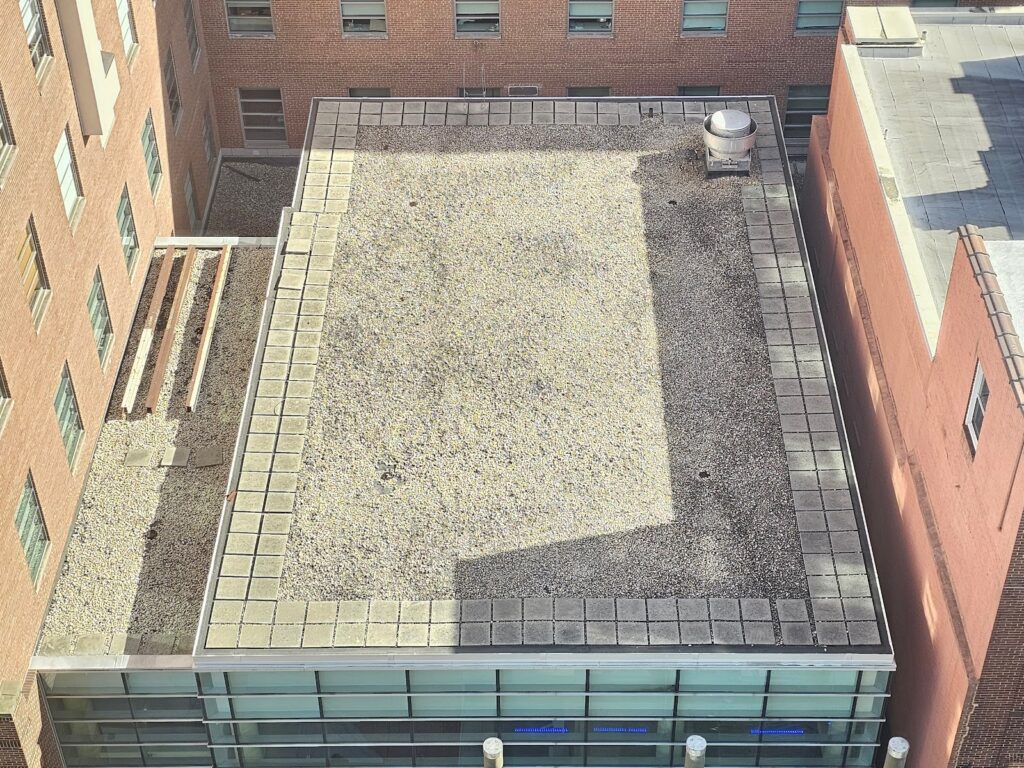
Ballasted Roof Systems.
Ballasted Roof Systems support in New Orleans, LA, with documented inspections, written scopes, and practical roof planning for commercial properties.
What this roof work solves
Ballasted Roof Systems in New Orleans should begin with a documented roof walk. The first job is to identify active water entry, drainage problems, membrane condition, edge details, rooftop equipment conflicts, and weather exposure before a price or schedule is discussed.
For commercial owners, the useful answer is rarely a one-line recommendation. The roof file should explain the work area, the reason for the scope, the access constraints, and the next maintenance decision.
How the scope is built
The scope is based on system selection, building use, roof age, visible defects, and the cost difference between immediate repair and longer-range planning. When repair is enough, the work stays focused. When replacement or recover planning is the responsible move, the reasoning is written plainly.
Each finished project should leave behind before-and-after photos, service notes, and follow-up items so the owner keeps a record for future inspections, budgeting, and vendor conversations.
Ballasted single-ply roofing is a system New Orleans commercial buildings should almost never receive in new or reroof work. The hurricane wind-uplift dynamics of Louisiana's ASCE 7 hurricane-prone region make loose-laid ballasted membrane a specification that fails predictably in Gulf Coast storm events. We do not recommend ballasted systems on new work in this market — but we do assess, document, and remove the ballasted inventory that exists on pre-2000 buildings across the metro.
Ballasted roofing — a loose-laid single-ply membrane held down by 10-to-12 pounds per square foot of river-wash stone — was installed on a portion of New Orleans's pre-2000 commercial building inventory, primarily in the industrial corridors of Jefferson Parish and in the older warehouse stock of New Orleans East. The system was specified during an era when Gulf Coast hurricane wind-uplift design was less rigorously enforced than it has been since Hurricane Katrina's 2005 documentation of commercial roof failures across the metro.
The fundamental problem with ballasted roofing in a hurricane-prone region is not the weight of the stone — it is that the stone is not attached. During a major hurricane event, wind-driven pressure differentials at building corners and perimeter zones can lift the membrane and the stone together, or can lift the membrane from beneath the stone where the ballast distribution has become uneven over years of wind migration and foot traffic. Post-storm damage documentation after both Katrina and Ida included ballasted systems on New Orleans-area commercial buildings where the stone redistribution from years of Gulf wind loading had left perimeter zones under-ballasted before the storm even made landfall.
We do not specify ballasted single-ply roofing on new commercial work in the New Orleans hurricane-prone region. This is a firm position, not a preference. The ASCE 7 hurricane-prone-region wind-uplift requirements for Orleans, Jefferson, St. Tammany, and surrounding parishes cannot be reliably met by a loose-ballasted attachment system — the design requires either full adhesion or mechanical attachment with documented fastener calculations for the building's actual exposure and risk classification. Any contractor recommending a new ballasted system on a New Orleans commercial building should be asked to show the ASCE 7 wind-uplift calculation justifying that specification.
Why Ballasted Systems Fail in Hurricane Events — The Engineering Explanation
Ballasted membrane systems rely on gravity and stone weight to resist wind uplift. At 10-to-12 psf of stone, the system resists modest uplift loads — the system was originally designed against wind speeds that predated ASCE 7's hurricane-prone-region pressure coefficients. The failure mechanism in a major hurricane event is not simple uplift of the entire stone-and-membrane assembly. It is progressive perimeter uplift: at building corners and perimeter zones, wind pressure coefficients under ASCE 7 hurricane-prone-region conditions produce uplift demands that substantially exceed the 10-to-12 psf ballast weight. The membrane lifts at those zones, the stone does not follow uniformly, and once the membrane separates at the corner, the wind-driven progressive failure spreads inward.
This is documented failure behavior, not theoretical. Post-Katrina and post-Ida damage assessments on New Orleans-area commercial buildings with ballasted systems consistently showed corner and perimeter separation before center-field ballast displacement. The stone weight that works in a 90-mph design-wind-speed calculation does not provide adequate restraint at the actual pressure coefficients generated in a Category 3 or 4 Gulf Coast hurricane. This is why ballasted specification on new commercial work in the hurricane-prone region is, in our view, indefensible from an engineering standpoint.
Assessing Existing Ballasted Inventory in New Orleans
New Orleans and Jefferson Parish do have a pre-2000 ballasted commercial roof inventory — primarily in the industrial and warehouse buildings of New Orleans East along the Chef Menteur Highway corridor, in older Jefferson Parish commercial properties along the Earhart Expressway, and in isolated pre-Katrina commercial stock across the metro that was not in the primary reconstruction corridors after 2005. These buildings require assessment before any reroof decision is made.
Assessing a ballasted system requires pulling stone back from representative locations to expose the membrane below. We pull ballast from 8-to-10 locations across the roof to inspect seam condition, membrane flexibility (brittleness at seams indicates end of UV life even on a membrane shielded from UV by stone), and lap adhesion. Moisture cores go through the cleared stone, through the membrane, and into the insulation below. Wet insulation under ballasted systems on aging New Orleans buildings is common — chronic drain restriction under accumulated debris at the stone-drain interface allows ponding water to remain on the membrane, and the Gulf Coast humidity means the insulation does not dry between rain events once saturated.
Ballast Removal Sequencing and Replacement Specification
Ballast removal on a New Orleans commercial reroof is a distinct production phase that precedes membrane removal. The sequence: identify drain locations under the ballast, establish material staging at the building perimeter or loading dock, remove stone in sections that pace the membrane-removal and same-day-dry-in crew, haul stone to staging, and dispose of or repurpose it. The labor cost for ballast removal on a New Orleans project is typically $2.50-to-$4.80 per square foot of roof area — a line item that must appear explicitly in any replacement scope. Any scope that does not address ballast removal separately is either understated or expecting the removal cost to surface as a change order during production.
Replacement of a ballasted New Orleans commercial building should specify a fully adhered or mechanically attached single-ply system — TPO, EPDM, or PVC as appropriate to the building's use and rooftop environment — with an ASCE 7 hurricane-prone-region wind-uplift calculation documented in the project file. The replacement system is the opportunity to bring the building into compliance with current Louisiana building code wind-uplift requirements that the ballasted original system never met. We close every ballasted-replacement project with a manufacturer NDL warranty document and a wind-uplift design calculation in the closeout package.
Why is ballasted roofing essentially never appropriate for New Orleans commercial buildings?
Questions to settle early
Where is the risk?
Locate leaks, wet-insulation indicators, open seams, weak flashing, and drainage restrictions across the roof.
What can wait?
Separate immediate work from maintenance items that can be tracked for the next service window.
What should be funded?
Build a practical recommendation for repair, coating, recover, or replacement planning.
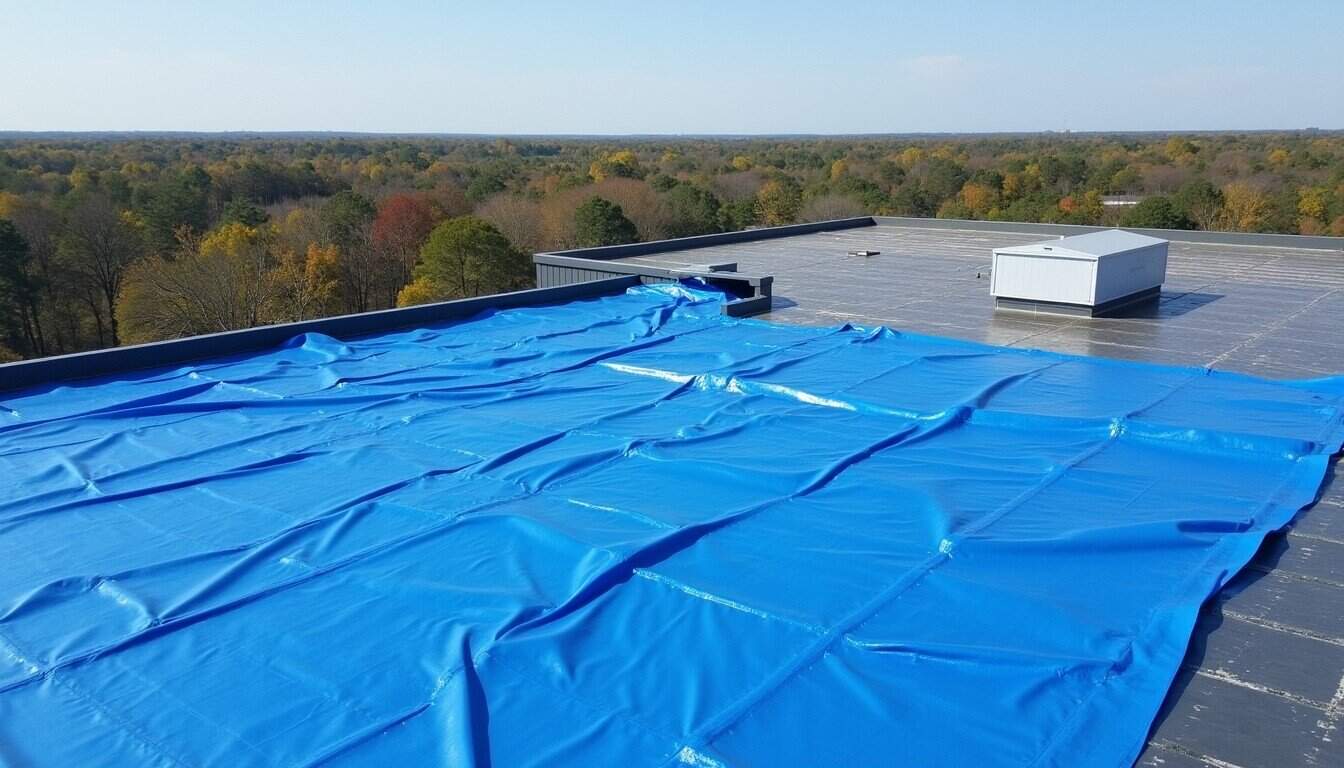
Need help with ballasted roof systems?
Send the building address, known roof age, access notes, and what changed. We will respond with the right next step.