
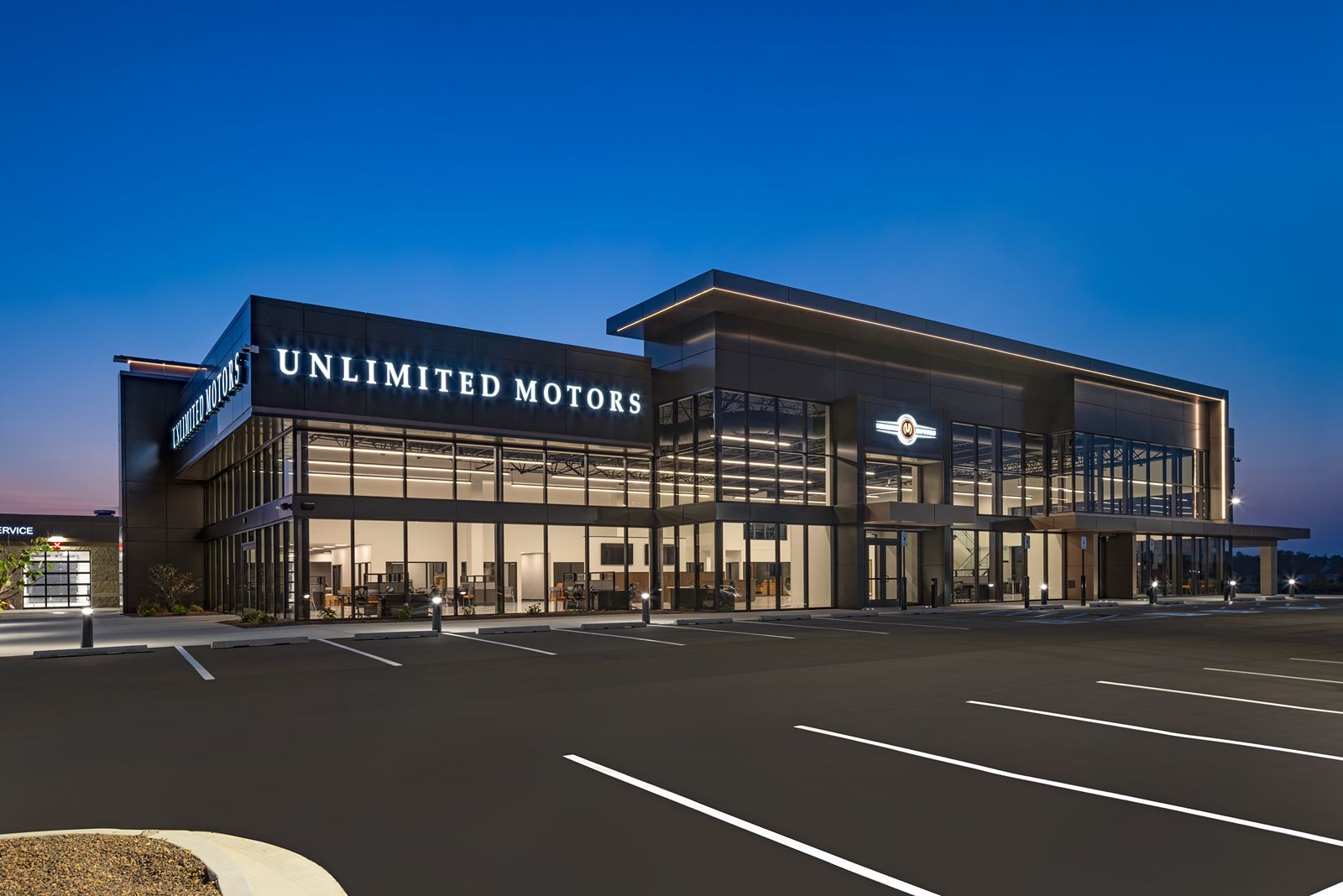
Auto Dealership Roofing.
Auto Dealership Roofing support in New Orleans, LA, with documented inspections, written scopes, and practical roof planning for commercial properties.
What this roof work solves
Auto Dealership Roofing in New Orleans should begin with a documented roof walk. The first job is to identify active water entry, drainage problems, membrane condition, edge details, rooftop equipment conflicts, and weather exposure before a price or schedule is discussed.
For commercial owners, the useful answer is rarely a one-line recommendation. The roof file should explain the work area, the reason for the scope, the access constraints, and the next maintenance decision.
How the scope is built
The scope is based on service scope, building use, roof age, visible defects, and the cost difference between immediate repair and longer-range planning. When repair is enough, the work stays focused. When replacement or recover planning is the responsible move, the reasoning is written plainly.
Each finished project should leave behind before-and-after photos, service notes, and follow-up items so the owner keeps a record for future inspections, budgeting, and vendor conversations.
Commercial roofing for auto dealerships, car lots, service centers, and automotive facilities throughout New Orleans, LA.
Lakeside Toyota and Lakeside Honda, operating from large campuses in the Metairie corridor adjacent to New Orleans, represent the kind of high-volume dealership operations that depend on their physical plants the way most businesses depend on their technology: when everything works, no one notices; when something fails, everything stops. Re-roofing a Metairie-area dealership means building to the coastal Louisiana wind resistance standards that post-Katrina code revisions established, managing salt air corrosion from Lake Pontchartrain proximity, and maintaining continuous operations through a re-roof in a market where service department downtime is measured in lost warranty claim revenue per hour.
Coastal Louisiana's design wind speed for commercial buildings in the New Orleans metro is among the highest in the continental United States, and the fully adhered membrane assemblies required to meet those uplift pressures are not optional quality upgrades — they are code-minimum specifications. We calculate uplift resistance requirements for the field, perimeter, and corner zones of every dealership roof section and specify tested assemblies with rated values that exceed those requirements by a meaningful safety margin. The margin matters in a market where a Category 2 event tests the roof before a Category 4 ever arrives.
Salt air corrosion from Lake Pontchartrain affects every metal component on a Metairie dealership roof within a few miles of the lake. Copings, through-wall flashings, equipment curb caps, gutter systems, and all mechanical equipment enclosures are susceptible to accelerated corrosion that will fail standard galvanized components within seven to ten years. We specify coated aluminum or stainless steel for all metal roofing components on New Orleans-area dealerships, upgrading any substandard components identified during the pre-roof inspection. The cost delta is modest; the service life extension is measured in decades.
Dealership showrooms in the New Orleans metro often feature the distinctive sloped canopy entry systems and multi-colored fascia that brand standards require, and these elements create complex transitions between membrane roofing, metal coping systems, and structural canopy frames. The Metairie corridor's dealers have some of the most architecturally varied facilities in the region because they were built during different eras under different brand standards. Each transition between system types is a potential failure point, and we document every one with photographs and drawings before, during, and after re-roofing.
The occupied operations challenge for a New Orleans area dealership has a specific hurricane season overlay. During the June through November storm season, we maintain a standing storm preparation protocol for every active job site: all loose materials are secured or removed at the end of each day, all open decking is closed to a waterproof condition before leaving the site if any storm development is possible within 48 hours, and we maintain a 24-hour contact protocol with the dealership's facilities manager for storm communication. This protocol has been tested in post-Katrina New Orleans, and we take it seriously.
Service department exhaust systems in the New Orleans climate face an additional challenge beyond the chemical and thermal demands of normal dealership service: the subtropical humidity that accelerates corrosion on all metal components that are not properly specified. Exhaust fan curbs, make-up air unit housings, and condensate lines all corrode faster in the New Orleans climate than in any inland market, and specifying stainless or coated components is particularly important here. We use stainless steel curb flashings at all exhaust and make-up air penetrations as standard for all New Orleans dealership projects.
Louisiana contractor licensing requires a Louisiana State Licensing Board for Contractors (LSLBC) license for commercial work. We hold a current LSLBC license for commercial general and roofing work, and we maintain the bonding and insurance levels required for major dealer group projects. The City of New Orleans and Jefferson Parish each require building permits for commercial re-roofing, and our project team manages all permit activity for sites in both jurisdictions.
Vapor management in the New Orleans climate is critical for dealership roofs because the combination of high exterior humidity and air-conditioned interiors creates inward vapor drive that can condense within improperly designed insulation assemblies. For climate-controlled showrooms and service departments, we specify vapor retarder positioning on the interior side of the insulation — the warm side in New Orleans' cooling-dominated climate — and we use closed-cell insulation products that resist vapor transmission within the insulation layer itself.
The New Orleans-area auto market is one of the Gulf Coast's most resilient, defined by the region's energy, healthcare, and tourism economies. Dealers who maintain facilities that meet post-Katrina code standards and that are properly documented for insurance purposes are positioned well for both the ongoing market and for any future event that tests the building's resilience. A properly specified commercial roof is the most visible expression of that commitment to resilience.
Can you repair a leaking BUR roof on a New Orleans building without full replacement?
Sometimes. If the leak source is an isolated failed flashing at a penetration or parapet — and core cuts show the BUR field plies are otherwise dry and intact — targeted repair is the appropriate scope. If the leak is coming from degraded plies in the roof field, patching the visible wet spot without addressing the ply failure produces another leak nearby within a season or two. In a market where the next tropical rain event may arrive before the targeted repair has time to prove out, that distinction matters more than it does in other markets. We tell you which situation you are in before we propose a scope.
How do you manage gravel removal during BUR tear-off in a dense urban New Orleans location?
Gravel-surfaced BUR tear-off is labor-intensive and generates significant debris volume. On CBD, French Quarter, and Warehouse District buildings with constrained street access, we use rooftop vacuum systems that collect the gravel without staging loose aggregate at the curb. Street-use permits for dumpster placement in the French Quarter and the Downtown Development District require advance coordination with the City of New Orleans — we handle that permitting before mobilization.
Questions to settle early
Where is the risk?
Locate leaks, wet-insulation indicators, open seams, weak flashing, and drainage restrictions across the roof.
What can wait?
Separate immediate work from maintenance items that can be tracked for the next service window.
What should be funded?
Build a practical recommendation for repair, coating, recover, or replacement planning.
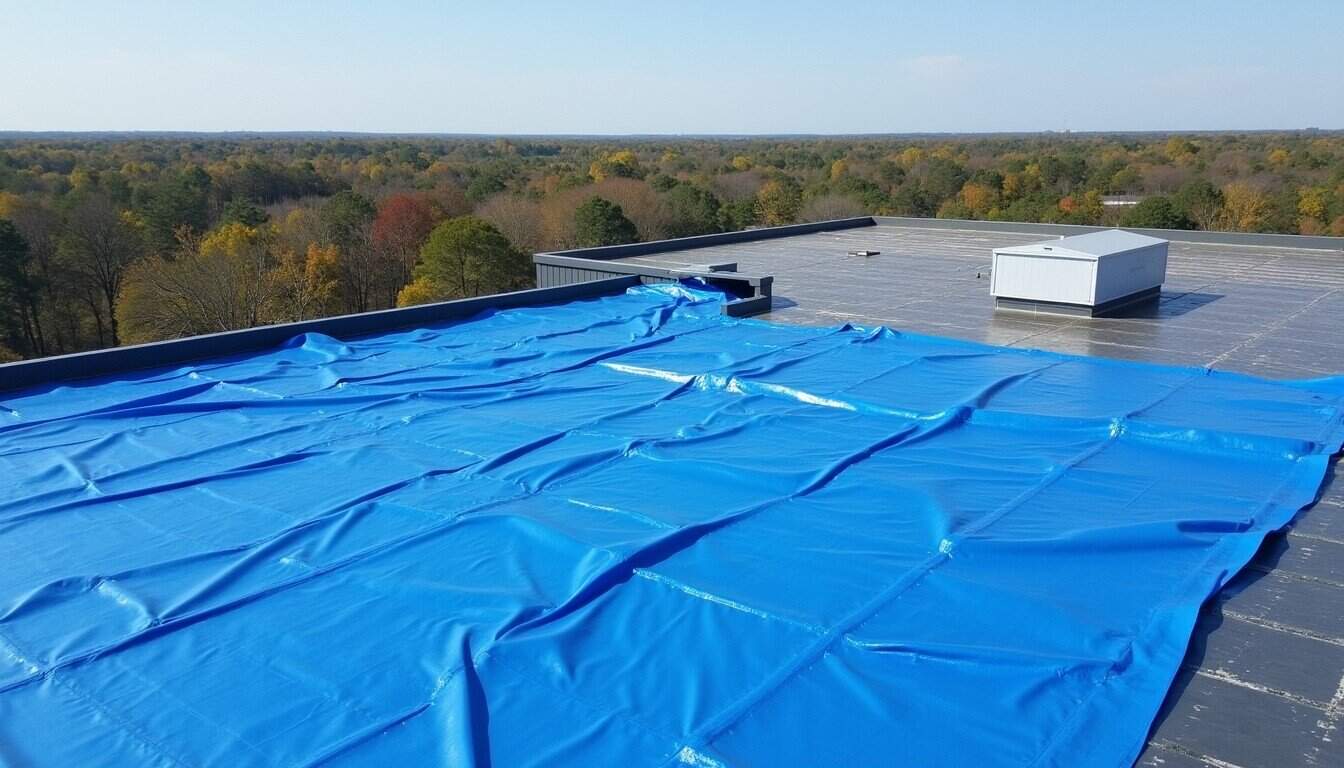
Need help with auto dealership roofing?
Send the building address, known roof age, access notes, and what changed. We will respond with the right next step.