
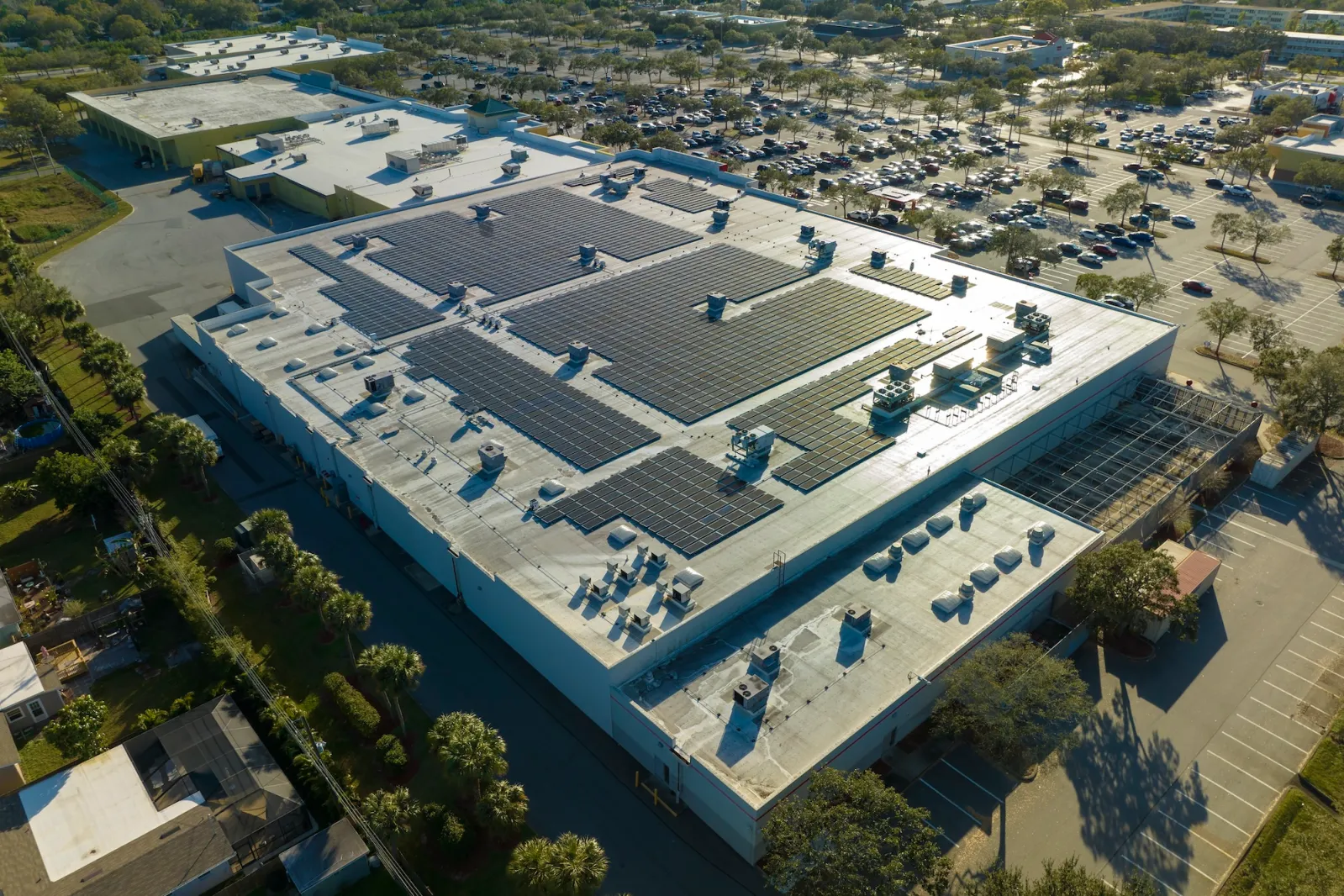
DST Roofing Services.
DST Roofing Services support in New Orleans, LA, with documented inspections, written scopes, and practical roof planning for commercial properties.
What this roof work solves
DST Roofing Services in New Orleans should begin with a documented roof walk. The first job is to identify active water entry, drainage problems, membrane condition, edge details, rooftop equipment conflicts, and weather exposure before a price or schedule is discussed.
For commercial owners, the useful answer is rarely a one-line recommendation. The roof file should explain the work area, the reason for the scope, the access constraints, and the next maintenance decision.
How the scope is built
The scope is matched to operating requirements, building use, roof age, visible defects, and the cost difference between immediate repair and longer-range planning. When repair is enough, the work stays focused. When replacement or recover planning is the responsible move, the reasoning is written plainly.
Each finished project should leave behind before-and-after photos, service notes, and follow-up items so the owner keeps a record for future inspections, budgeting, and vendor conversations.
Commercial roofing for Delaware Statutory Trust (DST) properties and 1031 exchange investors throughout New Orleans, LA.
Delaware Statutory Trust sponsors acquiring commercial properties in New Orleans face a risk environment unlike any other major DST market in the United States. The combination of hurricane exposure, subsidence-related structural movement, extreme humidity, and a documented history of catastrophic storm losses creates a roof risk profile that demands reserve modeling methodology that most national DST frameworks simply are not built to handle. Post-storm reserve modeling for New Orleans commercial properties is not a theoretical exercise — it is a direct response to what Katrina in 2005, Isaac in 2012, and Ida in 2021 documented about how commercial rooftops perform when Gulf of Mexico storm systems make landfall in southeast Louisiana.
The lessons of Hurricane Ida are particularly relevant for DST sponsors currently active in the New Orleans market. Ida made landfall as a Category 4 storm and caused widespread commercial roof damage across the metro area, with the combined cost of commercial roof repairs and replacements running into hundreds of millions of dollars. What the post-Ida recovery revealed, specifically for property owners operating under passive management structures, was that adequate reserves and an established local contractor relationship were the single most important determinants of recovery speed. Properties with both were operational within weeks. Properties without adequate reserves or contractor relationships were competing for a compressed pool of available contractor capacity at post-event pricing that was 40 to 60 percent above normal New Orleans market rates.
The 1031 exchange identification timeline does not pause for storm preparedness due diligence, and DST sponsors operating in the New Orleans market face the same 45-day identification and 180-day closing clocks that apply everywhere. What distinguishes professional New Orleans DST operators from those who encounter problems is the decision to commission a storm-readiness assessment as a non-negotiable component of pre-acquisition due diligence — not as an optional add-on that gets deferred when the timeline is tight. A roof condition report for a New Orleans commercial property that does not specifically assess hurricane vulnerability, wind uplift resistance, and drainage capacity during storm surge events is not an adequate document for DST due diligence purposes.
Post-storm reserve modeling is the technical area where New Orleans DST offerings most frequently fall short. A standard reserve contribution based on expected annual maintenance costs and a prorated replacement cycle does not adequately fund the response to a direct or near-direct hurricane strike. The modeling approach that experienced New Orleans DST sponsors use incorporates probabilistic storm event costs — building a reserve that assumes a significant storm event of some magnitude will occur over a seven-year hold, which is historically well-supported, and that the cost of post-event repairs will be elevated above baseline pricing by the compression of contractor capacity that routinely follows major Gulf Coast storms.
Offering memorandums for DST interests in New Orleans commercial properties must include storm reserve disclosures that are specific, defensible, and built on current Louisiana contractor pricing. Investors and their advisors in the DST marketplace are increasingly sophisticated about the adequacy of reserve disclosures for storm-exposed markets, and a reserve figure that would be reasonable for a Nashville or Memphis commercial property is not a reasonable reserve figure for a New Orleans property facing the same storm exposure profile. The disclosure gap between a nationally generic reserve assumption and a New Orleans-specific reserve model is the gap between a defensible offering and one that creates sponsor liability when the storm arrives.
The passive investor structure of a DST is tested most severely in post-storm environments. Investors cannot authorize emergency expenditures, cannot vote on repair approaches, and cannot contribute additional capital to fund repairs that exceed reserves. The trustee must act, must act quickly, and must act with whatever resources are available. In New Orleans after a major storm event, acting quickly means having a contractor on-site for emergency mitigation before the queue for contractor services closes — and that means having the relationship established, the contact confirmed, and the priority status secured before the storm makes landfall, not after.
New Orleans commercial properties have specific structural characteristics that complicate roof maintenance in ways that sponsors from other markets may not anticipate. Subsidence — the gradual sinking of land due to compaction of organic soils — affects commercial buildings across the metro area differently depending on their location and foundation type. Buildings experiencing differential settlement can develop roof deck deflection and parapet separation that creates water infiltration pathways that are fundamentally different from standard membrane wear. A condition report that does not account for subsidence effects on roof geometry and drainage is not a complete condition report for a New Orleans commercial property.
Hold-period maintenance for New Orleans DST commercial properties should follow a hurricane-aware annual calendar. Pre-season inspection in April or May, post-season assessment in November, and immediate post-storm inspection following any significant weather event are the standard elements. Drain maintenance is a year-round obligation given New Orleans's extremely high annual rainfall and the city's below-sea-level drainage challenges — a commercial roof that is not draining quickly creates hydrostatic loading conditions that can be structurally dangerous in a city whose topography already concentrates water. This is not a concern that exists in most other DST markets at the same intensity.
DST sponsors who build New Orleans portfolios with storm-specific reserve models, established local contractor relationships, and pre-storm inspection and maintenance programs are positioned to participate in one of the country's most compelling commercial real estate recovery stories. The New Orleans market has demonstrated remarkable resilience, and the fundamentals that drive commercial demand — the port, the energy sector, the healthcare economy, and the tourism infrastructure — have proven durable. But those fundamentals are only accessible to DST investors consistently if the physical assets underlying the DST interests are maintained to the standard that a Gulf Coast storm environment demands.
Can you work on a live New Orleans data center without interrupting cooling systems?
Yes, but it requires the facility manager's active cooperation on the production schedule. We build the sequence around the cooling system's maintenance windows, work cooling-adjacent penetrations during planned low-load periods, and never disturb any mechanical penetration without the facility's written approval for that specific action on that specific date. We do not make unilateral decisions about cooling system access.
How does hurricane season affect a data center roofing project in New Orleans?
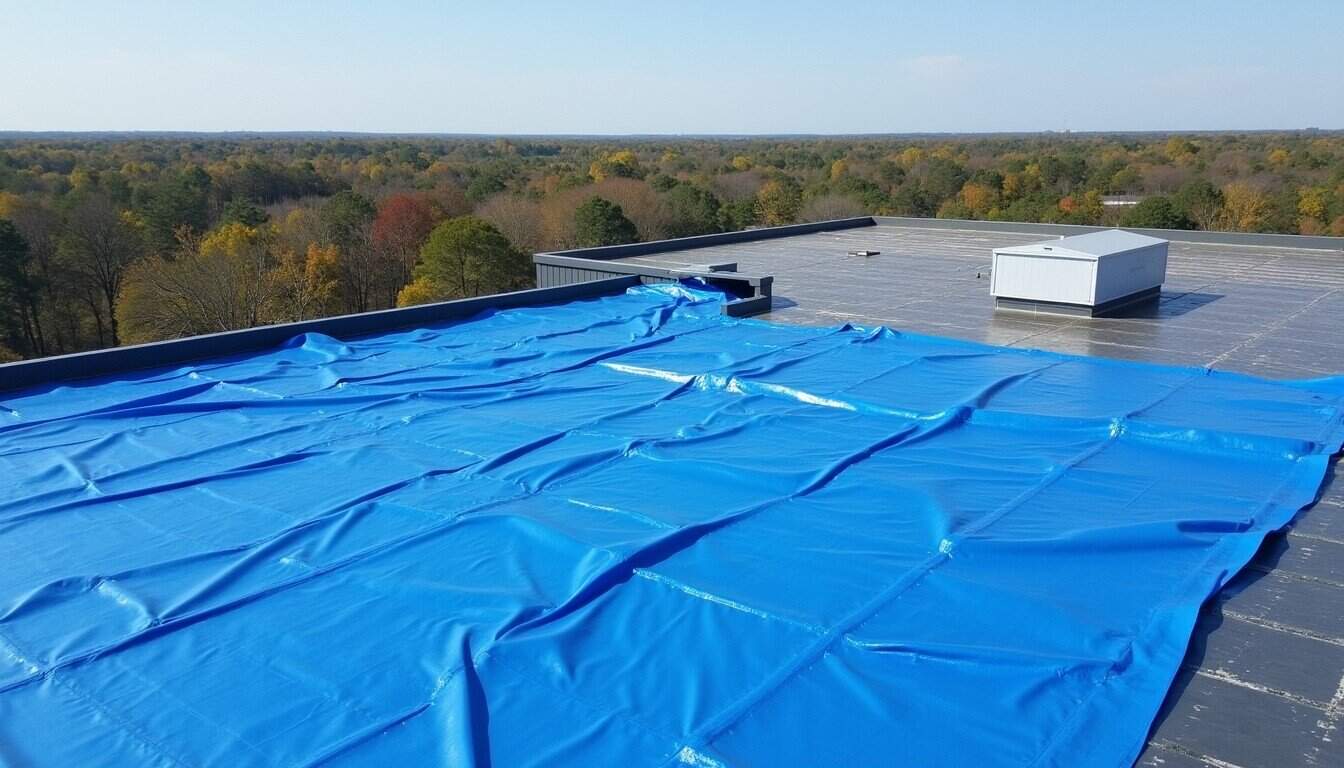
During hurricane season (June through November), we maintain a standing dry-in protocol — no section of roof is left open overnight, all open penetrations sealed before crew departure. We communicate this protocol in pre-construction so the production timeline accounts for weather windows. If a tropical weather event develops while production is active, we close and dry-in all open sections before securing the site.
Questions to settle early
Where is the risk?
Locate leaks, wet-insulation indicators, open seams, weak flashing, and drainage restrictions across the roof.
What can wait?
Separate immediate work from maintenance items that can be tracked for the next service window.
What should be funded?
Build a practical recommendation for repair, coating, recover, or replacement planning.
Need help with DST roofing services?
Send the building address, known roof age, access notes, and what changed. We will respond with the right next step.