
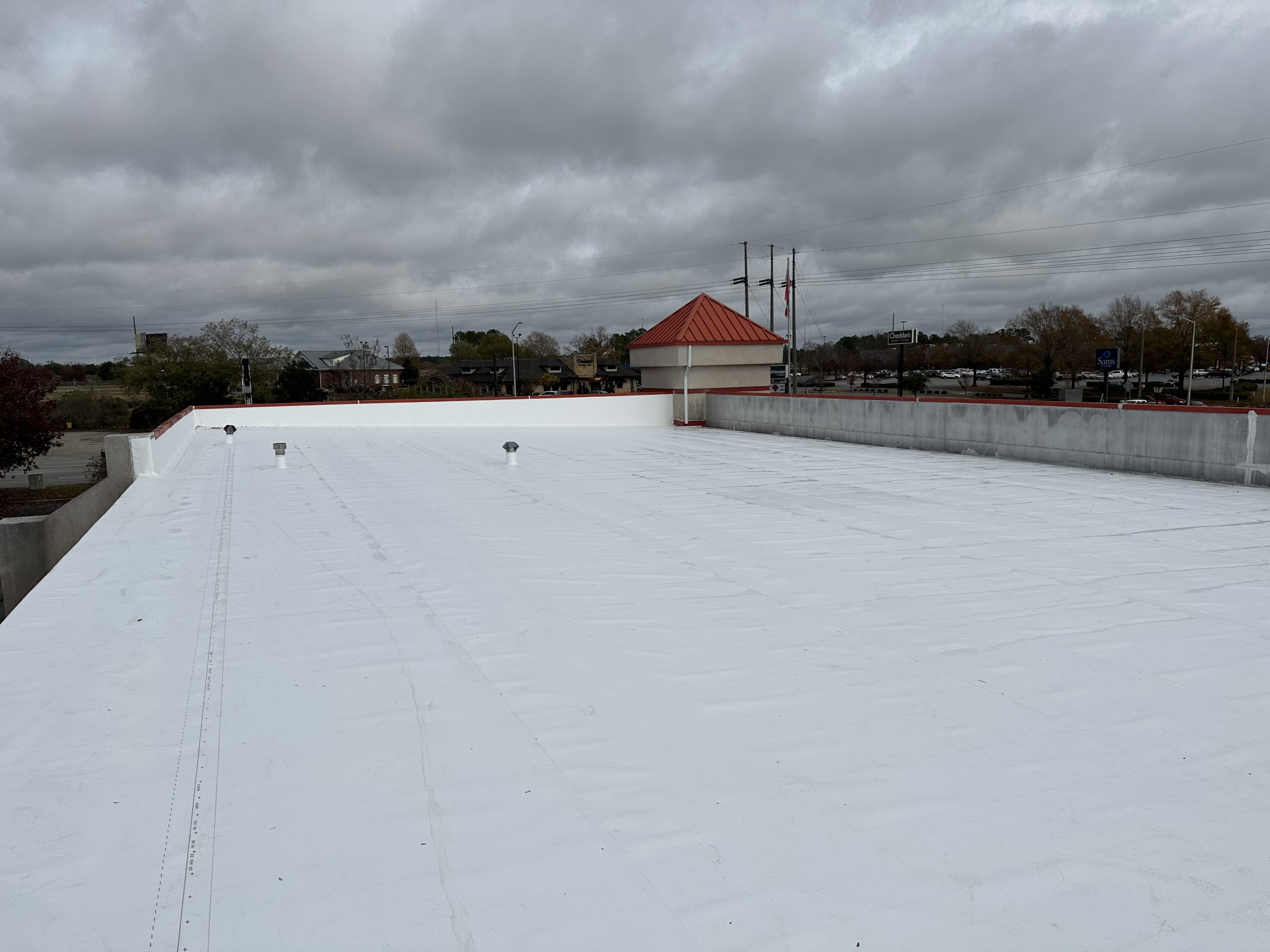
PVC Roof Systems.
PVC Roof Systems support in New Orleans, LA, with documented inspections, written scopes, and practical roof planning for commercial properties.
What this roof work solves
PVC Roof Systems in New Orleans should begin with a documented roof walk. The first job is to identify active water entry, drainage problems, membrane condition, edge details, rooftop equipment conflicts, and weather exposure before a price or schedule is discussed.
For commercial owners, the useful answer is rarely a one-line recommendation. The roof file should explain the work area, the reason for the scope, the access constraints, and the next maintenance decision.
How the scope is built
The scope is based on system selection, building use, roof age, visible defects, and the cost difference between immediate repair and longer-range planning. When repair is enough, the work stays focused. When replacement or recover planning is the responsible move, the reasoning is written plainly.
Each finished project should leave behind before-and-after photos, service notes, and follow-up items so the owner keeps a record for future inspections, budgeting, and vendor conversations.
New Orleans's concentration of restaurants, hospitality buildings, and food-service facilities in the French Quarter and the CBD means PVC roofing has a significant legitimate application here. Grease exhaust from commercial kitchen equipment destroys TPO and EPDM at the hood locations. PVC is the membrane that handles it — and in a market where a restaurant on Bourbon Street operates 18 hours a day, the roof failure consequence of specifying the wrong membrane is not theoretical.
PVC (polyvinyl chloride) membrane has a specific and important application in the New Orleans commercial roofing market. The city's hospitality and food-service industry — one of the densest concentrations of restaurants and bars per block in any US city — generates rooftop grease-exhaust exposure that systematically degrades TPO and EPDM at the areas around commercial kitchen hood vents. PVC's chemistry resists oil-based and fat-based compounds that break down the other membranes. In the French Quarter and the CBD restaurant district, that is not a marketing claim — it is documented in the replacement work we do on buildings where TPO was specified the first time.
Beyond grease exposure, PVC carries relevance for New Orleans industrial buildings along the River Road corridor and the West Bank industrial zone that handle petroleum products, chemical processing byproducts, or industrial cleaning agents that are hostile to standard membrane formulations. The PVC specification here is driven by the same chemical-resistance logic that applies in restaurant applications.
PVC costs more than TPO — typically 15 to 25 percent more per installed square — and the installation requires the same wind-uplift design discipline that applies to any membrane in Louisiana's hurricane-prone region. For buildings where chemical or grease exposure is not a factor, PVC is not the right specification. For buildings where it is, the cost premium is recovered in avoided early replacement and warranty longevity.
French Quarter and CBD Restaurant Applications
The French Quarter is the most concentrated restaurant and hospitality district in New Orleans, and the building stock — historic masonry construction with flat or near-flat roofs, limited equipment access, and Vieux Carré Commission oversight on visible rooftop modifications — creates a specific set of roofing conditions. Grease-exhaust condensate from kitchen hoods in the French Quarter's dense restaurant inventory lands on rooftop membrane surfaces that, in many cases, are on 1900s-era buildings with wood-nailer or structural concrete decks that cannot accommodate full mechanical replacement cycles every eight years.
PVC on these buildings provides two things: resistance to the grease chemistry that destroys other membranes, and a weldable membrane that accommodates the complex penetration geometry of historic buildings with multiple exhaust stacks, HVAC units, and access hatches in close proximity. PVC heat-welded seams around complex penetrations are more reliable than tape-flashed or adhesive-bonded alternatives in the French Quarter's combination of grease exposure and extreme summer humidity. We coordinate every French Quarter roofing project with the Vieux Carré Commission requirements for visible rooftop equipment and membrane color.
PVC Wind-Uplift Specification for Hurricane-Prone Region Buildings
PVC membrane is installed fully adhered or mechanically attached — the same attachment options as TPO and EPDM — and the wind-uplift design requirements are identical to those for any other single-ply system in Louisiana's hurricane-prone region. Risk Category III and IV buildings in Orleans and Jefferson parishes require fully adhered PVC with an ASCE 7 wind-uplift calculation documented in the project file. For Risk Category II commercial buildings on restaurant or food-service properties, we determine the attachment method based on the building's exposure classification and occupancy.
PVC's weldable seam technology is equivalent to TPO in wind resistance — both produce a seam that is at or near the full tensile strength of the membrane. The perimeter and corner detail work, edge metal specification to FM 4435 and ANSI/SPRI ES-1, and parapet-to-membrane transition reinforcement are the same on PVC projects as on any other single-ply membrane we install in New Orleans. The membrane's chemical resistance does not change the wind-uplift engineering requirement.
Sika Sarnafil and Other PVC Manufacturers in the New Orleans Market
Sika Sarnafil is our primary PVC specification for the New Orleans market. The 25-year warranty on qualifying Sarnafil PVC installations is the longest in the industry, and the warranty exclusions do not carve out grease or chemical exposure the way some competitors' warranties do — which matters on every French Quarter restaurant building we scope. Sarnafil's G-476 and TS-77 systems are what we install on most New Orleans PVC projects.
Other PVC manufacturers we work with include Duro-Last — whose prefabricated system approach reduces field seaming on the complex rooftop layouts common to the French Quarter's historic buildings — and Versico PVC for projects where regional field-rep support and warranty timeline align with the project schedule. We match the manufacturer to the building's geometry, warranty objective, and timeline, not to what we have in stock.
My French Quarter restaurant keeps failing around the hood exhausts. Will PVC fix it?
Questions to settle early
Where is the risk?
Locate leaks, wet-insulation indicators, open seams, weak flashing, and drainage restrictions across the roof.
What can wait?
Separate immediate work from maintenance items that can be tracked for the next service window.
What should be funded?
Build a practical recommendation for repair, coating, recover, or replacement planning.
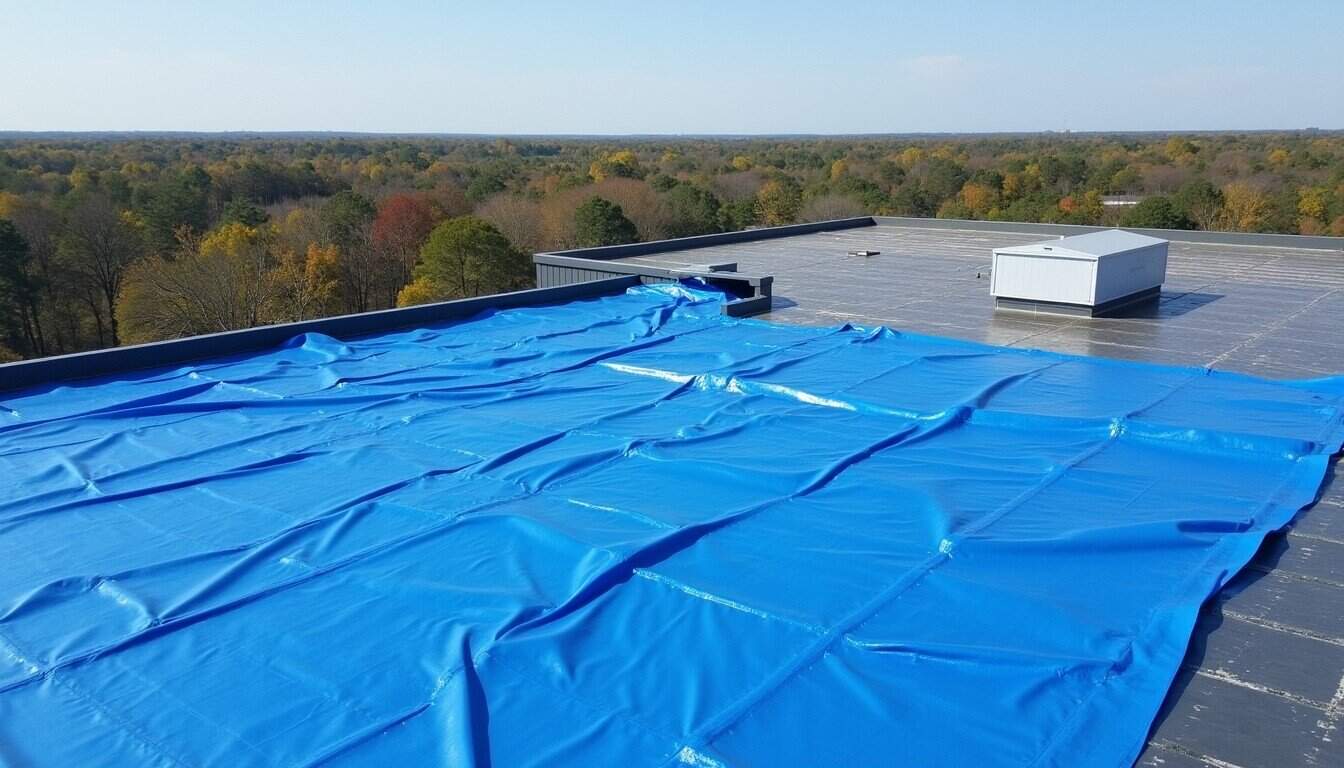
Need help with PVC roof systems?
Send the building address, known roof age, access notes, and what changed. We will respond with the right next step.