
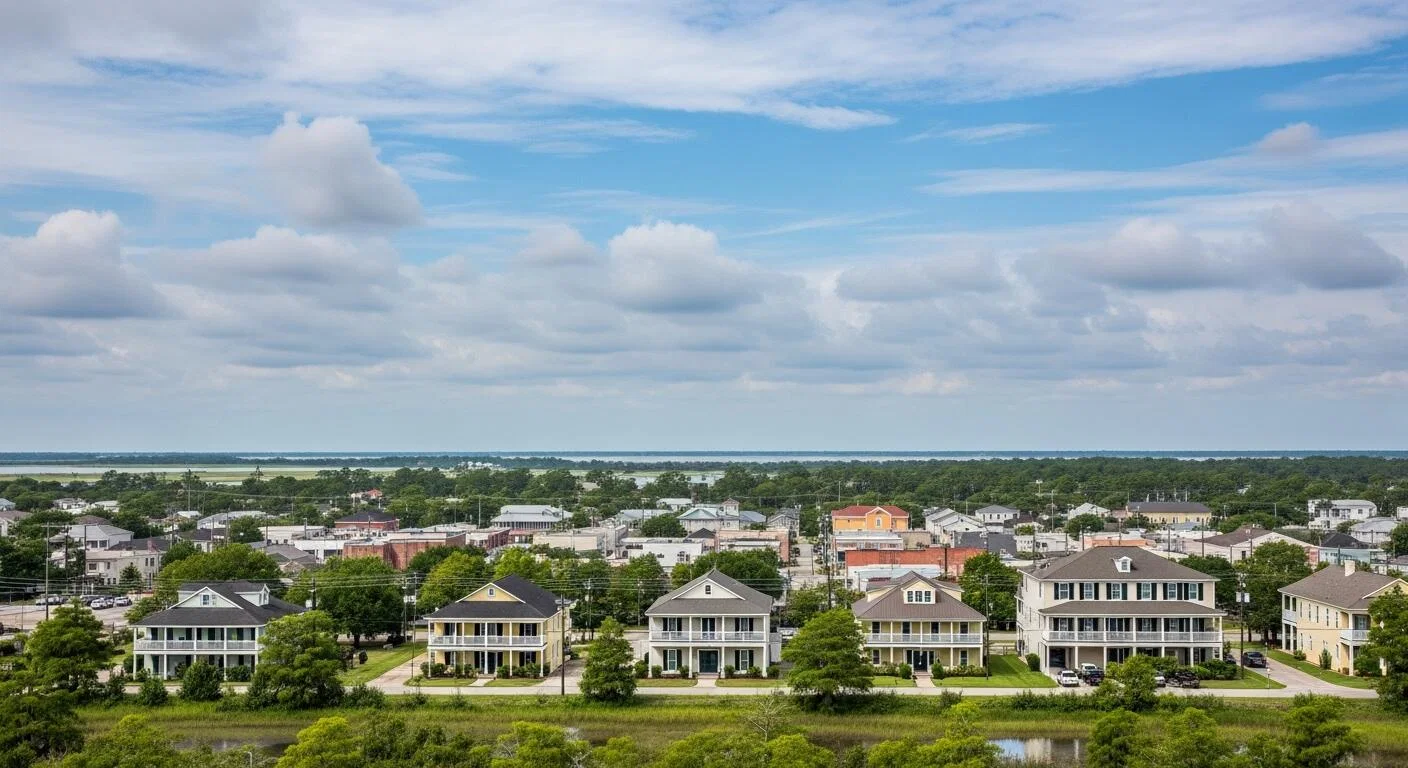
Commercial Roofing in Chalmette.
Commercial Roofers New Orleans provides commercial roof inspections, repairs, maintenance, storm response, and replacement planning in Chalmette, LA.
What this roof work solves
Commercial Roofing in Chalmette in New Orleans should begin with a documented roof walk. The first job is to identify active water entry, drainage problems, membrane condition, edge details, rooftop equipment conflicts, and weather exposure before a price or schedule is discussed.
For commercial owners, the useful answer is rarely a one-line recommendation. The roof file should explain the work area, the reason for the scope, the access constraints, and the next maintenance decision.
How the scope is built
Chalmette roof work is planned around site access, traffic, tenant schedules, drainage, and the weather exposure that shapes that corridor. When repair is enough, the work stays focused. When replacement or recover planning is the responsible move, the reasoning is written plainly.
Each finished project should leave behind before-and-after photos, service notes, and follow-up items so the owner keeps a record for future inspections, budgeting, and vendor conversations.
Chalmette is the commercial and governmental center of St. Bernard Parish — the most heavily flooded jurisdiction in Louisiana during Hurricane Katrina. The post-Katrina rebuild produced an essentially new commercial inventory that is now approaching its first major maintenance and replacement milestones . Bernard corridor regularly.
Hurricane Katrina's storm surge inundated virtually all of St. Bernard Parish on August 29, 2005 — flood depths of 8 to 12 feet across most of Chalmette and the surrounding communities effectively erased the pre-storm commercial building inventory. The post-Katrina reconstruction of St. Bernard Parish commercial properties produced a building stock that is, by a large margin, more uniform in age than any other commercial inventory in the New Orleans metro: the overwhelming majority of commercial buildings currently standing in Chalmette were constructed between 2007 and 2015.
That uniformity of vintage has a specific implication for commercial roofing: the post-Katrina Chalmette commercial inventory is entering its first major maintenance and replacement window simultaneously. Buildings that were roofed with 60-mil TPO on mechanically attached systems in 2008 through 2012 are now 13 to 17 years into their roofing systems. Manufacturer warranties on these buildings typically run 15 to 20 years with documented annual maintenance requirements — and a significant portion of them have not had consistent maintenance documentation since installation. The capital planning conversation in Chalmette right now is about which buildings are going into their first replacement cycle, which ones need documented maintenance to extend their warranty coverage, and which ones have developed moisture intrusion patterns that push them ahead of the curve.
The Domino Sugar refinery on the Mississippi River in Chalmette is the largest single industrial facility in St. Bernard Parish and one of the most significant industrial employers in the metro. The refinery campus itself is not a standard commercial roofing client — but the cluster of industrial supply, logistics, and support businesses that have developed along the St. Bernard Highway and Judge Perez Drive corridors to serve the refinery and the broader industrial base represent a consistent commercial roofing market in Chalmette.
Post-Katrina Commercial Inventory and the 15-Year Maintenance Window
The most consistent finding in our Chalmette assessments is that post-Katrina commercial buildings with no documented maintenance history are reaching a critical threshold. A single-ply TPO system installed in 2009 with no documented annual inspections is 16 years old with no warranty maintenance record — the manufacturer warranty may be effectively void, the membrane has had no tracking on seam condition or drain function, and the building's ownership may have changed without roof documentation transferring. We treat these buildings as having unknown history and start with a complete moisture-core and visual assessment before recommending any scope.
For Chalmette buildings with intact documentation — maintenance records that have followed the building through ownership and recorded the inspection and repair history — the scope is a different conversation: moisture trending, warranty status confirmation, and a capital-horizon projection that tells the owner whether they are looking at replacement in year 18 or whether the system is tracking to full design life.
Judge Perez Drive and St. Bernard Industrial Corridor
Judge Perez Drive is the primary commercial artery in Chalmette, running parallel to the St. Bernard Highway through the post-Katrina rebuild corridor. The commercial buildings along this stretch were primarily delivered between 2008 and 2014 — a concentrated vintage cohort that is broadly approaching first replacement age. Anchor retail, grocery, pharmacy, restaurant, and service-commercial buildings form the backbone of this corridor. The buildings tend to be single-story with low-slope flat roofs, simple drain configurations, and mechanically attached TPO as the dominant membrane system.
The St. Bernard Highway industrial corridor carries the supply-chain and logistics operations that support the Domino Sugar facility and the broader industrial employment base in the parish. Industrial buildings here — warehouse, distribution, and light manufacturing — tend toward somewhat larger footprints and in some cases carry aging metal roofing systems that predate Katrina or were rebuilt quickly in the post-storm period. These older post-Katrina industrial buildings are the ones most likely to have wind-uplift attachment conditions that do not
Is most of Chalmette's commercial roofing post-Katrina construction?
Yes. The . Bernard Parish, and the commercial building stock that existed before Katrina was almost entirely demolished or declared a total loss. The commercial buildings currently operating in Chalmette are overwhelmingly post-2007 construction — which means the inventory is entering its first major roofing maintenance and replacement cycle as a group, roughly 13 to 18 years after the post-Katrina build-out.
What is the drive time from your New Orleans office to Chalmette?
Approximately . Bernard Highway or Judge Perez Drive. We run St. Bernard Parish routes regularly. Emergency response for Chalmette commercial buildings is same-day.
Questions to settle early
Where is the risk?
Locate leaks, wet-insulation indicators, open seams, weak flashing, and drainage restrictions across the roof.
What can wait?
Separate immediate work from maintenance items that can be tracked for the next service window.
What should be funded?
Build a practical recommendation for repair, coating, recover, or replacement planning.
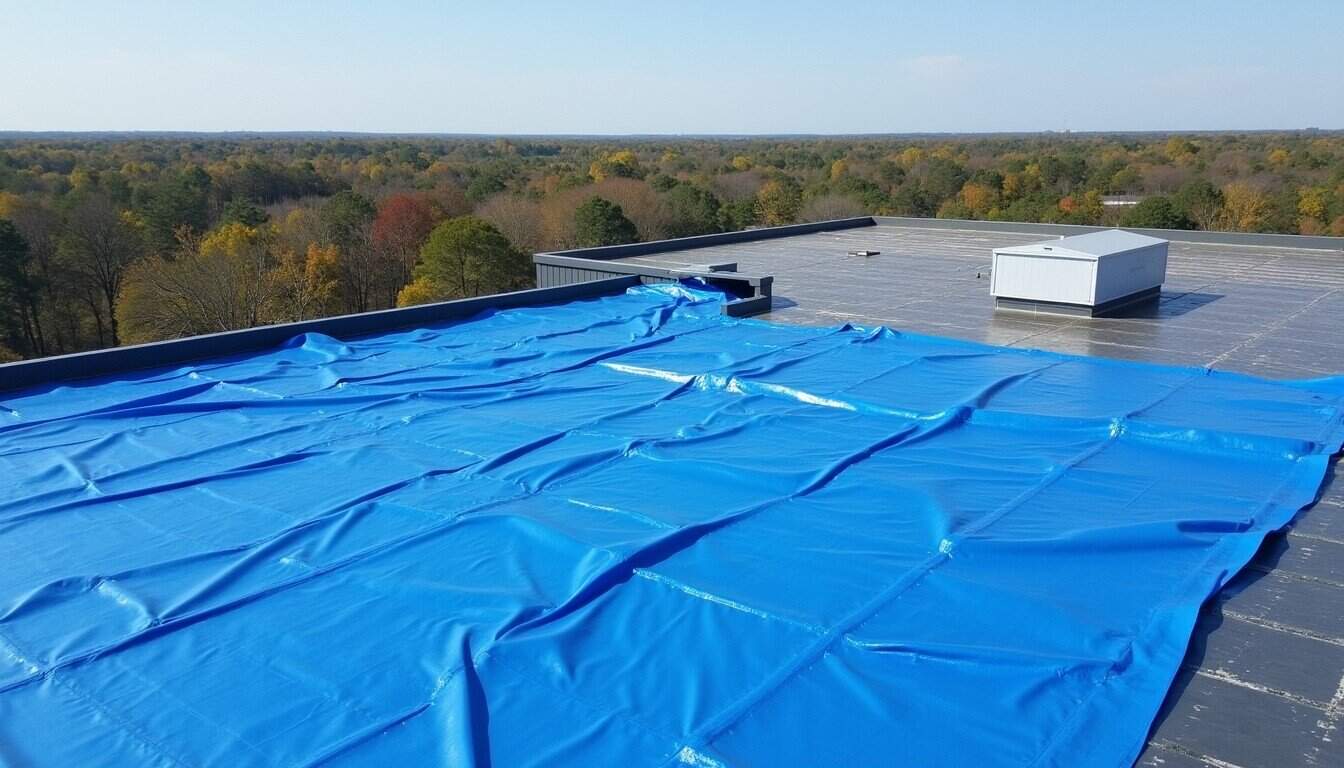
Need help with commercial roofing in chalmette?
Send the building address, known roof age, access notes, and what changed. We will respond with the right next step.