
Roof Condition Reports.
Roof Condition Reports support in New Orleans, LA, with documented inspections, written scopes, and practical roof planning for commercial properties.
What this roof work solves
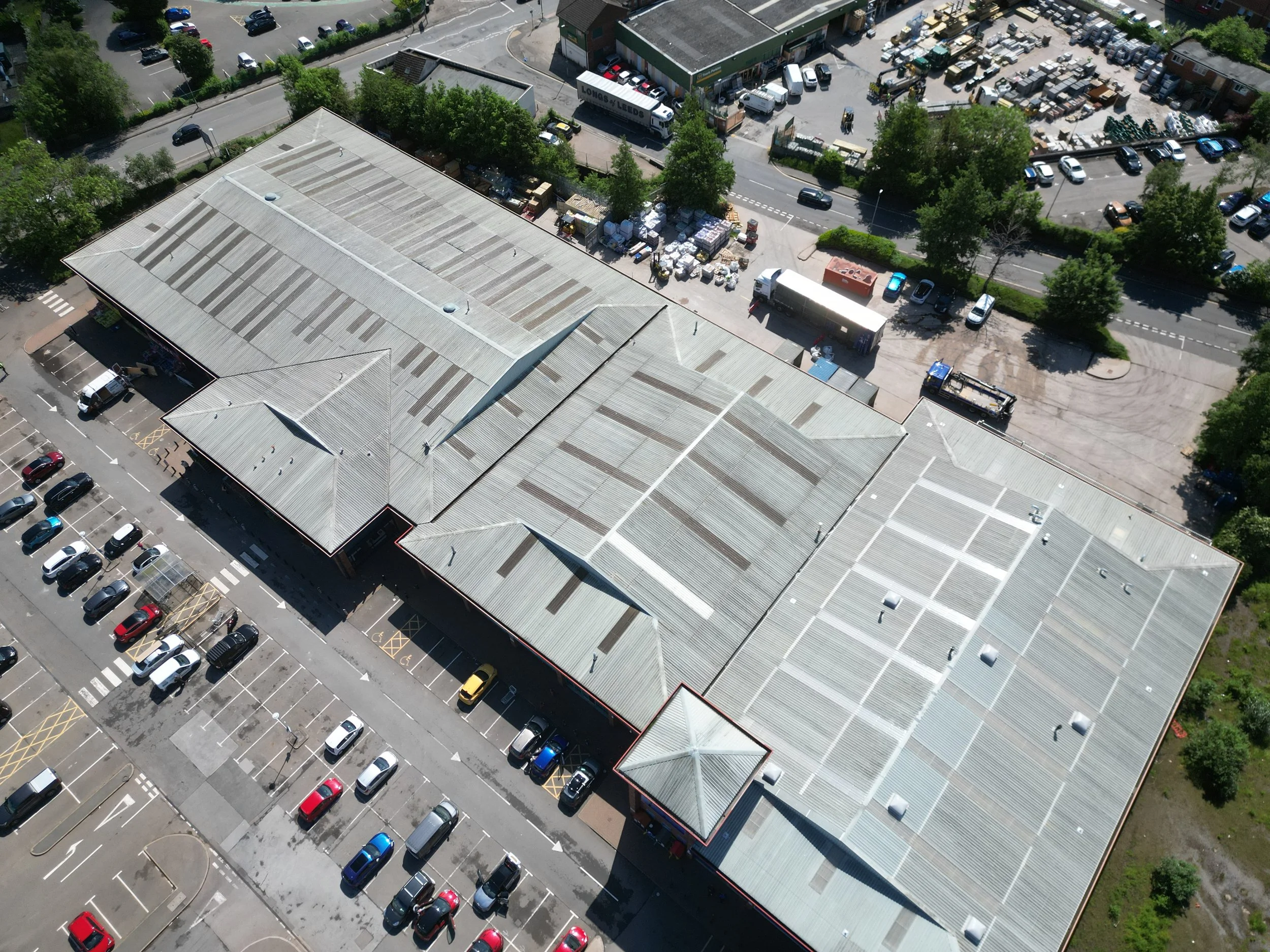
Roof Condition Reports in New Orleans should begin with a documented roof walk. The first job is to identify active water entry, drainage problems, membrane condition, edge details, rooftop equipment conflicts, and weather exposure before a price or schedule is discussed.
For commercial owners, the useful answer is rarely a one-line recommendation. The roof file should explain the work area, the reason for the scope, the access constraints, and the next maintenance decision.
How the scope is built
The scope is tuned to owner documentation, building use, roof age, visible defects, and the cost difference between immediate repair and longer-range planning. When repair is enough, the work stays focused. When replacement or recover planning is the responsible move, the reasoning is written plainly.
Each finished project should leave behind before-and-after photos, service notes, and follow-up items so the owner keeps a record for future inspections, budgeting, and vendor conversations.
A condition report on a New Orleans commercial roof needs to serve three potential purposes: routine maintenance documentation, post-storm insurance claim support, and capital planning. All three require a zone-keyed, photo-anchored deliverable — not a paragraph summary with unlabeled photos.
Most commercial roof reports circulating in the New Orleans market are inspection forms with a paragraph summary and a handful of phone photos that are not labeled, not keyed to a reference system, and not usable for anything other than the immediate moment they describe. They cannot support a storm-damage claim because they do not document pre-event condition by zone. They cannot support a capital request because they do not assign scope priorities at the zone level. They cannot support a warranty claim because the manufacturer's field rep cannot navigate the documentation.
Our condition reports are matched to a zone diagram that creates a numbered reference system for every section of the roof. Every photo is labeled with a zone number and a defect descriptor. Every scope item is logged by zone. The scope columns — monitor, repair now, budget for replacement — are assigned at the zone level. This format makes the report directly comparable to the next report on the same building, usable in a capital planning conversation, and usable as pre-event documentation if a storm occurs between inspections.
For New Orleans commercial buildings, the zone diagram has additional value that flat-market inspection records do not require: it is the document that lets a post-storm rapid assessment confirm which zones were in acceptable condition before the storm and which damage is attributable to the event. Without that zone-level baseline, the adjuster-ready documentation that supports a storm claim is not producible.
Report Depth Tiers — Basic, Comprehensive, Capital-Grade
Basic tier: Zone diagram, photo log with zone keys, condition rating per zone on a 1-5 scale, and scope column — monitor, repair-now, or budget-replace — per zone. No written narrative sections. Appropriate for ongoing maintenance documentation on stable buildings where the purpose is warranty maintenance records and the pre-hurricane baseline. Turnaround is 3-5 business days after the site visit.
Comprehensive tier: Everything in the basic tier plus written narrative sections for each area of concern, manufacturer detail references for each flashing defect identified, and a building-level summary with an aggregate condition score. Appropriate for buildings in the repair or replacement planning phase, for post-storm insurance claim support, and for warranty claim documentation. Turnaround is 5-7 business days after the site visit. Post-storm comprehensive reports are expedited for buildings actively taking water.
Capital-grade tier: Everything in the comprehensive tier plus a cost-band estimate for each identified scope item, a lifecycle cost analysis section including the storm-season deferral premium calculation for buildings in high-exposure corridors, and a formatted executive summary suitable for ownership, a capital committee, or an acquisition due-diligence team. Appropriate for property acquisitions in the New Orleans market, capital budget approval processes, and buildings where the report will be reviewed by people without roofing expertise. Turnaround is 7-10 business days after the site visit.
The Zone Diagram in the New Orleans Context
The zone diagram is the document that makes a pre-hurricane inspection usable as post-storm claim documentation. When a May inspection produces a zone-keyed photo log showing zone 7 in condition 4 — minor wear, no near-term action — and the September post-storm survey shows zone 7 in condition 2 with active membrane separation at the parapet return, the adjuster can see the before-and-after on the same reference system. That comparison is what distinguishes storm-attributable damage from pre-existing deterioration in a claim.
For New Orleans commercial properties with Vieux Carré Commission oversight — French Quarter buildings where visible rooftop modifications require VCC review — the zone diagram also documents the existing rooftop configuration as a baseline for any future modification permit applications. Building ownership in the French Quarter transitions frequently between hospitality groups, and the zone diagram preserves the documented rooftop configuration across those transitions.
We produce zone diagrams for buildings we did not install and for buildings where no prior documentation exists. The first site visit produces the diagram based on the actual current roof configuration, measured and drawn to scale. That diagram then anchors every subsequent inspection on the building.
When a Condition Report Is and Is Not Enough
A visual condition report is appropriate for most maintenance, warranty, and initial capital planning purposes. It is not sufficient when the capital decision depends on knowing how much insulation is saturated — a determination that visual inspection cannot make with confidence on New Orleans roofs, where subtropical humidity means moisture intrusion spreads laterally through insulation at a rate that the visible surface often does not reflect.
Questions to settle early
Where is the risk?
Locate leaks, wet-insulation indicators, open seams, weak flashing, and drainage restrictions across the roof.
What can wait?
Separate immediate work from maintenance items that can be tracked for the next service window.
What should be funded?
Build a practical recommendation for repair, coating, recover, or replacement planning.
Need help with roof condition reports?
Send the building address, known roof age, access notes, and what changed. We will respond with the right next step.