Third-Party Roofing Quality Inspection.
Third-Party Roofing Quality Inspection support in New Orleans, LA, with documented inspections, written scopes, and practical roof planning for commercial properties.
What this roof work solves
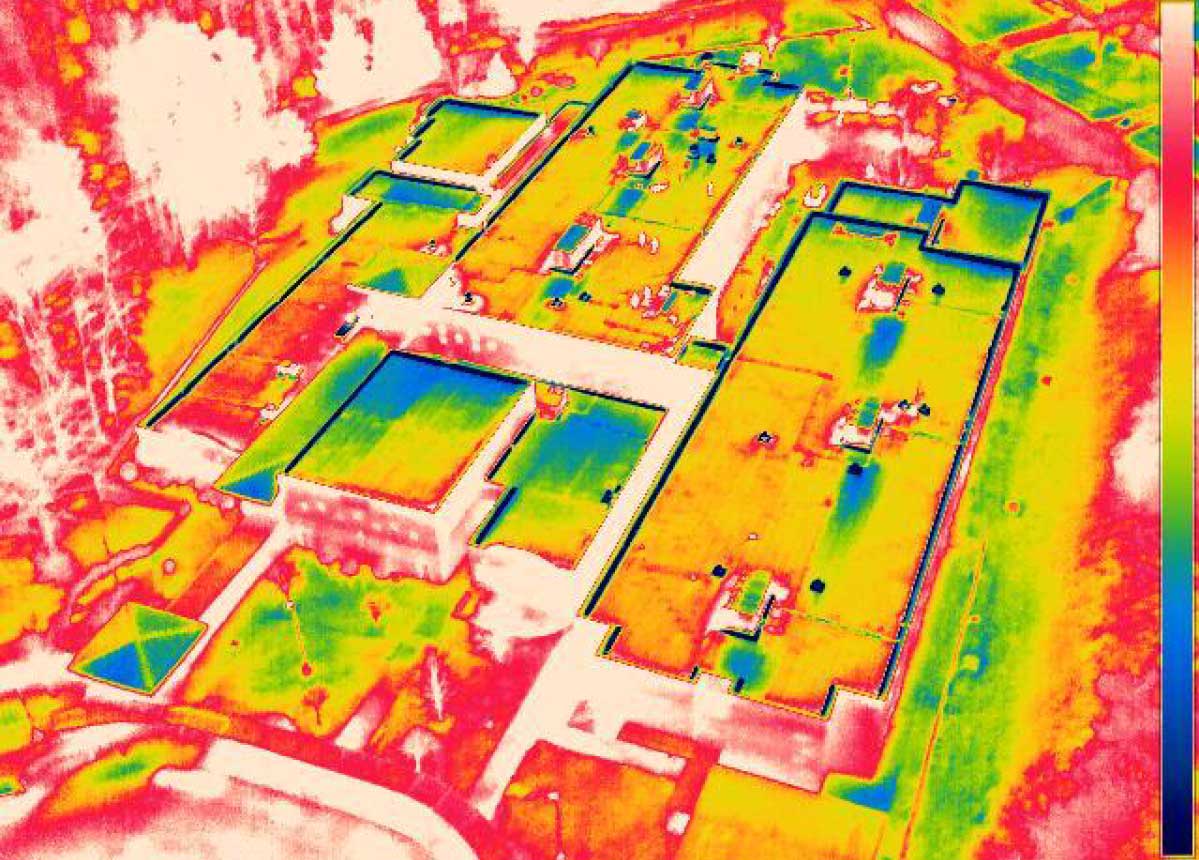
Third-Party Roofing Quality Inspection in New Orleans should begin with a documented roof walk. The first job is to identify active water entry, drainage problems, membrane condition, edge details, rooftop equipment conflicts, and weather exposure before a price or schedule is discussed.
For commercial owners, the useful answer is rarely a one-line recommendation. The roof file should explain the work area, the reason for the scope, the access constraints, and the next maintenance decision.
How the scope is built
The scope is tuned to owner documentation, building use, roof age, visible defects, and the cost difference between immediate repair and longer-range planning. When repair is enough, the work stays focused. When replacement or recover planning is the responsible move, the reasoning is written plainly.
Each finished project should leave behind before-and-after photos, service notes, and follow-up items so the owner keeps a record for future inspections, budgeting, and vendor conversations.
Independent field QA inspection during another contractor's installation — verifying membrane installation quality, seam integrity, wind-uplift attachment compliance, and manufacturer warranty eligibility on New Orleans commercial projects we are not building.
Third-party quality inspection is distinct from owner's representative work in one important way: it is a specific technical inspection engagement, not ongoing advisory through the project lifecycle. An owner, general contractor, or property manager retains us to walk a roof during or after another contractor's installation, document our findings against the manufacturer's published installation standard and the project's contract specification, and deliver a written report.
We do this on New Orleans commercial projects regularly — mostly for out-of-town institutional owners who retained a local contractor and want an independent field verification, for general contractors who need documented QA on a roofing subcontractor's installation before accepting substantial completion, and for public entities whose procurement policies require third-party QA documentation on projects above a specified contract value. The Orleans Parish School Board and Jefferson Parish government buildings have both used this format for post-Katrina and post-Ida replacement projects.
The inspection is documented to manufacturer-inspection standard and to Louisiana Department of Insurance wind-damage documentation standards. Every finding is photographed, keyed to the roof zone diagram, cross-referenced to the applicable manufacturer detail requirement or specification section, and categorized as: warranty-jeopardizing (must correct before manufacturer inspection), specification deviation (correction required per contract), or observation (documented for the asset record, no immediate action required).
Seam integrity: We run probe tests on a representative sample of heat-welded seams — minimum one probe per 500 linear feet of seam, plus every seam in a flashing transition zone, every seam within 12 inches of a penetration, and every T-junction. Probe testing catches cold welds that appear sound on visual inspection. On a fully adhered TPO replacement at a New Orleans commercial building, we also probe the membrane-to-substrate adhesive transfer at the perimeter and corner zones, where wind-uplift design depends on full adhesive coverage.
Wind-uplift attachment compliance: For mechanically attached systems, we pull a sample inspection of the fastener pattern at the field, perimeter, and corner zones and verify spacing against the approved ASCE 7 wind-uplift design. For fully adhered systems, we observe adhesive pull-back checks at defined intervals and document coverage percentages. In the New Orleans hurricane-prone-region environment, the perimeter and corner zones carry the highest pressure coefficients — deviation from the approved attachment pattern in those zones is a warranty-jeopardizing finding.
Flashing details: Parapet walls, penetrations, drains, curbs, edge metal, and expansion joints — we photograph each one against the manufacturer's published detail drawing. In New Orleans buildings with older masonry parapets, the flashing turn-down height is the most common warranty-jeopardizing condition. Edge metal clip engagement and spacing at corner zones is the second most common, particularly on post-Katrina construction where pre-2010 edge metal specifications that predate the hardened FM .
Post-storm installation conditions: For projects under construction during hurricane season, we include an inspection of any portion of the work that was in place during a named weather event. Insulation that absorbed moisture during a storm interruption, partially completed seam runs that were not protected during the interruption, and perimeter edge metal that shifted during wind loading all require specific assessment and documentation before the next production phase proceeds.
Manufacturer Warranty Inspection Support
Most major manufacturer NDL warranty inspections on New Orleans commercial projects are performed by the manufacturer's own field representative or factory-credentialed inspector. These inspections produce a punch list of conditions that must be corrected before the warranty is issued. The punch list cure period varies by manufacturer — typically 30-90 days after inspection.
We support owner and general contractor teams through warranty inspections in two ways. Pre-inspection: we walk the roof and identify probable punch-list items before the manufacturer's inspector arrives, so the installing contractor can correct them in advance. Post-inspection: we scope and manage the remediation the punch list requires, then submit completion documentation to the manufacturer's warranty desk. The pre-inspection walk is particularly valuable in this market because the conditions manufacturer inspectors flag most often in New Orleans — parapet flashing height deficiencies, edge metal clip spacing at corner zones, and adhesive coverage gaps on fully adhered systems — are detectable before the manufacturer visit and correctable in a short crew day.
For public-entity projects where the contract requires documented third-party QA, our inspection report and warranty inspection support documentation are formatted for inclusion in the project closeout file that the contracting entity's audit will review.
Every third-party QA inspection delivers a written report within five business days of the field visit. The report includes: executive summary covering overall installation quality assessment, finding count by category, and any findings that require correction before the manufacturer warranty inspection proceeds; a roof zone diagram with all findings keyed by number; a finding-by-finding detail section with photograph, location, description, applicable specification or manufacturer requirement, and recommended corrective action; and a findings matrix that can be used as a contractor correction-required list.
For Louisiana public-entity projects, the report is additionally formatted to We include cross-references to the applicable project specification section and the Louisiana State Licensing Board for Contractors requirements where relevant.
Questions to settle early
Where is the risk?
Locate leaks, wet-insulation indicators, open seams, weak flashing, and drainage restrictions across the roof.
What can wait?
Separate immediate work from maintenance items that can be tracked for the next service window.
What should be funded?
Build a practical recommendation for repair, coating, recover, or replacement planning.
Need help with third-party roofing quality inspection?
Send the building address, known roof age, access notes, and what changed. We will respond with the right next step.