
Owner's Representative Roofing Services.
Owner's Representative Roofing Services support in New Orleans, LA, with documented inspections, written scopes, and practical roof planning for commercial properties.
What this roof work solves
Owner's Representative Roofing Services in New Orleans should begin with a documented roof walk. The first job is to identify active water entry, drainage problems, membrane condition, edge details, rooftop equipment conflicts, and weather exposure before a price or schedule is discussed.
For commercial owners, the useful answer is rarely a one-line recommendation. The roof file should explain the work area, the reason for the scope, the access constraints, and the next maintenance decision.
How the scope is built
The scope is tuned to owner documentation, building use, roof age, visible defects, and the cost difference between immediate repair and longer-range planning. When repair is enough, the work stays focused. When replacement or recover planning is the responsible move, the reasoning is written plainly.
Each finished project should leave behind before-and-after photos, service notes, and follow-up items so the owner keeps a record for future inspections, budgeting, and vendor conversations.
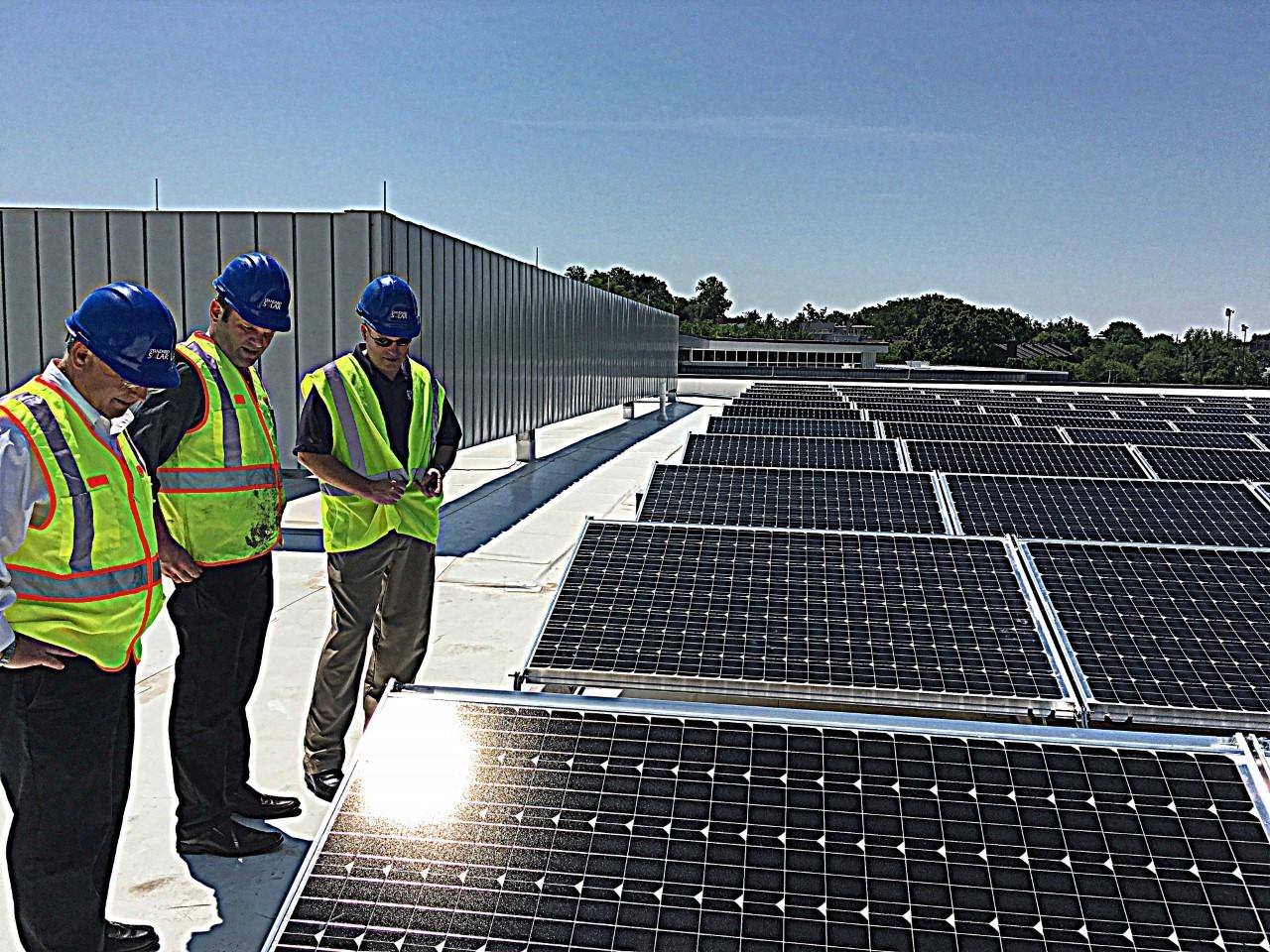
We act as technical owner's representative on New Orleans commercial roofing projects where we are not the installing contractor — advising during procurement, reviewing submittals, and observing the installation at the milestones where hurricane wind-uplift compliance and warranty eligibility are determined.
An owner's representative on a New Orleans commercial roofing project is the person on the owner's side of the table who can read a submittal for ASCE 7 wind-uplift compliance, identify a parapet flashing detail that will fail under Gulf Coast thermal cycling, and escalate a construction deficiency before it becomes a warranty suspension or an Ida-season roof loss. Most building owners in this market do not have that person internally.
The facility manager is managing a building's worth of systems simultaneously. The asset manager is managing capital allocations across a portfolio. Neither necessarily knows that a fully adhered TPO system installed without the manufacturer's required adhesive transfer rate leaves the membrane susceptible to the kind of perimeter separation that Ida documented on commercial buildings across Jefferson Parish — or that the manufacturer's warranty inspector will find the adhesive pattern in a core sample and void the warranty before the owner realizes the installation was substandard.
We fill this role on projects where we are not the installing contractor. The arrangement is direct: you retain us at a fixed-engagement or hourly rate, we have no financial relationship with the installing contractor, and our only interest is that the project is installed correctly, documented to hurricane wind-uplift standard, and closed out with a manufacturer warranty that will hold up when Gulf Coast storm conditions test it.
Pre-construction: We review the contractor's submitted scope, manufacturer submittals, and proposed materials against the contract documents. In the New Orleans market, the pre-construction submittal review is where we most often find wind-uplift specification drift — the contractor's submitted membrane differs from the specified product line, the proposed attachment method does not These get resolved before installation, not during the punch walk when they are expensive to correct.
During construction: We conduct field observation visits at defined milestones — insulation installation before membrane cover, membrane installation at progress (not just at punch), adhesive coverage or fastener pattern verification for the wind-uplift system as specified, flashing detail completion at parapets and penetrations, and edge metal clip spacing and torque at the perimeter and corner zones. Field observation is not continuous surveillance; it is targeted visits at the points where wind-uplift compliance deviations most commonly occur and are hardest to correct after the fact.
Closeout: We participate in the punch walk, verify the manufacturer inspection is scheduled with the correct credentialed inspector, confirm the ASCE 7 wind-uplift design documentation is included in the closeout package, and review the full closeout file — warranty document, photo-keyed zone diagram, wind-uplift design calculation, FM approval number, and maintenance contract — before the owner accepts substantial completion.
The High-Risk Deviations We Find in New Orleans Projects
Adhesive coverage on fully adhered systems: Full-adhered TPO and PVC systems are the standard specification for Risk Category III and IV buildings in New Orleans's hurricane-prone-region environment. The adhesive coverage rate — the percentage of membrane surface that achieves manufacturer-required adhesive transfer — directly determines the uplift resistance of the installed system. Inadequate adhesive coverage passes visual inspection at the surface and fails in wind loading. We verify coverage during installation by observing pull-back checks at defined intervals and documenting the findings.
Edge metal clip spacing at corners: FM 4435 and ANSI/SPRI ES-1 require specific clip spacing and engagement depth at building corners and at the transitions between roof zones. Corner zone pressure coefficients under ASCE 7 hurricane-prone-region wind speeds are substantially higher than field-zone pressures. Crews that install uniform clip spacing across the full perimeter without increasing corner-zone density leave the highest-pressure zone of the roof inadequately secured. This is one of the most common deviations we find on New Orleans commercial projects.
Parapet flashing turn-down on historic buildings: Buildings in the French Quarter and Warehouse District frequently have parapets where the available run for membrane turn-down is limited by historic masonry conditions. The manufacturer's minimum flashing height requirement — typically 8 inches above the finished membrane surface — cannot always be achieved at these locations without modification. We document the condition, confirm with the manufacturer's warranty desk whether a modified detail is acceptable, and get the written response in the closeout file before the owner accepts substantial completion.
Post-storm construction restart conditions: Projects under construction during an active Gulf Coast storm season can be interrupted by named weather events. When construction restarts after a storm interruption, the partially installed membrane, insulation, and insulation that was exposed to the event needs assessment before the next production phase covers it. We schedule a post-interruption field observation visit at any construction restart that follows a significant weather event.
When Owner's Rep Is Worth the Engagement Cost
In the New Orleans market, the calculation is different from most other US cities. The hurricane-driven consequence of a warranty-voiding installation deficiency is not just a 20-year unwarranted roof — it is a 20-year unwarranted roof in a market where a major storm event is a planning assumption, not a tail risk. A 100,000 sq ft commercial roof in Orleans Parish that loses its manufacturer warranty due to a construction deficiency is carrying the full replacement cost exposure through every hurricane season until the next capital event.
Questions to settle early
Where is the risk?
Locate leaks, wet-insulation indicators, open seams, weak flashing, and drainage restrictions across the roof.
What can wait?
Separate immediate work from maintenance items that can be tracked for the next service window.
What should be funded?
Build a practical recommendation for repair, coating, recover, or replacement planning.
Need help with owner's representative roofing services?
Send the building address, known roof age, access notes, and what changed. We will respond with the right next step.