
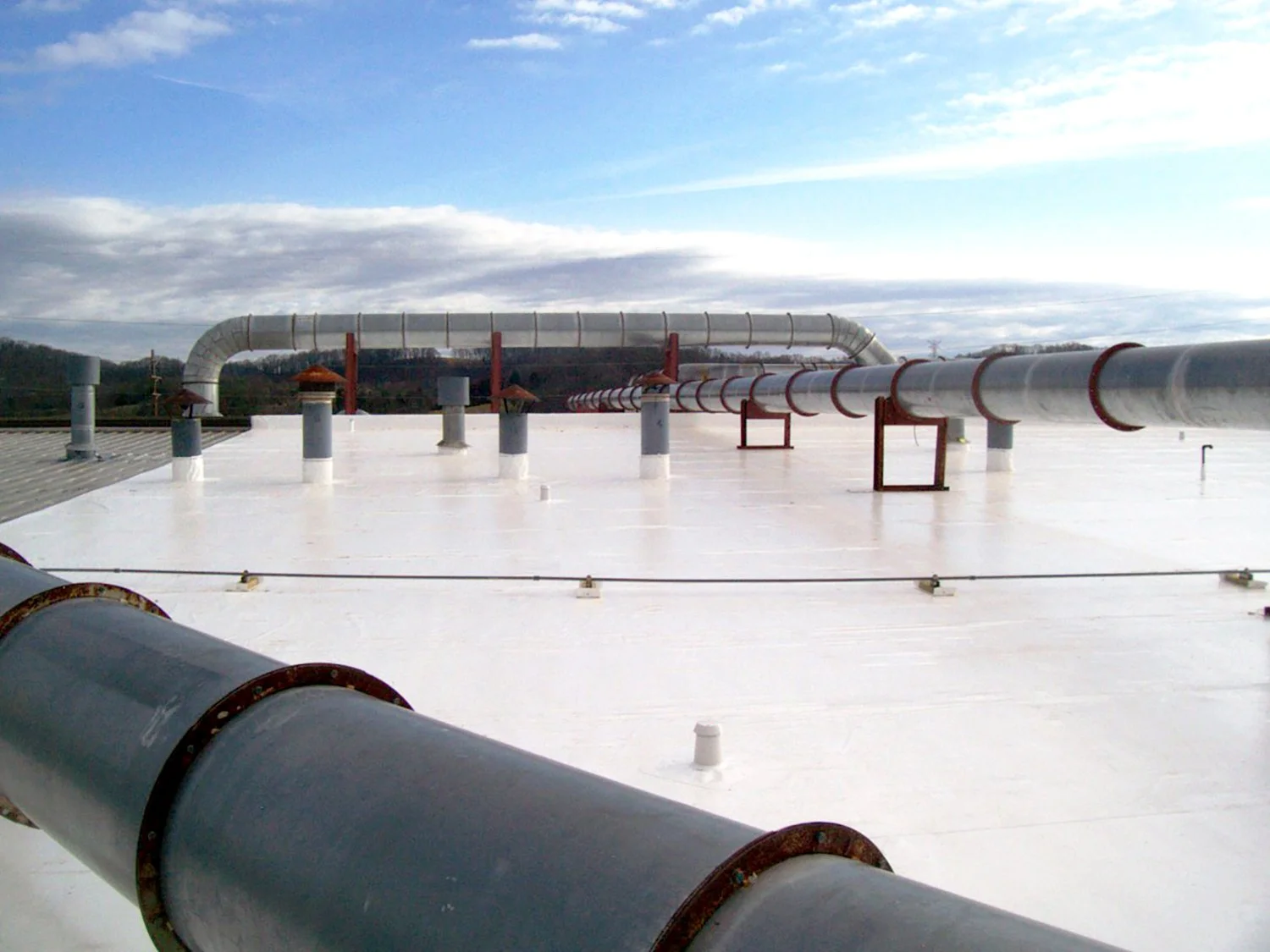
Replacement vs. Recover Analysis.
Replacement vs. Recover Analysis support in New Orleans, LA, with documented inspections, written scopes, and practical roof planning for commercial properties.
What this roof work solves
Replacement vs. Recover Analysis in New Orleans should begin with a documented roof walk. The first job is to identify active water entry, drainage problems, membrane condition, edge details, rooftop equipment conflicts, and weather exposure before a price or schedule is discussed.
For commercial owners, the useful answer is rarely a one-line recommendation. The roof file should explain the work area, the reason for the scope, the access constraints, and the next maintenance decision.
How the scope is built
The scope is tuned to owner documentation, building use, roof age, visible defects, and the cost difference between immediate repair and longer-range planning. When repair is enough, the work stays focused. When replacement or recover planning is the responsible move, the reasoning is written plainly.
Each finished project should leave behind before-and-after photos, service notes, and follow-up items so the owner keeps a record for future inspections, budgeting, and vendor conversations.
We apply a documented decision framework to the recover-or-replace question on aging New Orleans commercial roofs — moisture survey, deck condition, hurricane wind-uplift compliance of the existing system, warranty status, and capital horizon — and deliver a written recommendation the owner can take to a capital committee.
The replacement-vs-recover decision is the highest-stakes choice in commercial roof asset management, and in the New Orleans market the stakes are higher than in most other US cities. A recover option at 40-50 percent of full replacement cost is only worth taking if the existing insulation is dry, the deck is sound, the existing system's wind-uplift attachment is adequate for the building's ASCE 7 hurricane-prone-region exposure, and the capital horizon supports the extend-now, replace-later strategy. A recover over saturated insulation in a subtropical market where moisture does not dry between rain events traps moisture, accelerates deck corrosion under the damp insulation, and voids the new warranty — converting a $280,000 recover project into a $620,000 emergency replacement four years later, possibly after a storm event has accelerated the failure.
We apply a structured decision framework to this question on every aging New Orleans commercial building we assess. The framework is not a sales tool — we have recommended recovers on buildings where a full replacement would have generated substantially more revenue for us, and we have recommended full replacements on buildings where owners wanted a recover and the field data did not support it. The recommendation goes where the data goes.
The deliverable is a written report with the supporting data: moisture core log, deck condition findings, wind-uplift attachment assessment, warranty status documentation, and capital horizon analysis. The report is formatted so the owner can take it to a capital committee, a lender, an insurance underwriter, or a public-entity board without needing us in the room to interpret it.
The Five-Part Decision Framework for New Orleans Buildings
Part 1 — Moisture distribution: We core the existing roof system at a density of one core per 2,000-3,000 square feet of roof area, with additional cores at reported leak locations, at drain sumps, and at any area where prior infrared scan data indicated suspected saturation. In the New Orleans subtropical environment, moisture that enters a commercial roof system does not evaporate between rain events the way it does in a drier climate — wet insulation in this market tends to stay wet and to spread laterally along vapor-permeable pathways. If more than 20-25 percent of the roof area is wet, replacement is the right call. If under 20 percent, a selective-recover with targeted wet-area tear-out may be viable. Between 20 and 25 percent, the spatial distribution matters — concentrated wet areas that can be surgically addressed during recover are a different situation from diffuse saturation across the field.
Part 2 — Deck condition: Extended wet insulation eventually compromises the deck beneath it. On pre-Katrina commercial buildings across Orleans and Jefferson parishes, light-gauge metal deck that has carried wet insulation through multiple hurricane seasons may have corrosion at the flute valleys that is not detectable without pulling the insulation. We pull inspection ports under wet core locations and at any visible deck deflection point. Corroded metal deck under wet areas fails the recover path — the recover system needs a sound deck to carry the new wind-uplift design load. On pre-Katrina wood-nailer buildings in the French Quarter and older commercial corridors, rot under wet areas is the determining condition.
Part 3 — Wind-uplift compliance of the existing system: A New Orleans-specific consideration that does not appear in most national recover-vs-replace frameworks. The existing membrane attachment method and fastener pattern may have been installed to pre-2005 or pre-2010 code specifications that are now below the hardened ASCE 7 hurricane-prone-region requirements for the building's current risk category. A recover system applied over a mechanically attached base system that is under-engineered for hurricane exposure inherits that wind-uplift deficit — the new system will have a manufacturer warranty, but the attachment under it does not We document this condition and include it in the replacement-vs-recover recommendation.
Part 4 — Warranty status: An active manufacturer warranty is a material factor in the recover decision. Some manufacturer programs offer warranty term credit toward a new manufacturer warranty when the existing warranted system is recovered within the original warranty term. We document the existing warranty status, the remaining term, and whether the recover path qualifies for any warranty credit or continuation under the current manufacturer's Gulf Coast program.
Part 5 — Capital horizon: Recover extends asset life typically 10-15 years depending on the recover system. The capital horizon analysis asks: what is the owner's intended hold period, refinance cycle, or next major capital event date? For New Orleans commercial buildings, we add a hurricane-season consideration to the capital horizon analysis — a recover that extends asset life 12 years through several projected peak hurricane seasons carries a different risk profile than a full replacement that resets the wind-uplift certification and warranty for 20-25 years.
New Orleans-Specific Factors in the Recover Decision
Post-storm damage accumulation: Buildings that have been through multiple Gulf Coast storm events without a comprehensive post-storm assessment may have cover board or membrane damage from wind-driven debris impacts or partial perimeter separation that a moisture survey does not detect. Before finalizing a recover recommendation on any building that was in the path of a major hurricane in the last ten years, we cut inspection panels at the perimeter and corner zones where storm-related conditions are most likely to be present.
Subtropical moisture infiltration pattern: In the New Orleans climate, moisture-infiltration pathways in a commercial roof system tend to follow the insulation joints rather than the membrane puncture locations that are obvious in drier climates. A moisture survey that produces a wet reading at a mid-field core location on a New Orleans building often reflects lateral moisture spread from a perimeter or flashing source rather than a direct field penetration. We document the infiltration pathway as part of the core log — this affects both the recover decision and the selective-recover scope if a partial recover is recommended.
Orleans Parish building permit and energy code compliance: IECC 2021 requires minimum R-25 for low-slope commercial roofs in New Orleans's Climate Zone 2A. A recover that does not bring the insulation stack to current code minimums may trigger code compliance at the time of recover permit issuance. The City of New Orleans Department of Safety and Permits and the Jefferson Parish Inspection and Code Enforcement office have different interpretations of when recover permits trigger full energy code compliance versus a grandfathered scope. We flag this in the report and confirm the applicable requirement with the relevant jurisdiction before the owner commits to a recover scope.
Questions to settle early
Where is the risk?
Locate leaks, wet-insulation indicators, open seams, weak flashing, and drainage restrictions across the roof.
What can wait?
Separate immediate work from maintenance items that can be tracked for the next service window.
What should be funded?
Build a practical recommendation for repair, coating, recover, or replacement planning.
Need help with replacement vs. recover analysis?
Send the building address, known roof age, access notes, and what changed. We will respond with the right next step.