
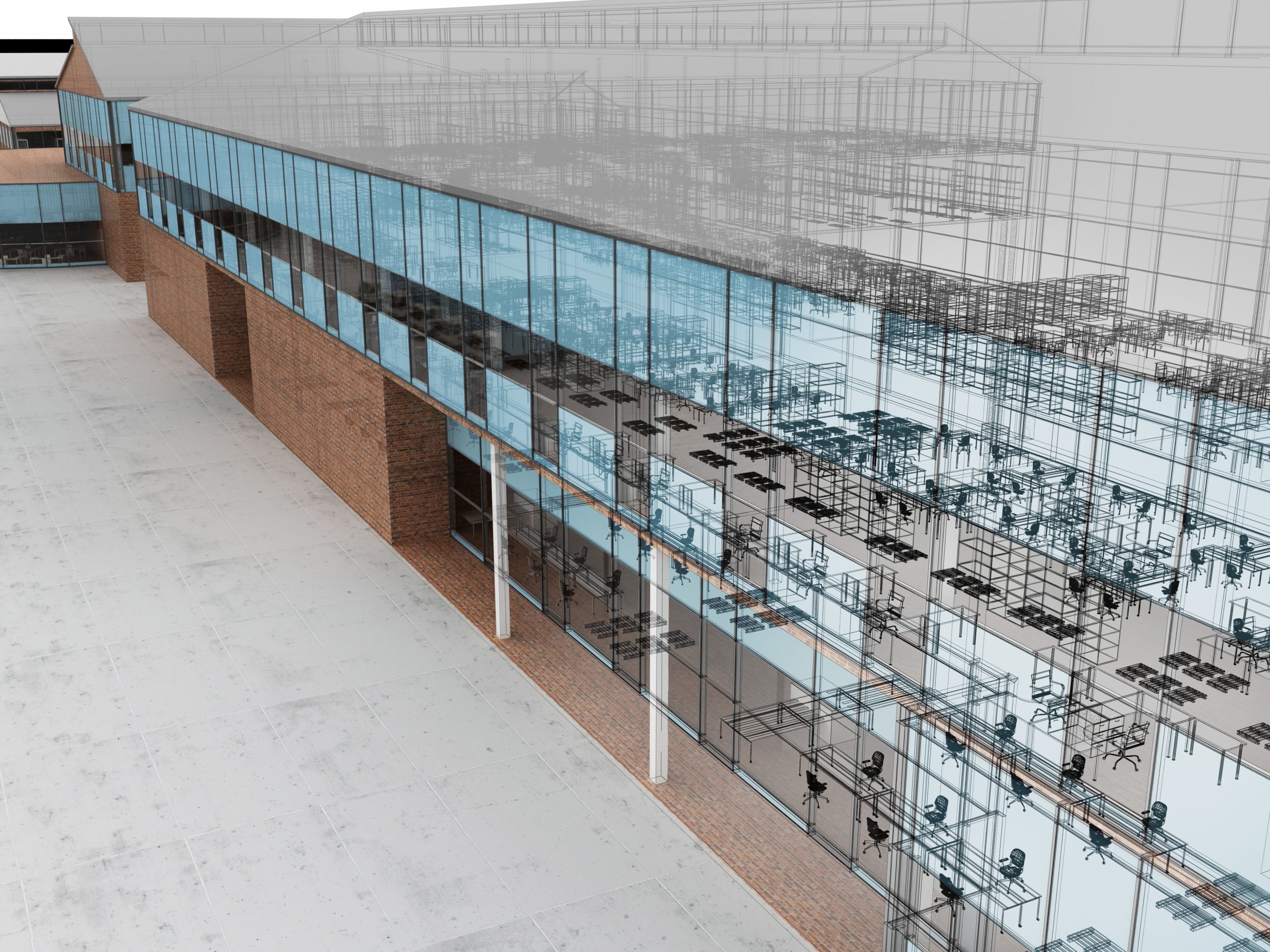
Life-Cycle Cost Analysis.
Life-Cycle Cost Analysis support in New Orleans, LA, with documented inspections, written scopes, and practical roof planning for commercial properties.
What this roof work solves
Life-Cycle Cost Analysis in New Orleans should begin with a documented roof walk. The first job is to identify active water entry, drainage problems, membrane condition, edge details, rooftop equipment conflicts, and weather exposure before a price or schedule is discussed.
For commercial owners, the useful answer is rarely a one-line recommendation. The roof file should explain the work area, the reason for the scope, the access constraints, and the next maintenance decision.
How the scope is built
The scope is tuned to owner documentation, building use, roof age, visible defects, and the cost difference between immediate repair and longer-range planning. When repair is enough, the work stays focused. When replacement or recover planning is the responsible move, the reasoning is written plainly.
Each finished project should leave behind before-and-after photos, service notes, and follow-up items so the owner keeps a record for future inspections, budgeting, and vendor conversations.
We model commercial roof systems over 30-40 year capital horizons for New Orleans buildings — installed cost, hurricane-cycle maintenance, post-storm emergency repair, warranty costs, and end-of-life replacement — so owners can compare system options on total cost of ownership rather than bid-day price.
The cheapest commercial roof on bid day in New Orleans is rarely the cheapest roof over a 30-year capital horizon — and the gap is larger here than in most US markets because the hurricane cycle adds cost events that do not appear in national reference data. A 60-mil mechanically attached TPO system at $7.25 per square foot installed might perform adequately for 15 years before the first major storm-related failure. An 80-mil fully adhered system at $8.10 per square foot installed — specified to ASCE 7 hurricane-prone-region requirements with FM-rated edge metal and reinforced parapet flashings — might run to year 22 and into a recover option. The bid-day difference on a 100,000 square foot roof is $85,000. The lifecycle difference, accounting for one major post-storm repair cycle on the mechanically attached system, could be $350,000 or more.
Life-cycle cost analysis makes this comparison explicit and documented. We model the major cost events for each system option under consideration — installation, semi-annual maintenance over the warranty term, expected post-storm emergency repair frequency based on New Orleans climate and hurricane exposure history, warranty cost including the post-storm documentation requirements specific to Gulf Coast manufacturer programs, and end-of-life replacement or recover — presented as net present value over the owner's specified planning horizon.
New Orleans commercial buildings have enough documented post-storm cost history to model with reasonable confidence. We know the post-storm emergency repair frequency on 60-mil mechanically attached TPO in the lakefront Exposure C zone because we have maintained buildings in that corridor through Zeta and Ida. We know that modified bitumen buildings rebuilt in 2008-2012 across Mid-City and Gentilly are entering their first replacement cycles in 2025-2030 at approximately $15-19 per square foot installed. That market-specific cost history produces LCC models that are more accurate than anything a national reference database generates.
Year-0 installation cost: Quoted from our scope against the same building specification for each system option. We do not use published cost reference guides — we use current New Orleans market pricing including the LSLBC-licensed contractor premium, the hurricane-season scheduling constraint for projects that span June through November, and the post-storm demand premium that applies in the 12-18 months following a major Gulf Coast event.
Annual maintenance cost: The documented maintenance cost for each system under the required manufacturer warranty maintenance program plus our observed average corrective maintenance cost per square foot per year for that system type in New Orleans subtropical and hurricane conditions. Corrective maintenance costs in this market are inflated above national averages by two factors: post-storm emergency repair frequency and the premium for rapid-response mobilization after Gulf Coast weather events.
Storm-event cost events: Based on our project history and the publicly documented post-Katrina, post-Zeta, and post-Ida repair cycles in Orleans and Jefferson parishes, we model expected capital events at each major hurricane-cycle exposure point. We apply this as a probability-weighted event, not a deterministic projection — but we use New Orleans-specific frequency and severity data, not national catastrophe averages.
Net present value: All future costs discounted at the owner's specified discount rate. New Orleans institutional owners and public entities typically use 5-7 percent discount rates for capital project LCC models. For public entities subject to Louisiana capital outlay program requirements, we can align the discount rate and horizon to the state's capital outlay planning assumptions.
System Options We Typically Compare in New Orleans
60-mil mechanically attached TPO vs. 80-mil fully adhered TPO for hurricane-prone-region buildings: The most frequent comparison request in this market. The fully adhered system has higher year-0 cost, longer warranty term (typically 25 vs. 20 years), lower average post-storm emergency repair cost due to reduced perimeter separation risk under Gulf Coast uplift conditions, and qualifies for FM approval ratings that some Louisiana commercial property insurers require for wind coverage discounts. On a 30-year LCC, the fully adhered system is often lower total cost despite the higher bid-day price — and the storm-event probability weighting is the factor that tips the comparison.
TPO vs. PVC on French Quarter and historic hospitality buildings: PVC membranes tolerate chemical exposure from kitchen exhaust systems and HVAC chemical maintenance products better than standard TPO formulations. New Orleans hospitality and restaurant buildings — particularly in the French Quarter where the Vieux Carré Commission restricts visible rooftop modifications — often have high rooftop chemical exposure from adjacent kitchen exhaust. On a 30-year LCC for a French Quarter hospitality building, PVC sometimes outperforms TPO on total cost of ownership when the higher chemical-degradation maintenance cost on TPO is included.
Modified bitumen vs. fluid-applied silicone coating on structurally sound existing systems: For buildings with dry insulation and sound deck — confirmed by core pulls — a silicone coating over an existing modified bitumen or BUR system can extend asset life 10-15 years at 30-50 percent of full replacement cost. In the New Orleans market, the LCC comparison has to account for the fact that a major storm event during the coating's service life may produce damage that requires more extensive repair than a newly installed replacement system would. We model this as a conditional branch with sensitivity analysis.
Presenting LCC Results to New Orleans Owners and Capital Committees
We format LCC results for two audiences. The facility manager gets the detailed assumption table, the sensitivity analysis, and the data behind each cost event including the storm-event probability model. The capital committee or asset manager gets a one-page summary: system options, 30-year NPV for each, the break-even horizon where higher initial spend starts returning positive NPV, and a recommendation. For public entities presenting to an elected board or a legislative oversight body, the one-page format needs to hold up to public scrutiny — we know that requirement and format accordingly.
Questions to settle early
Where is the risk?
Locate leaks, wet-insulation indicators, open seams, weak flashing, and drainage restrictions across the roof.
What can wait?
Separate immediate work from maintenance items that can be tracked for the next service window.
What should be funded?
Build a practical recommendation for repair, coating, recover, or replacement planning.
Need help with life-cycle cost analysis?
Send the building address, known roof age, access notes, and what changed. We will respond with the right next step.