
Commercial Roofing in Harahan.
Commercial Roofers New Orleans provides commercial roof inspections, repairs, maintenance, storm response, and replacement planning in Harahan, LA.
What this roof work solves
Commercial Roofing in Harahan in New Orleans should begin with a documented roof walk. The first job is to identify active water entry, drainage problems, membrane condition, edge details, rooftop equipment conflicts, and weather exposure before a price or schedule is discussed.
For commercial owners, the useful answer is rarely a one-line recommendation. The roof file should explain the work area, the reason for the scope, the access constraints, and the next maintenance decision.
How the scope is built
Harahan roof work is planned around site access, traffic, tenant schedules, drainage, and the weather exposure that shapes that corridor. When repair is enough, the work stays focused. When replacement or recover planning is the responsible move, the reasoning is written plainly.
Each finished project should leave behind before-and-after photos, service notes, and follow-up items so the owner keeps a record for future inspections, budgeting, and vendor conversations.
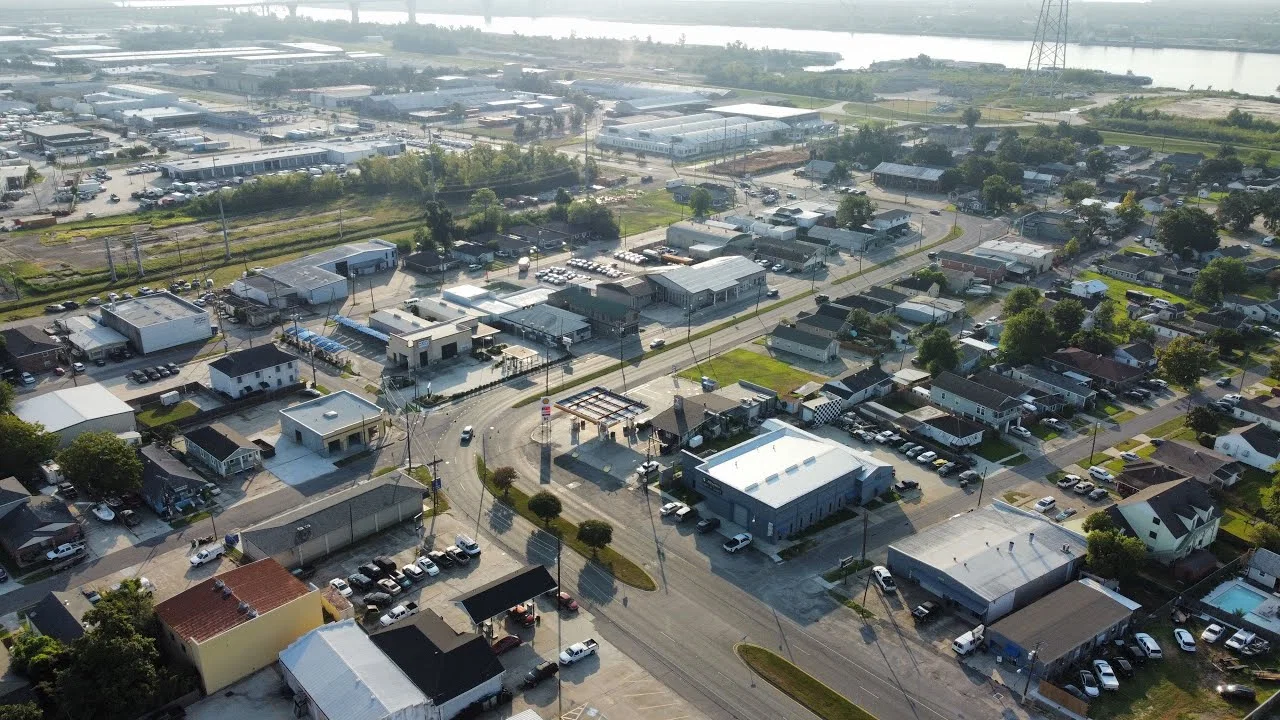
Harahan's commercial identity is defined by two anchors: the Elmwood Industrial District — one of the largest concentrated commercial and light-industrial parks in the metro — and the Causeway Boulevard commercial corridor connecting Jefferson Parish's interior to the lake. Our crews run regular routes through both.
The Elmwood Industrial District sits between Harahan and Jefferson and represents one of the highest concentrations of large-footprint commercial and light-industrial roofing in the New Orleans metro outside of the New Orleans East warehouse corridor. Distribution centers, food-service and hospitality suppliers, building-materials distributors, healthcare supply operations, and light manufacturing occupy buildings ranging from 1970s-era tilt-up concrete construction to early 2000s speculative industrial product. The roofing inventory across Elmwood is correspondingly varied — aged built-up systems on the oldest structures, mid-generation modified bitumen on 1990s construction, and first-generation TPO and EPDM on the 2000s and 2010s industrial buildings.
Large-footprint industrial buildings in Elmwood present specific considerations that smaller commercial buildings do not. Roof areas of 100,000 to 500,000 square feet require phased tear-off and dry-in sequencing that keeps the building protected regardless of what the Gulf weather pattern does during production. Drain sizing and scupper capacity on large industrial roofs matters more per square foot than on smaller commercial buildings — a ponding problem on a 300,000-square-foot distribution roof generates cumulative water weight that affects structural loading, not just membrane aging.
Elmwood Industrial District Roofing Specifics
Phased production and same-day dry-in: Large industrial buildings in Elmwood require a defined daily production plan that specifies the maximum tear-off area per day based on the number of dry-in crew members and available material. We do not open more roof area in a single day than we can close before the end of the shift — in the New Orleans metro, where afternoon thunderstorms during summer can arrive with under 30 minutes' warning, this discipline is non-negotiable for any Elmwood building with active interior operations.
Cold-storage and temperature-sensitive facilities: Several Elmwood buildings include cold-storage or temperature-controlled operations. These buildings require roofing operations that do not compromise the thermal envelope during production — section-by-section tear-off with temporary insulation protection, phased dry-in before moving to the next section, and coordination with the facility's refrigeration system operators before any roof penetration work occurs.
Wind-uplift on large industrial roofs: The open-terrain areas within and surrounding the Elmwood district elevate ASCE 7 Exposure C pressure coefficients on buildings that lack significant surrounding shelter. Large industrial roofs accumulate higher total uplift force in proportion to their area — a 200,000 square-foot roof with the same fastener density per square foot as a 50,000 square-foot building generates four times the total uplift force on its attachment system. We run full FM design software calculations for every industrial replacement in Elmwood.
Causeway Boulevard Corridor and Jefferson-Harahan Commercial Zone
Permit processing for Harahan and the Jefferson-incorporated zone runs through Jefferson Parish Department of Inspection and Code Enforcement with the same 5 to 7 business day standard timeline that applies to other Jefferson Parish commercial permits. Energy code compliance documentation and wind-uplift calculations are standard submission requirements. For industrial buildings in Elmwood, the wind-uplift calculation is the most scrutinized component of the permit package, and we prepare that documentation to match what Jefferson Parish plan examiners expect to see.
Can you handle large industrial roofs in the Elmwood District?
Yes. Large-footprint industrial roofing is a core part of our commercial work in the Jefferson Parish corridor. We run phased production plans with defined daily tear-off limits, maintain same-day dry-in discipline regardless of the production pace, and calculate wind-uplift design specific to each building's dimensions and exposure category. Cold-storage and temperature-sensitive buildings get additional dry-in protection during production.
What is your response time for Harahan commercial buildings?
Harahan and the Elmwood district are approximately CBD office, depending on I-10 traffic. Same-day emergency response is standard for all Harahan commercial buildings, including the Elmwood industrial zone. After-hours response is available for buildings on our maintenance contracts.
Do you handle buildings that span the Jefferson-Harahan municipal boundary?
Questions to settle early
Where is the risk?
Locate leaks, wet-insulation indicators, open seams, weak flashing, and drainage restrictions across the roof.
What can wait?
Separate immediate work from maintenance items that can be tracked for the next service window.
What should be funded?
Build a practical recommendation for repair, coating, recover, or replacement planning.
Need help with commercial roofing in harahan?
Send the building address, known roof age, access notes, and what changed. We will respond with the right next step.