
Commercial Roof Maintenance Contracts.
Commercial Roof Maintenance Contracts support in New Orleans, LA, with documented inspections, written scopes, and practical roof planning for commercial properties.
What this roof work solves
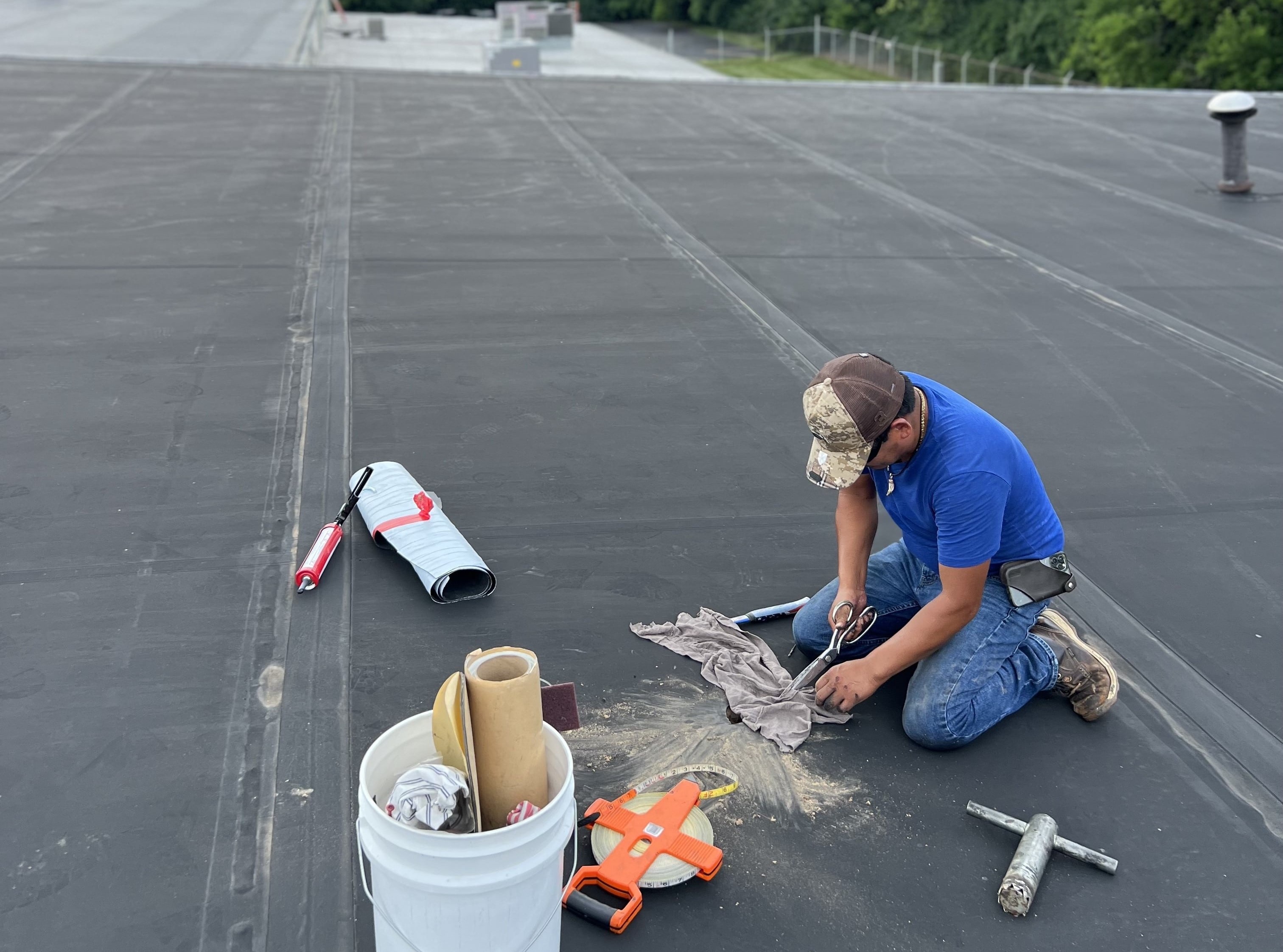
Commercial Roof Maintenance Contracts in New Orleans should begin with a documented roof walk. The first job is to identify active water entry, drainage problems, membrane condition, edge details, rooftop equipment conflicts, and weather exposure before a price or schedule is discussed.
For commercial owners, the useful answer is rarely a one-line recommendation. The roof file should explain the work area, the reason for the scope, the access constraints, and the next maintenance decision.
How the scope is built
The scope is based on service scope, building use, roof age, visible defects, and the cost difference between immediate repair and longer-range planning. When repair is enough, the work stays focused. When replacement or recover planning is the responsible move, the reasoning is written plainly.
Each finished project should leave behind before-and-after photos, service notes, and follow-up items so the owner keeps a record for future inspections, budgeting, and vendor conversations.
Semi-annual and annual maintenance programs structured around manufacturer warranty requirements and the New Orleans hurricane season calendar — documented inspections, minor repair inclusion, and the written record that survives both a warranty claim review and a Louisiana Department of Insurance wind-damage claim.
The most common reason manufacturer warranty claims get denied on New Orleans commercial buildings is not installation defect — it is missing maintenance documentation. Every 20-year NDL warranty from major manufacturers requires documented periodic inspection by a credentialed contractor. The specific interval varies: Carlisle requires semi-annual inspection on NDL policies, GAF requires annual. When a roof fails during or after a hurricane event and the building owner submits a warranty claim, the manufacturer's warranty department reviews the maintenance record. Missing documentation gives them contractual grounds to deny the claim — regardless of whether the failure was at a warranted seam or flashing.
In the New Orleans market, this documentation gap has real consequences. Post-Ida warranty denials were more common than post-storm press attention suggested, and a consistent pattern in those denials was absent or incomplete maintenance records for buildings whose roofs were otherwise properly installed. Our maintenance contracts are structured around each manufacturer's specific inspection protocol and the hurricane-season calendar specific to this market.
Most of our maintenance clients are building owners and property managers who either inherited a building with an existing manufacturer warranty they want to keep active, or who installed a new roof with us and want to protect the warranty investment through the next storm season. We also run maintenance contracts on buildings with no active warranty — because a documented inspection record still has real value for capital planning and for post-storm insurance claim support.
Field membrane: We walk the full membrane field systematically — not a spot check, not a drone fly-over without a boots-on-roof follow-up. We note and photograph every blister, seam edge lift, surface crack, and granule loss location. In New Orleans's subtropical UV environment, surface degradation on aging membranes progresses faster than in temperate markets — early identification and repair of surface checking extends membrane life and preserves coating eligibility if a future coating scope is under consideration.
Perimeter and parapet flashings: The highest-failure-rate locations on any New Orleans commercial roof. We inspect every linear foot of perimeter base flashing, through-wall counter-flashing, and edge metal for separation, open laps, and deteriorated sealant. Parapet cap condition is checked for wind-uplift risk — after Ida's 150 mph gust exposure across Jefferson Parish, we added a specific cap-fastening and parapet-to-membrane transition check to every post-storm and pre-hurricane-season inspection.
Drains, sumps, and scuppers: Every roof drain body, overflow ring, and scupper is inspected for debris blockage and proper sealing. New Orleans's organic debris load — live oak and southern magnolia leaf fall, Spanish moss, and Gulf storm-deposited material — clogs roof drains faster than in most other markets. Blocked drains on a roof that receives 60-plus inches of annual rainfall produce ponding that accelerates membrane aging at the pond perimeter. Drain clearing is included in our maintenance contracts as a standard inspection item, not a separate add-on charge.
- Membrane field — full surface walk with photo documentation at every defect location
- Perimeter flashings — every linear foot, location-keyed to roof plan
- Drain bodies, overflow rings, and scuppers — debris clearing, ring sealing, slope-to-drain verification
- Penetration boots and curb flashings — all HVAC curbs, conduit sleeves, pipe boots
- Parapet cap condition — wind-uplift risk and hurricane-season readiness
- Edge metal and perimeter restraint — clip condition, FM-rated fastener verification
Semi-Annual vs. Annual Programs — and the Hurricane-Season Calendar
Semi-annual (spring and fall): Required by Carlisle, Versico, and several other manufacturers on 20-year NDL policies. For New Orleans commercial buildings, we align the spring inspection to May — after the winter thermal cycling period and before the June 1 hurricane season open. The May inspection identifies perimeter and parapet vulnerabilities while there is still time to correct them before the first tropical development of the season. The fall inspection runs in November, after the primary hurricane season window closes and before the winter cooling season.
Annual: Accepted by GAF, Johns Manville, and most 10 to 15-year NDL warranty structures. Scheduled in May for New Orleans commercial buildings — same pre-hurricane-season logic. An October inspection is the secondary scheduling option for buildings where May conflicts with the building's operational calendar, but May is strongly preferred in this market given the stakes of entering hurricane season with unresolved perimeter vulnerabilities.
Minor Repairs Included in Maintenance Contracts
Every maintenance contract we write includes an allowance for minor repairs identified during inspection — typically $500 to $1,500 in materials and labor depending on program tier. This allowance covers drain debris clearing and re-sealing, penetration boot re-sealing, minor membrane surface repairs at isolated blister or surface-crack locations, and minor parapet sealant corrections. Any work that exceeds the allowance receives a separate written scope and your approval before we proceed.
In the New Orleans market, the value of catching minor failures at inspection scale is magnified by the speed at which small defects become large problems once tropical moisture loading begins. A parapet sealant gap that is a minor repair in May is a water-intrusion event by late July. A drain with partial debris blockage that passes flow in April is a ponding problem during a September tropical rain event at three inches per hour. The maintenance contract's minor repair allowance is designed specifically to catch these defects before the storm season converts them into emergency calls.
Questions to settle early
Where is the risk?
Locate leaks, wet-insulation indicators, open seams, weak flashing, and drainage restrictions across the roof.
What can wait?
Separate immediate work from maintenance items that can be tracked for the next service window.
What should be funded?
Build a practical recommendation for repair, coating, recover, or replacement planning.
Need help with commercial roof maintenance contracts?
Send the building address, known roof age, access notes, and what changed. We will respond with the right next step.