
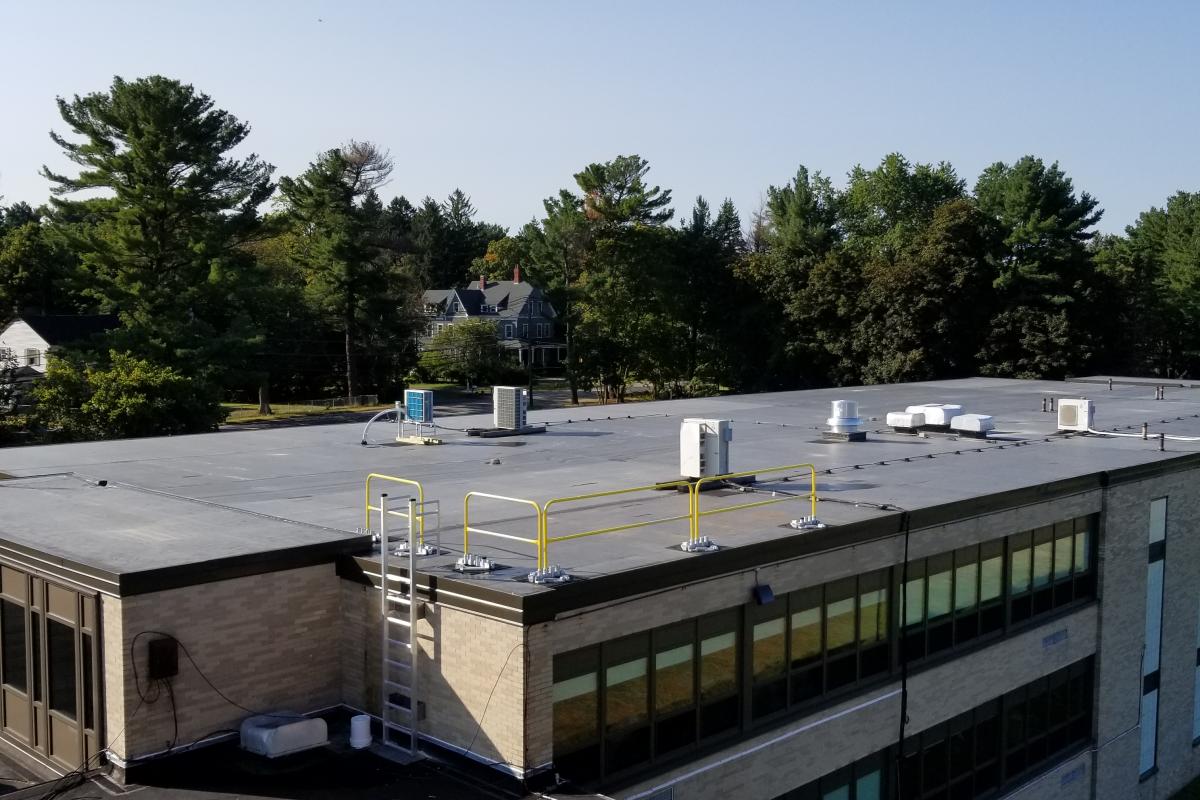
Government and Municipal Building Roofing.
Government and Municipal Building Roofing support in New Orleans, LA, with documented inspections, written scopes, and practical roof planning for commercial properties.
What this roof work solves
Government and Municipal Building Roofing in New Orleans should begin with a documented roof walk. The first job is to identify active water entry, drainage problems, membrane condition, edge details, rooftop equipment conflicts, and weather exposure before a price or schedule is discussed.
For commercial owners, the useful answer is rarely a one-line recommendation. The roof file should explain the work area, the reason for the scope, the access constraints, and the next maintenance decision.
How the scope is built
The scope is based on service scope, building use, roof age, visible defects, and the cost difference between immediate repair and longer-range planning. When repair is enough, the work stays focused. When replacement or recover planning is the responsible move, the reasoning is written plainly.
Each finished project should leave behind before-and-after photos, service notes, and follow-up items so the owner keeps a record for future inspections, budgeting, and vendor conversations.
Commercial roofing for city halls, courthouses, fire stations, police stations, and public facilities throughout New Orleans, LA.
New Orleans public buildings operate in one of the most climatically punishing environments in North America, and the city's experience with catastrophic storm damage has permanently shaped how municipal facility roofing is specified and procured. The Orleans Parish Criminal District Court on Tulane Avenue, the City Hall building on Perdido Street, the New Orleans Public Library's central branch at , and the dozens of NOFD fire stations distributed across the city's unique urban geography all need roofing systems engineered for sustained heat, extraordinary humidity, relentless UV exposure, and the wind uplift demands of a city that has twice been reshaped by major hurricanes in the past twenty years.
The City of New Orleans Procurement Department manages competitive solicitations for public facility work under Louisiana's Public Bid Law. Projects above the formal threshold require advertisement in the official journal of the city, which is the Times-Picayune and The Advocate, for a minimum period before bid opening. All bids are opened publicly and bid tabulations are made available as public records. Louisiana requires that contractors hold a valid state contractor's license issued by the Louisiana State Licensing Board for Contractors in the appropriate classification before bidding any public works project. Roofing specialty contractors may need licensure under the commercial specialty or home improvement subclass depending on project scope, and the LSLBC enforces these requirements aggressively.
Hurricane wind uplift engineering is the defining technical requirement for New Orleans public facility roofing. The city falls within ASCE 7's highest design wind speed zones for the continental United States, and roofing systems must be designed and tested to resist the uplift pressures generated by 150-plus miles-per-hour design wind speeds. This means fully adhered membrane systems with enhanced perimeter and corner fastening, factory-Mutual-rated assemblies tested to the actual design pressures, and edge metal systems that meet ANSI/SPRI ES-1 wind design criteria. FM Global approvals are increasingly mandatory in New Orleans public facility specifications, and contractors must install these systems in strict accordance with FM installation requirements to preserve their uplift rating.
FEMA Public Assistance has financed a substantial share of New Orleans' post-Katrina and post-Ida municipal building reconstruction, and this federal funding continues to flow into roofing replacements on facilities damaged by successive storm events. FEMA PA projects carry full Davis-Bacon prevailing wage requirements, and the documentation load is substantial. Contractors on FEMA-funded roofing work must submit weekly certified payrolls, maintain records adequate for federal audit, and comply with procurement integrity requirements that limit the use of sole-source justifications and restrict change order processes. The FEMA compliance infrastructure is demanding but familiar to established New Orleans contractors who have worked through the city's post-disaster rebuilding cycles.
The historic character of New Orleans' civic buildings creates preservation compliance requirements that parallel the technical and procurement demands of these projects. City Hall, completed in 1957, is a midcentury modern landmark. Older neighborhood fire stations in the Garden District, Uptown, and Tremé reflect early-twentieth-century civic architecture. Projects on historically significant public buildings require coordination with the Louisiana Division of Historic Preservation under the Section 106 process when federal funding is involved, and with the New Orleans Historic District Landmarks Commission for work on buildings within designated districts. Roofing replacement methods must be designed to avoid adverse effects on character-defining features, which on many older New Orleans public buildings includes decorative cornices, original copper flashings, and slate or clay tile roof coverings on visible secondary roofs.
Energy performance is an increasingly prominent element of New Orleans public facility roofing specifications. Louisiana's energy code requires minimum solar reflectance index values for low-slope roofing on new and substantially renovated public buildings, and the city's own sustainability framework, supported in part by Bloomberg Philanthropies funding through the Office of Resilience and Sustainability, encourages facilities to exceed code minimums. White TPO and PVC membrane systems are specified on most of the city's flat-roof public buildings because they meaningfully reduce the urban heat island effect and cut cooling loads in a city where air conditioning operates essentially year-round. Green roof assemblies have also been incorporated on several New Orleans public buildings as part of stormwater management programs tied to the Sewerage and Water Board's drainage improvements.
Louisiana's Little Miller Act governs bonding on public construction contracts. Performance bonds and payment bonds, each at 100 percent of the contract price, are required on all public works contracts over $25,000. Bid bonds of five percent of the bid price must be submitted with competitive bids. Louisiana also requires that performance and payment bonds be filed with the clerk of court for the parish in which the work is performed, creating a public record of the bonding obligation. This filing requirement is specific to Louisiana and unfamiliar to out-of-state contractors who have not previously worked in the state's public procurement environment.
New Orleans Police Department facilities, including the headquarters on South Broad Street and the district stations serving the First through Eighth Districts, present project management challenges beyond the technical roofing work. Security credentialing for contractor personnel, restrictions on photography near sensitive infrastructure, and coordination with the NOPD facility manager for access scheduling are all standard project requirements. Contractors new to police facility work in New Orleans should plan four to six weeks for personnel credentialing and incorporate security coordination meetings into their project schedules. These requirements are typically documented in the special conditions section of the bid documents.
Long-term warranty performance is a priority concern for New Orleans public clients who have learned from experience that post-storm warranty claims can be contested by manufacturers citing inadequate installation documentation. Specifications for major municipal roofing projects now routinely require that the manufacturer's technical representative conduct a pre-installation meeting, mid-project inspection, and final warranty inspection, with written reports submitted to the city at each stage. These oversight requirements protect both the public agency and the contractor by creating a documented installation record that supports warranty claims if storm damage occurs during the coverage period.
Can you repair a leaking BUR roof on a New Orleans building without full replacement?
Sometimes. If the leak source is an isolated failed flashing at a penetration or parapet — and core cuts show the BUR field plies are otherwise dry and intact — targeted repair is the appropriate scope. If the leak is coming from degraded plies in the roof field, patching the visible wet spot without addressing the ply failure produces another leak nearby within a season or two. In a market where the next tropical rain event may arrive before the targeted repair has time to prove out, that distinction matters more than it does in other markets. We tell you which situation you are in before we propose a scope.
How do you manage gravel removal during BUR tear-off in a dense urban New Orleans location?
Gravel-surfaced BUR tear-off is labor-intensive and generates significant debris volume. On CBD, French Quarter, and Warehouse District buildings with constrained street access, we use rooftop vacuum systems that collect the gravel without staging loose aggregate at the curb. Street-use permits for dumpster placement in the French Quarter and the Downtown Development District require advance coordination with the City of New Orleans — we handle that permitting before mobilization.
Questions to settle early
Where is the risk?
Locate leaks, wet-insulation indicators, open seams, weak flashing, and drainage restrictions across the roof.
What can wait?
Separate immediate work from maintenance items that can be tracked for the next service window.
What should be funded?
Build a practical recommendation for repair, coating, recover, or replacement planning.
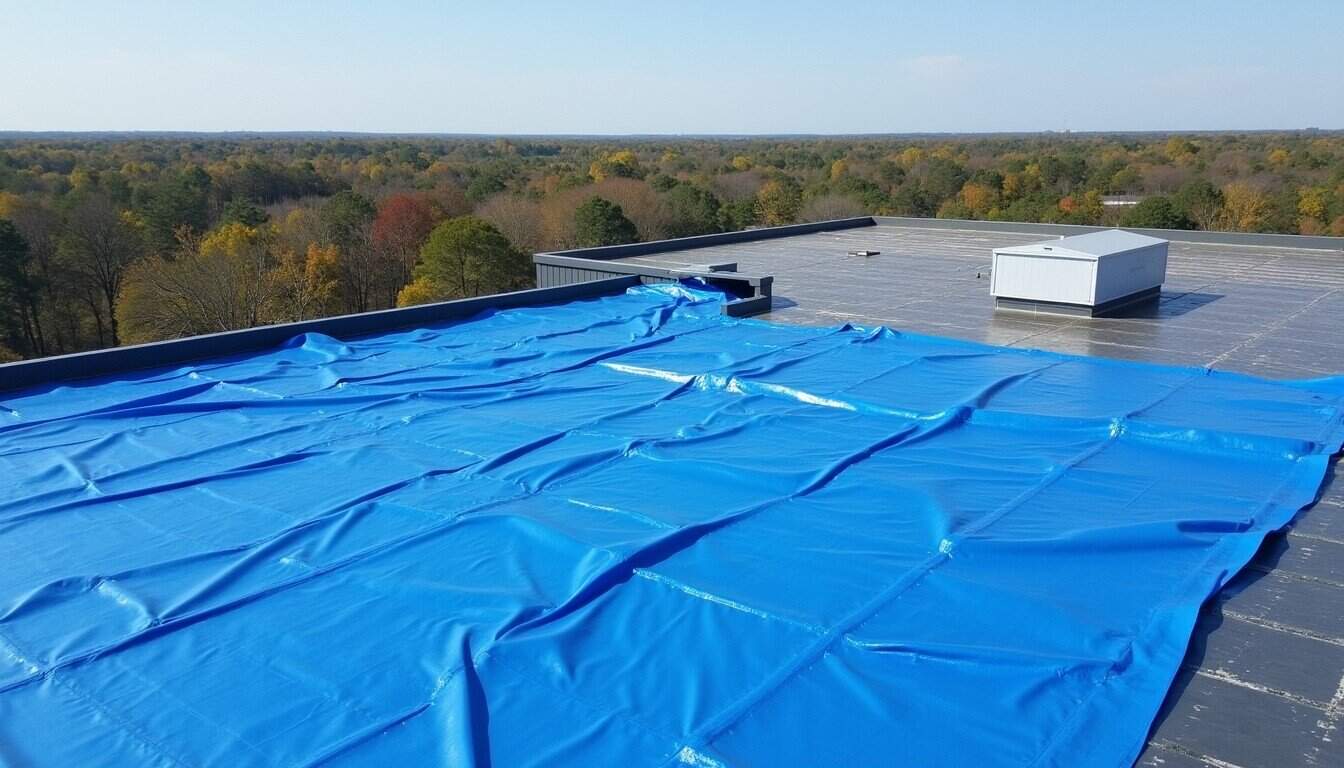
Need help with government and municipal building roofing?
Send the building address, known roof age, access notes, and what changed. We will respond with the right next step.