
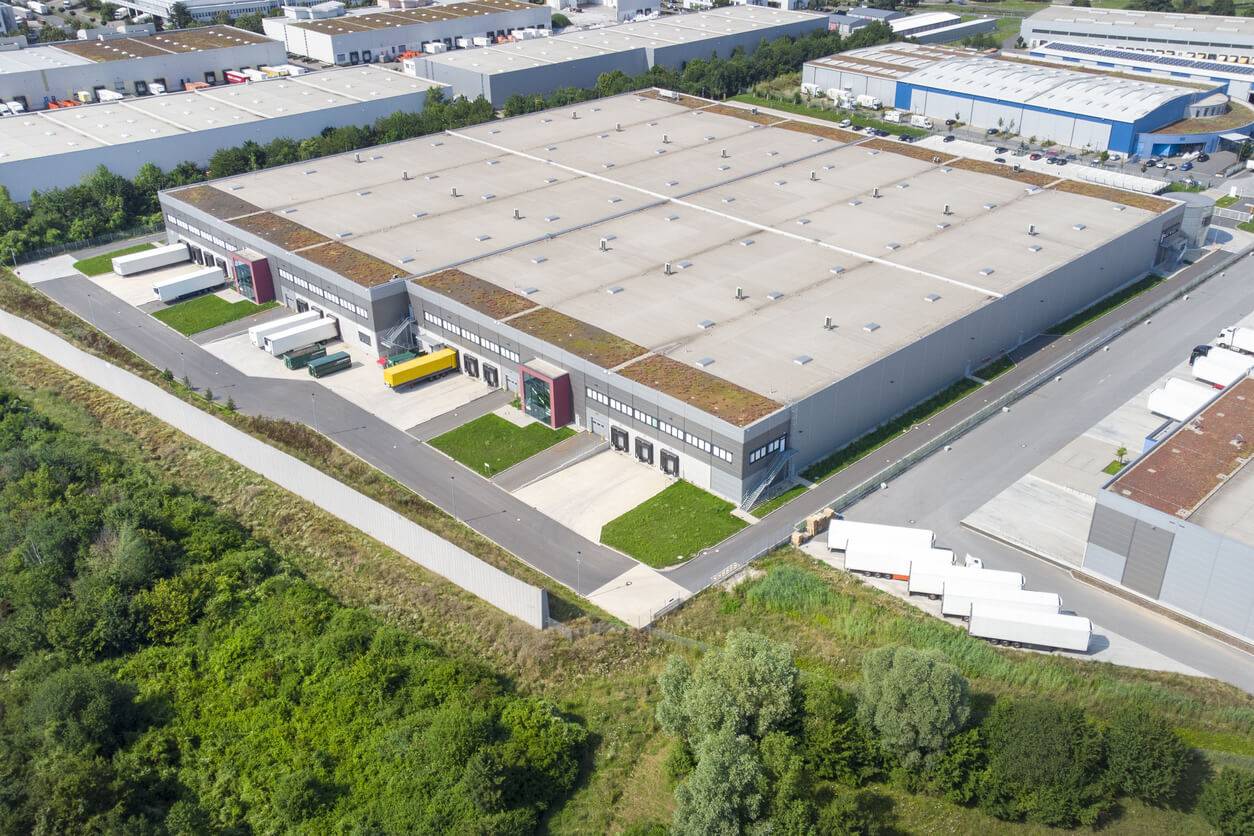
Industrial Roofing.
Industrial Roofing support in New Orleans, LA, with documented inspections, written scopes, and practical roof planning for commercial properties.
What this roof work solves
Industrial Roofing in New Orleans should begin with a documented roof walk. The first job is to identify active water entry, drainage problems, membrane condition, edge details, rooftop equipment conflicts, and weather exposure before a price or schedule is discussed.
For commercial owners, the useful answer is rarely a one-line recommendation. The roof file should explain the work area, the reason for the scope, the access constraints, and the next maintenance decision.
How the scope is built
The scope is based on service scope, building use, roof age, visible defects, and the cost difference between immediate repair and longer-range planning. When repair is enough, the work stays focused. When replacement or recover planning is the responsible move, the reasoning is written plainly.
Each finished project should leave behind before-and-after photos, service notes, and follow-up items so the owner keeps a record for future inspections, budgeting, and vendor conversations.
Industrial Roofing for manufacturing facilities, warehouses, and industrial buildings throughout New Orleans area.
The Port of New Orleans handles more than 53 million tons of cargo annually, anchoring a Mississippi River industrial corridor that runs from the Crescent City Connection upriver through Baton Rouge, Convent, and beyond — one of the most concentrated stretches of heavy industrial real estate in North America. The roofing challenges along this corridor are substantial and specific: 62 inches of annual rainfall, hurricane exposure that includes Katrina's catastrophic 2005 landfall and Ida's direct hit in 2021, no freeze cycles but extreme summer heat and UV loading, and the subsidence phenomenon that is unique to southeast Louisiana — buildings in the New Orleans metro area can settle differentially as the ground beneath them compresses, creating slope and drainage changes on what was once a properly designed flat roof. We've been doing industrial roofing in this environment long enough to understand every one of those factors and how they interact.
Katrina and Ida didn't just cause damage — they created a generational reset of industrial roofing standards in the metro. After Katrina, buildings that had been maintained to minimum standards were replaced or rebuilt to current code requirements. After Ida, a second round of buildings that had been repaired post-Katrina but hadn't been upgraded to post-Katrina code showed their vulnerabilities again. The pattern is clear: industrial buildings on the Mississippi River industrial corridor and in the broader metro that survive major hurricanes with minimal damage have one thing in common — properly designed and maintained roofing systems installed to wind uplift requirements that account for the actual wind exposure of a Louisiana Gulf Coast hurricane landfall. We don't sell roofing systems at the minimum code threshold in this market. The next major storm is not a hypothetical in New Orleans.
Michoud Assembly Facility in New Orleans East is one of the most significant aerospace manufacturing operations in the country — it builds the core stage of NASA's Space Launch System rocket and has housed production of the Saturn V, Space Shuttle external tank, and other major aerospace programs over its history. The facility is a large campus of manufacturing, assembly, and support buildings operated under a combination of NASA and Boeing facility management protocols. Contractor work on Michoud involves NASA facility access controls, safety management systems calibrated to the sensitivity of active aerospace manufacturing, and building envelope requirements driven by the precision manufacturing and clean room environments inside. We've worked on government-owned, contractor-operated aerospace facility roofing in the Gulf South and understand the documentation, compliance, and coordination environment that comes with it.
Port Fourchon, Louisiana's offshore oil and gas service hub on the Gulf of Mexico, is the logistics gateway for a large portion of US offshore production. The industrial facilities at Port Fourchon — marine supply bases, equipment fabrication yards, crew change facilities, fuel depots, and equipment storage buildings — operate in perhaps the most extreme coastal roofing environment in the continental United States: direct Gulf exposure, Category 5 hurricane risk, salt air at maximum concentration from direct oceanfront positioning, and the subsidence environment of coastal Louisiana that is even more severe than the New Orleans metro. We have experience on Port Fourchon industrial facilities and treat every project there as a coastal extreme environment specification with no concessions to cost reduction at the expense of performance.
Subsidence is the roofing consideration unique to southeast Louisiana that contractors from other markets frequently fail to account for. The deltaic soils beneath New Orleans and the surrounding areas compress gradually and unevenly as organic material decompresses and water drains. A flat roof that was properly sloped to drains when installed may develop low spots and ponding areas years later as the building settles. The correct response is not simply to call it a maintenance problem — it's to assess whether the drainage system can be modified to restore positive drainage within the settled geometry. Tapered insulation systems during reroof are our standard approach to resetting positive drainage on settled New Orleans industrial buildings, and we design the taper to account for not just current settlement but projected additional settlement over the new roof system's service life.
The Avondale industrial shipyard legacy and the associated heavy industrial on the Jefferson Parish riverfront represent an older industrial building stock — some structures from the 1940s through 1970s — that has accumulated layers of roofing history. These buildings often have coal tar pitch or asphalt BUR systems under one or more layers of modified bitumen or single-ply overlay that have been applied over decades of incremental reroof decisions. The cumulative dead load of these assemblies can be substantial, and the condition of the layers below the most recent membrane is often unknown without invasive investigation. We conduct core sampling on every complex-history industrial building before recommending a reroof approach, because the right answer depends on knowing what's actually underneath the current surface, not assuming it.
The I-10 industrial spine from the Causeway corridor through Metairie and into New Orleans proper, and extending east through New Orleans East toward Slidell, carries a mix of light industrial, distribution, and commercial service buildings that represent the everyday industrial roofing market in the metro. These buildings face the same hurricane exposure and high-rainfall environment as the heavy port industrial, but they're typically smaller-scale facilities with TPO or modified bitumen systems that need regular maintenance and periodic replacement on 15 to 20 year cycles. Post-Ida, we saw a surge of industrial building owners who had been deferring maintenance decisions and suddenly found themselves with storm-damaged systems that needed immediate response. The lesson hasn't worn off — many of those same owners are now on maintenance programs with us specifically to avoid a repeat of that emergency situation.
Industrial roofing in New Orleans requires contractors who understand Louisiana contractor licensing requirements, the specific permit and inspection processes of Orleans, Jefferson, St. Bernard, and Plaquemines parishes, and the relationship between roofing system design and the insurance market. Louisiana property insurance has become extremely challenging to obtain and maintain in recent years, and insurers are increasingly applying detailed inspections and condition requirements to industrial properties as a precondition for coverage. A professional roof inspection report from a licensed roofing contractor is now a standard insurance underwriting requirement for many industrial property owners in the metro, and having that documentation current — not just at renewal time but as ongoing evidence of maintenance compliance — is part of the insurance risk management picture for industrial property owners here.
We work across the full New Orleans industrial market: Port of New Orleans terminal facilities, the Mississippi River industrial corridor, New Orleans East industrial, the Avondale and Jefferson Parish riverfront, Michoud and aerospace, and the coastal industrial at Port Fourchon. New Orleans industrial roofing demands contractors who know the climate, the regulatory environment, the insurance context, and the subsidence factor that is unique to this place. We know all of it, and we're ready to demonstrate that on your project.
Subsidence in the New Orleans metro area causes flat roof decks to develop low spots and reverse slopes as the building settles differentially over time. Water that pooled in these areas may have accelerated membrane degradation and potentially caused insulation saturation in the low zones. During reroof, we address subsidence-related drainage problems by installing tapered polyisocyanurate insulation above the existing deck, designed to restore positive slope to drain points. The taper design should account not just for current settlement geometry but for projected additional settlement — typically 0.5 to 1 inch per decade in many New Orleans area soils — so the new system maintains positive drainage for most of its service life. Core sampling at the lowest points is essential before specifying the taper design, because wet insulation in the existing system must be removed and replaced rather than built over with new insulation.
Louisiana's coastal industrial buildings should be specified to FM 1-120 or FM 1-150 wind uplift ratings minimum, and in direct coastal areas like Port Fourchon, FM 1-180 or higher is warranted. FM 1-90, which is acceptable in many inland markets, is not adequate for a Gulf Coast facility that will face a major hurricane during its roof system service life — the historical landfall record in Louisiana makes that probability effectively certain over a 20-year system life. The uplift specification must be applied not just to the membrane-to-insulation attachment but to the insulation-to-deck attachment, the deck-to-structural-member connection, and the edge metal and perimeter termination details. The perimeter zone typically requires fastener spacing at two to three times the density of the field, and corner zones require even higher density. We design to the complete system, not just the membrane layer.
Active port cargo facility roofing work requires coordination with port terminal operations management, typically the stevedore company or terminal operator, to phase roofing work around vessel calls and cargo handling schedules. Crane work must be coordinated to avoid conflicts with container cranes and ship gear operating in adjacent berths. Materials staging on port property is subject to port security protocols and must clear the travel paths of cargo handling equipment. Workers on port property require TWIC (Transportation Worker Identification Credential) cards, and we maintain a workforce with current TWIC credentials for all port-adjacent project work in the New Orleans area. The phasing of roofing work on active cargo facilities generally requires a daily coordination call with terminal operations to confirm the next day's work area clearance, and every evening the roof is in a watertight condition before crew departure regardless of scheduled reopening the following day.
New Orleans's consistently high humidity — often 80 to 90 percent relative humidity during the summer construction season — affects roofing material storage and application in several ways. Polyisocyanurate insulation boards absorb moisture from the atmosphere when stored in open conditions and should be kept covered and elevated from the deck or ground until installation. Modified bitumen rolls should be stored under cover and not left on an open roof overnight in humid conditions because moisture absorption affects adhesion in self-adhered systems. Some water-based adhesive formulations used in fully adhered systems have minimum ambient temperature and maximum humidity application limits — in New Orleans summer conditions, these limits are regularly approached, and substituting solvent-based adhesives with appropriate VOC permitting may be required to maintain adhesion quality. We monitor ambient conditions during installation and maintain weather station data as part of our quality documentation on New Orleans industrial projects.
Questions to settle early
Where is the risk?
Locate leaks, wet-insulation indicators, open seams, weak flashing, and drainage restrictions across the roof.
What can wait?
Separate immediate work from maintenance items that can be tracked for the next service window.
What should be funded?
Build a practical recommendation for repair, coating, recover, or replacement planning.
Need help with industrial roofing?
Send the building address, known roof age, access notes, and what changed. We will respond with the right next step.