
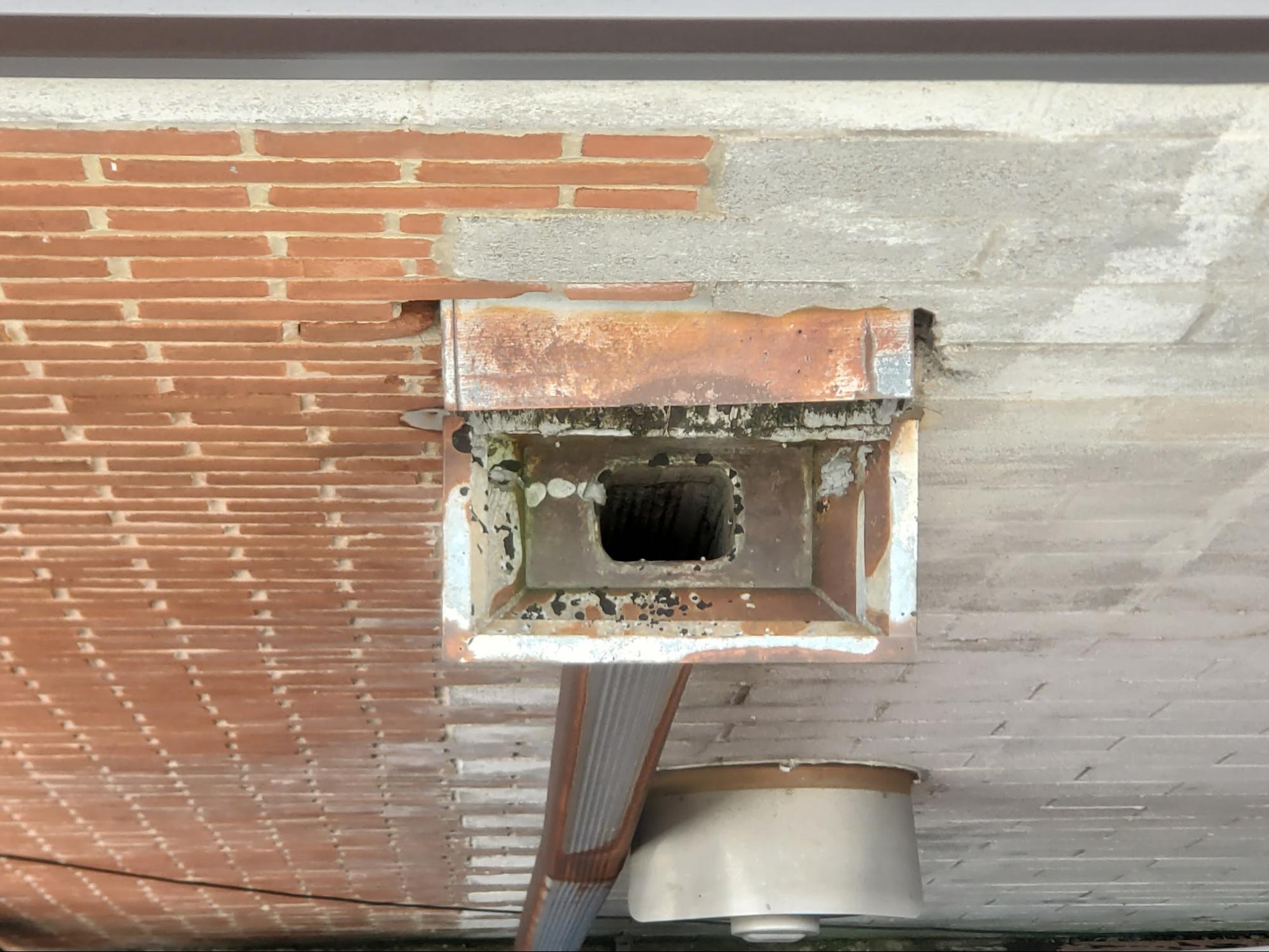
Roof Drain Cleaning and Repair.
Roof Drain Cleaning and Repair support in New Orleans, LA, with documented inspections, written scopes, and practical roof planning for commercial properties.
What this roof work solves
Roof Drain Cleaning and Repair in New Orleans should begin with a documented roof walk. The first job is to identify active water entry, drainage problems, membrane condition, edge details, rooftop equipment conflicts, and weather exposure before a price or schedule is discussed.
For commercial owners, the useful answer is rarely a one-line recommendation. The roof file should explain the work area, the reason for the scope, the access constraints, and the next maintenance decision.
How the scope is built
The scope is based on service scope, building use, roof age, visible defects, and the cost difference between immediate repair and longer-range planning. When repair is enough, the work stays focused. When replacement or recover planning is the responsible move, the reasoning is written plainly.
Each finished project should leave behind before-and-after photos, service notes, and follow-up items so the owner keeps a record for future inspections, budgeting, and vendor conversations.
In a city that receives over 60 inches of rain per year and experiences tropical rainfall events at intensities above three inches per hour, a blocked commercial roof drain is not a maintenance inconvenience — it is an interior water claim waiting to occur. Pre-hurricane-season drain cleaning is one of the highest-return maintenance investments a New Orleans building owner can make.
New Orleans commercial roofs drain more water in a single month of hurricane season than many US cities drain in a full year. The combination of annual rainfall above 60 inches, tropical storm events that deliver three to five inches in a matter of hours, and the Sewerage and Water Board's drainage infrastructure that runs at capacity during peak storm events means that every commercial roof drain in this market is under real performance pressure multiple times per year. A drain that handles routine rainfall adequately can fail completely under the combined load of a major tropical rain event — and on a large commercial flat roof, that failure produces ponding that stresses the membrane, loads the structure, and finds its way through the assembly.
The seasonal maintenance window for drain cleaning in New Orleans is April and May — before the June 1 official hurricane season start. This timing is not arbitrary. Debris accumulated over the fall and winter, combined with organic material from spring growth and pollen season, creates drain blockages that may not prevent drainage under ordinary spring rainfall but will fail under tropical-intensity rain rates. Pre-season drain cleaning in May means every drain on the roof is verified and flowing before the first significant storm event of the season.
We clean, repair, and replace drains across the full range of internal drain components used on New Orleans commercial buildings. The most common manufacturers in the local inventory are Zurn (current standard specification), Josam (widely used on pre-Katrina institutional and government construction), and Wade (common on mid-century commercial buildings in the CBD and warehouse districts). We stock replacement bowls, clamping rings, strainers, and body extensions for all three.
A pre-season drain service covers every drain on the roof: strainer removal, bowl clearing of accumulated debris and sediment, clamping ring inspection and tightening where loose, bowl bowl-seating verification, and a flow test with a garden hose to confirm the leader is accepting water flow. The service visit produces a written record of each drain's condition — bowl condition, clamping ring status, any obstructions found, and any drains that show physical damage or corrosion that requires repair or replacement rather than just cleaning.
Scuppers receive attention on every pre-season service visit as well. Scuppers — the through-wall overflow openings designed to provide secondary drainage when primary drains are overloaded — accumulate debris, bird nesting material, and corroded metal liner sections between service visits. A scupper that cannot function during a tropical storm event provides no protection when the primary drain is overwhelmed by rainfall intensity. We clear every scupper to the full-open dimension and document the liner condition at each one.
Buildings in the French Quarter and along the historic commercial corridors often have older drainage systems with cast iron components that require careful inspection. Cast iron drain bodies from pre-1980 installations may be corroded through at the clamping ring seat or at the bowl-to-leader connection — conditions that visual inspection from the surface does not always reveal. We probe drain bodies for structural integrity during cleaning visits and flag any that warrant further camera inspection of the leader.
A drain bowl that has corroded through at the clamping ring seat or separated at the leader connection cannot be repaired by tightening or re-sealing. The bowl must be extracted, the leader connection inspected, and a new drain body installed with a full membrane flashing integration. We core through the roofing system, extract the failed component, verify the leader condition at the connection point by camera where the condition is uncertain, install the replacement bowl with a compatible flashing ring, and integrate the new bowl into the existing membrane system using the manufacturer's specified flashing detail.
Leader connection failures — drain bodies that have separated at the hub joint from the drain leader — produce water that exits into the ceiling plenum rather than the storm system. These conditions mimic roof membrane leaks at the interior: the water appears below the drain location, the facility manager reports a roof leak, and a contractor who does not pull the drain cover may patch membrane without finding the actual source. We scope the drain leader on every leak diagnostic where the interior evidence is consistent with a drain location.
Emergency drain replacement on occupied New Orleans commercial buildings — CBD towers, occupied medical-office facilities on the Veterans Boulevard corridor, active retail buildings in the Warehouse District — requires temporary bypass drainage while the new bowl cures into the system. We sequence drain replacement work around weather forecasts and maintain temporary drainage provisions so the building is not left with a blocked drain opening during active production.
Ponding deeper than one inch remaining 48 hours after a rain event is a code violation under most building code editions adopted in Louisiana, and it is a practical problem that accelerates membrane aging faster in New Orleans's climate than in most other US cities. Standing water in subtropical heat and high humidity promotes algae growth that retains moisture against the membrane surface, stresses seams through repeated wet-dry cycling, and concentrates structural load at the low point.
We address ponding at the source rather than treating the symptom. If the drain is functioning and the ponding results from insufficient roof slope, the correct solution is a tapered insulation fill that directs water to the drain. If the drain has settled or shifted so that the drain bowl is no longer at the actual roof low point, we either reposition the drain or install a secondary drain at the current low point. We do not recommend pump solutions for chronic ponding — a pump is a maintenance dependency that fails at the worst time.
Tapered insulation designs for New Orleans commercial roof ponding corrections are engineered against actual elevation surveys of the ponded area, not estimated against the design drawings. We use a laser level to map the low-point contour before specifying the taper package. This matters in New Orleans because many commercial buildings have experienced structural settlement over their service life that has altered their actual roof geometry from the original construction documents.
How often should New Orleans commercial roof drains be cleaned?
Questions to settle early
Where is the risk?
Locate leaks, wet-insulation indicators, open seams, weak flashing, and drainage restrictions across the roof.
What can wait?
Separate immediate work from maintenance items that can be tracked for the next service window.
What should be funded?
Build a practical recommendation for repair, coating, recover, or replacement planning.
Need help with roof drain cleaning and repair?
Send the building address, known roof age, access notes, and what changed. We will respond with the right next step.