
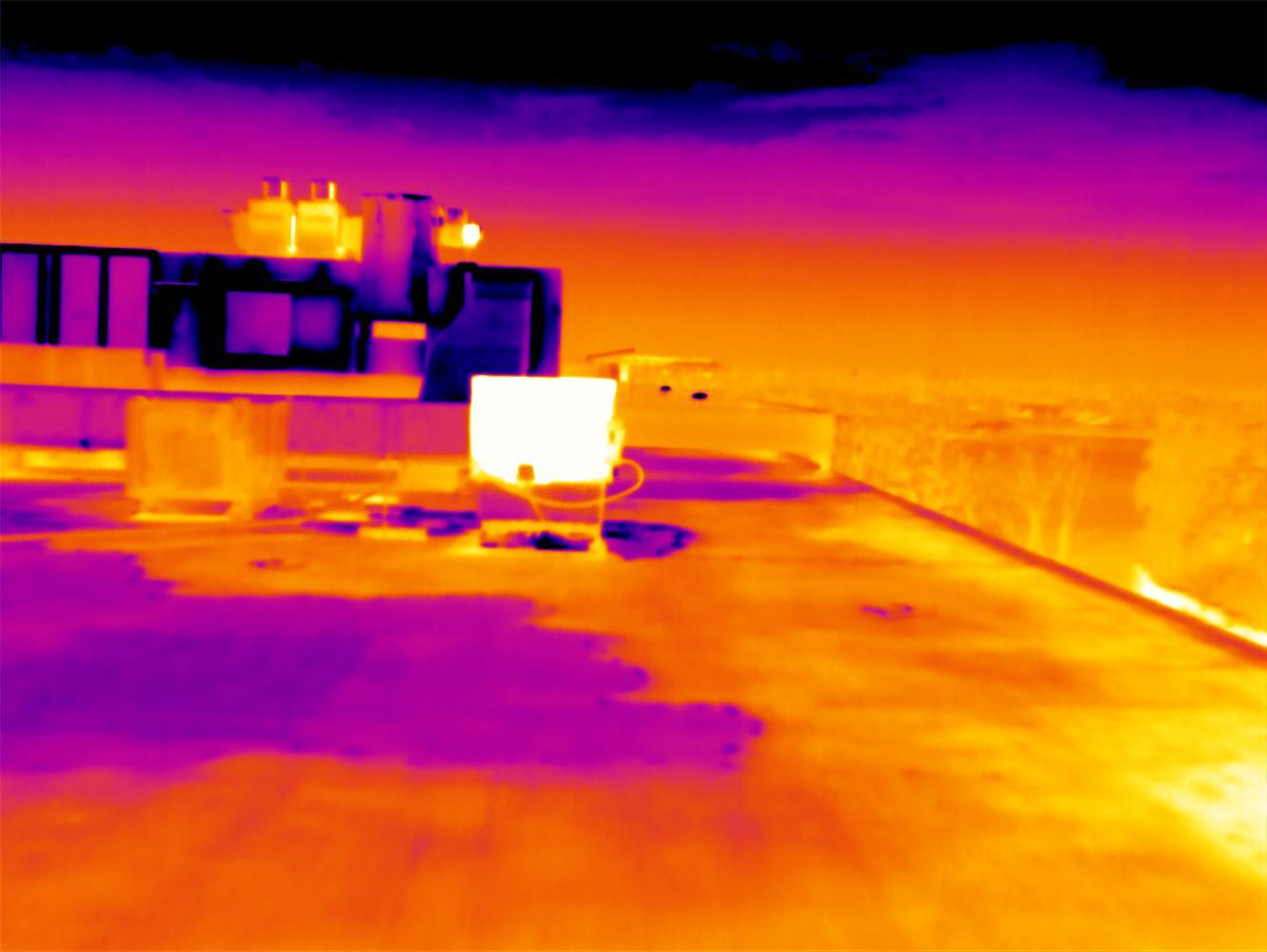
Infrared Moisture Scanning.
Infrared Moisture Scanning support in New Orleans, LA, with documented inspections, written scopes, and practical roof planning for commercial properties.
What this roof work solves
Infrared Moisture Scanning in New Orleans should begin with a documented roof walk. The first job is to identify active water entry, drainage problems, membrane condition, edge details, rooftop equipment conflicts, and weather exposure before a price or schedule is discussed.
For commercial owners, the useful answer is rarely a one-line recommendation. The roof file should explain the work area, the reason for the scope, the access constraints, and the next maintenance decision.
How the scope is built
The scope is based on service scope, building use, roof age, visible defects, and the cost difference between immediate repair and longer-range planning. When repair is enough, the work stays focused. When replacement or recover planning is the responsible move, the reasoning is written plainly.
Each finished project should leave behind before-and-after photos, service notes, and follow-up items so the owner keeps a record for future inspections, budgeting, and vendor conversations.
Saturated insulation under a TPO or modified bitumen membrane is invisible from a roof walk. An infrared scan maps the moisture boundary before you open the roof — so the tear-off scope matches the actual wet area, not the estimated one.
New Orleans commercial roofs accumulate saturated insulation faster than roofs in most other US markets. Annual rainfall above 60 inches, high ambient humidity that prevents drying between rain events, and recurring storm-season moisture loading mean that a single undetected seam failure or flashing separation can wet a substantial insulation area before the first ceiling stain appears. By the time a facility manager calls about a leak, the moisture boundary is often well beyond the visible source.
Infrared thermography identifies where to open the roof before the tear-off begins. The technique works on the differential heat retention of wet and dry insulation: the sun loads the roof surface during the day, wet insulation retains that heat longer than dry insulation as the surface cools after sunset, and the thermal camera reads the wet zones as warm anomalies against the cooler dry field. The result is a moisture boundary map that guides core sampling and — on roofs with a sufficient proportion of dry insulation — drives the recover-versus-replace decision.
In this market, the recover-versus-replace decision has a higher financial consequence than in most other cities. Full replacement of a properly specified hurricane-prone-region roof — full-adhered membrane, tapered insulation, FM-rated edge metal — is a significant capital commitment. An infrared scan and core sampling program that confirms 70 percent of the existing insulation is dry and recoverable can redirect a replacement budget into a recover project and a wind-uplift upgrade, which is often the right allocation for a building whose primary risk exposure is storm, not just membrane age.
When Infrared Scanning Is Appropriate in This Market
Pre-recover decision: Before committing to a recover versus full replacement on any aging New Orleans commercial roof, an infrared scan establishes how much of the existing insulation is dry. If the wet area is below 25 percent of the total roof area, a recover with targeted insulation replacement in the wet zones is typically the right scope. If it is above 25 percent — and in this market, post-storm inspections frequently reveal wet fractions of 35 to 50 percent on older buildings — full replacement with a clean insulation deck is the honest call. Recovering over saturated polyiso in 80 percent humidity traps moisture, accelerates deck corrosion, and voids the new manufacturer warranty.
Post-storm damage documentation: After a tropical weather event, infrared scanning documents moisture entry that may not have caused visible interior damage yet. Membrane compromise from debris impact or sustained wind-driven rain infiltration creates wet insulation zones that will produce ceiling damage during the next ordinary rainstorm if not addressed. We have conducted post-storm infrared scans on buildings across the New Orleans metro following multiple storm events — the scan report, combined with the core log, provides the insurance-grade moisture boundary documentation that adjusters require to scope the recovery.
Pre-sale or pre-refinancing documentation: Commercial property transactions in the New Orleans market increasingly include infrared moisture scan reports as part of roof due diligence. A signed, dated scan with a written moisture boundary summary and a core log gives buyers and lenders an objective basis for the roof's condition — more reliable than a visual inspection alone, particularly on buildings with complex repair histories.
Recurring leak investigation: On buildings where a leak has been repaired multiple times without permanent resolution, an infrared scan frequently reveals that the active moisture in the insulation extends far beyond the area that was repaired. Lateral migration through saturated insulation is a common diagnostic complication on New Orleans commercial buildings — the scan identifies the full moisture extent so the repair scope is correct.
Timing in the New Orleans climate is different from most US markets. New Orleans summer dew points above 75 degrees mean that nighttime surface cooling is slower than in drier climates — the window between the optimal post-sunset scan start and the point where dew formation begins to contaminate the thermal read is narrower than in, for example, Houston or Atlanta. We typically begin New Orleans summer scans 45 to 60 minutes after sunset and work a tight schedule to stay inside the usable thermal window. Spring and fall scans — April through May and October through November — have more forgiving timing and are often the best months to schedule scanning on New Orleans roofs where the client has flexibility.
We walk a systematic grid across the roof surface, capturing overlapping thermal frames with GPS coordinates logged at each frame. The thermal images are stitched into a roof plan overlay showing suspected wet zones against the dry field. Core sampling follows the scan: we pull cores at the centroid of identified warm anomalies and at control points in areas the scan reads as dry. The cores confirm moisture presence and verify the scan's read — our false-positive rate on warm anomalies that did not correspond to wet insulation on confirmed New Orleans scans has been below 15 percent.
Rooftop HVAC equipment presents a particular interpretation challenge on New Orleans commercial buildings, where dense mechanical rooftop populations are common on Class B office and medical-office buildings across the metro. Equipment bases produce warm zones that can mask adjacent moisture anomalies. We flag all HVAC-adjacent warm reads in the report and verify them by core or probe before classifying them as moisture findings.
Limits of the Technique in a Gulf Coast Environment
An infrared scan does not penetrate the structural deck. It reads moisture in the insulation layer directly below the membrane — not in the deck, not in interior ceiling assemblies. Deck corrosion on older New Orleans commercial buildings — particularly light-gauge steel deck on pre-Katrina construction that sustained moisture exposure during the 2005 flooding period — requires a separate visual and probe investigation.
Questions to settle early
Where is the risk?
Locate leaks, wet-insulation indicators, open seams, weak flashing, and drainage restrictions across the roof.
What can wait?
Separate immediate work from maintenance items that can be tracked for the next service window.
What should be funded?
Build a practical recommendation for repair, coating, recover, or replacement planning.
Need help with infrared moisture scanning?
Send the building address, known roof age, access notes, and what changed. We will respond with the right next step.