
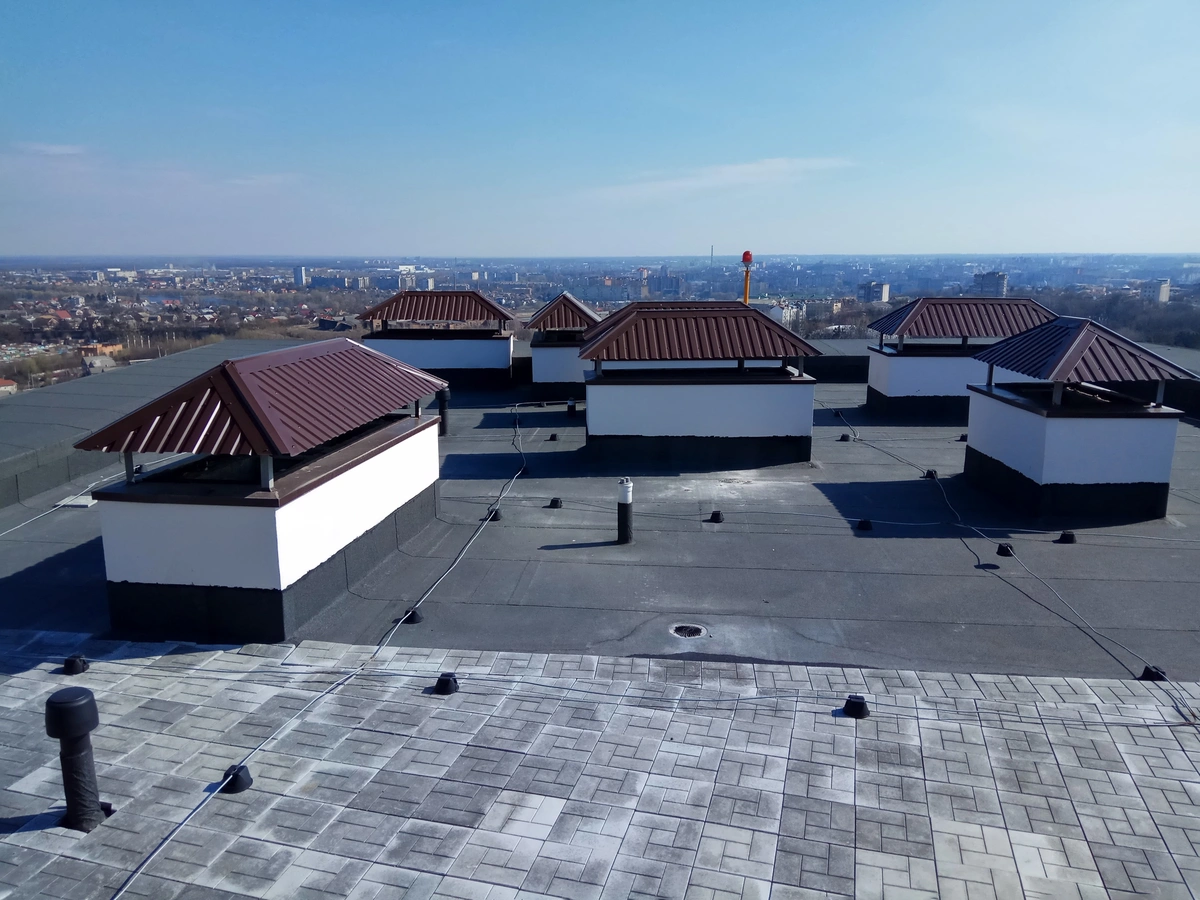
Office Building Roofing.
Office Building Roofing support in New Orleans, LA, with documented inspections, written scopes, and practical roof planning for commercial properties.
What this roof work solves
Office Building Roofing in New Orleans should begin with a documented roof walk. The first job is to identify active water entry, drainage problems, membrane condition, edge details, rooftop equipment conflicts, and weather exposure before a price or schedule is discussed.
For commercial owners, the useful answer is rarely a one-line recommendation. The roof file should explain the work area, the reason for the scope, the access constraints, and the next maintenance decision.
How the scope is built
The scope is based on service scope, building use, roof age, visible defects, and the cost difference between immediate repair and longer-range planning. When repair is enough, the work stays focused. When replacement or recover planning is the responsible move, the reasoning is written plainly.
Each finished project should leave behind before-and-after photos, service notes, and follow-up items so the owner keeps a record for future inspections, budgeting, and vendor conversations.
Commercial roofing for Class A, B, and C office buildings, suburban office parks, and downtown towers throughout New Orleans, LA.
The One Shell Square tower at in the New Orleans CBD — the city's tallest office building and a major Freeport-McMoRan tenant property — and the Entergy Services corporate campus along Loyola Avenue define the Class A office roofing market in a city where every building system must be designed against the existential threat of hurricane direct landfall. Re-roofing a New Orleans Class A office building requires FM Global-approved wind uplift assemblies, occupied-building protocols that account for the city's active storm season, and an acute understanding of what happens to a building's roof system when a Category 3 hurricane passes within thirty miles of the city center.
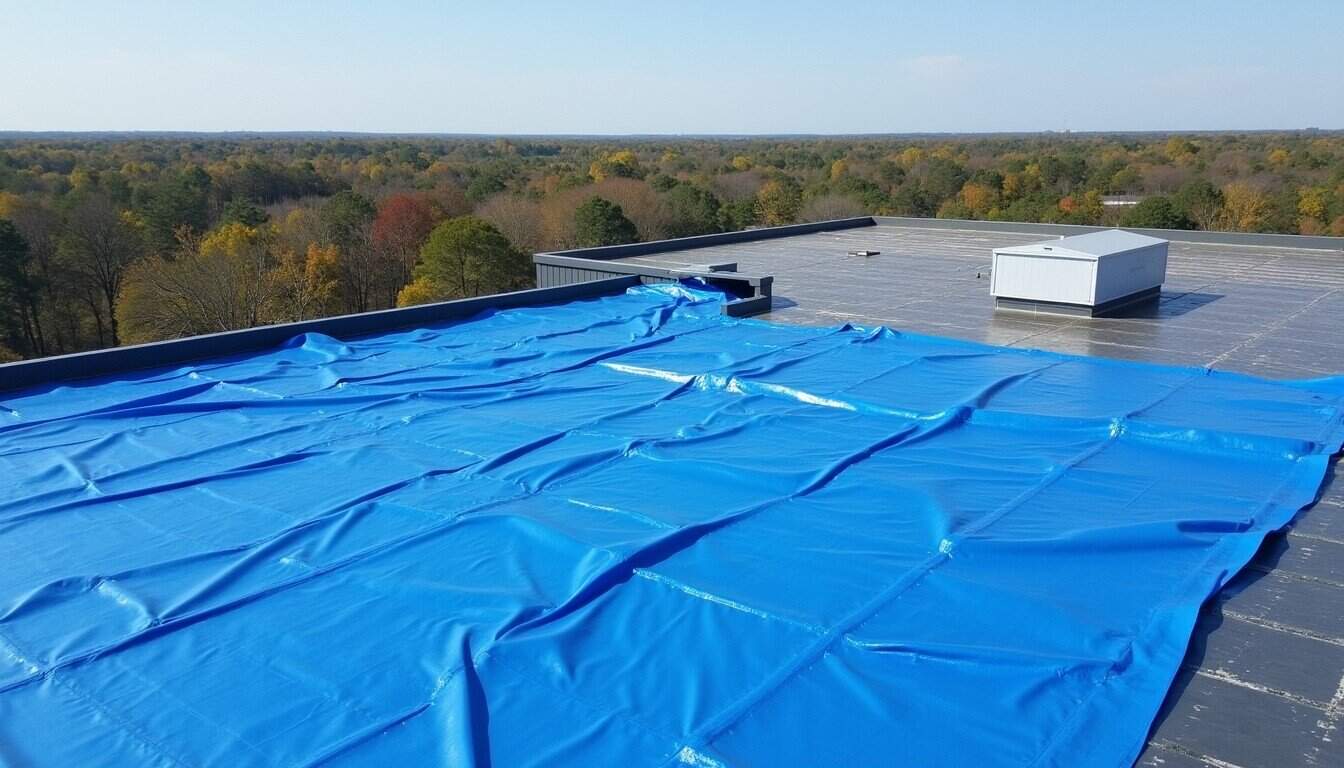
Occupied building protocols for New Orleans office re-roofing are shaped by the city's hurricane preparedness culture as much as by conventional tenant relations concerns. A re-roofing project scheduled for June through November — the official hurricane season — requires a documented storm preparedness plan that specifies how all open deck areas will be covered and all staged materials will be secured within twelve hours of a National Hurricane Center watch issuance. This is not a theoretical requirement: active New Orleans construction projects have been caught by tropical storm accelerations that gave less than the expected preparation time, and roofing contractors who lack a practiced hurricane-preparedness protocol will leave property owners exposed to storm damage claims that the contractor's liability insurance may not cover if the storm preparedness obligation was contractually assigned to the contractor.
Green roof systems on New Orleans office buildings face the same wind engineering challenge as green roofs anywhere in the coastal storm zone, amplified by the city's extreme wind speed requirements. A vegetated assembly in New Orleans must be engineered to resist the wind uplift forces of a 150-mph wind field with the growing medium in place and saturated from pre-storm rainfall. Most New Orleans green roof consultants now design with a paving stone ballast system rather than open growing medium to meet wind uplift requirements, but this approach adds significantly to the structural load. Any green roof evaluation at a New Orleans office building should begin with a full structural analysis before any product or system is specified.
HVAC coordination on New Orleans office buildings is complicated by the city's extreme cooling season. A twenty-story CBD office building in New Orleans runs air conditioning twelve months of the year, and any HVAC outage during the June through September cooling peak can render occupied floors uninhabitable within hours. Re-roofing projects that require rooftop chiller condenser or cooling tower work should schedule those phases for the November through March window, when outside temperatures allow occupied floors to remain tolerable during brief system outages. HVAC rental unit procurement should be budgeted for any project phase requiring extended equipment outage during the cooling season.
Louisiana's commercial energy code requires cool roof compliance under the state's adopted IECC provisions for Climate Zone 2, mandating minimum SRI 75 on low-slope commercial re-roofing projects that trigger full code applicability. Entergy Louisiana's commercial efficiency rebate programs offer significant incentives for above-code insulation, and a white TPO or PVC membrane at SRI 90+ with R-20 or higher above-deck insulation qualifies for the maximum rebate tier. The cooling energy reduction from a high-SRI membrane is particularly valuable in New Orleans, where the roof surface is exposed to direct tropical sun for twelve months and conventional dark roofing surfaces can reach 190 degrees Fahrenheit in July, driving building cooling loads that translate directly to energy cost.
Lease obligations at New Orleans Class A buildings are influenced by the post-Katrina insurance environment that has fundamentally changed how commercial property is underwritten in southeast Louisiana. Major commercial tenants in the New Orleans CBD negotiate lease provisions that require the landlord to maintain the building's FM Global approval status and to document post-storm inspections within a specified period after any hurricane or tropical storm event. A landlord who cannot produce current FM Global documentation for the building's roofing assembly may face lease default claims from tenants whose business interruption insurance requires a certified building condition status to remain in force.
Cool membrane selection for New Orleans office buildings is effectively predetermined by the combination of Louisiana energy code requirements and the commercial insurance market's preference for FM-approved assemblies. The FM Global RoofNav database must be consulted for assemblies that meet both the required wind uplift rating (1-120 or 1-150 for most New Orleans CBD locations) and the SRI requirement of Louisiana's energy code. White TPO with heat-welded seams and a mechanically fastened attachment in the FM-approved density for the applicable wind zone is the standard specification that simultaneously satisfies energy code, FM Global approval, and insurance documentation requirements.
Post-storm inspection and documentation protocols are more formalized in New Orleans than in any other commercial office market in the United States. After every named storm event that affects the New Orleans area, building owners should retain a qualified roofing contractor to perform a documented inspection within seventy-two hours of storm passage. The inspection should include aerial photography, membrane surface condition photography, drain inspection records, and a signed inspection report from a qualified roofing professional. This documentation is required by most commercial property insurance policies as a condition of storm damage claims, and its absence is a frequent basis for partial claim denial in the New Orleans insurance market.
Selecting a roofing contractor for a New Orleans Class A office building requires verifying their Louisiana Contractors Licensing Board commercial roofing license, their FM Global Certificate of Competency, and their hurricane preparedness protocol documentation. The LCCLB license is required for all commercial roofing work in Louisiana, and contractors operating without it expose property owners to joint liability. The FM Global CoC verifies that the contractor has demonstrated the installation quality that FM-approved assemblies require. Request both documents before any contract is signed, and evaluate the hurricane preparedness plan as a separate qualification criterion.
Can you repair a leaking BUR roof on a New Orleans building without full replacement?
Sometimes. If the leak source is an isolated failed flashing at a penetration or parapet — and core cuts show the BUR field plies are otherwise dry and intact — targeted repair is the appropriate scope. If the leak is coming from degraded plies in the roof field, patching the visible wet spot without addressing the ply failure produces another leak nearby within a season or two. In a market where the next tropical rain event may arrive before the targeted repair has time to prove out, that distinction matters more than it does in other markets. We tell you which situation you are in before we propose a scope.
How do you manage gravel removal during BUR tear-off in a dense urban New Orleans location?
Gravel-surfaced BUR tear-off is labor-intensive and generates significant debris volume. On CBD, French Quarter, and Warehouse District buildings with constrained street access, we use rooftop vacuum systems that collect the gravel without staging loose aggregate at the curb. Street-use permits for dumpster placement in the French Quarter and the Downtown Development District require advance coordination with the City of New Orleans — we handle that permitting before mobilization.
Questions to settle early
Where is the risk?
Locate leaks, wet-insulation indicators, open seams, weak flashing, and drainage restrictions across the roof.
What can wait?
Separate immediate work from maintenance items that can be tracked for the next service window.
What should be funded?
Build a practical recommendation for repair, coating, recover, or replacement planning.
Need help with office building roofing?
Send the building address, known roof age, access notes, and what changed. We will respond with the right next step.