
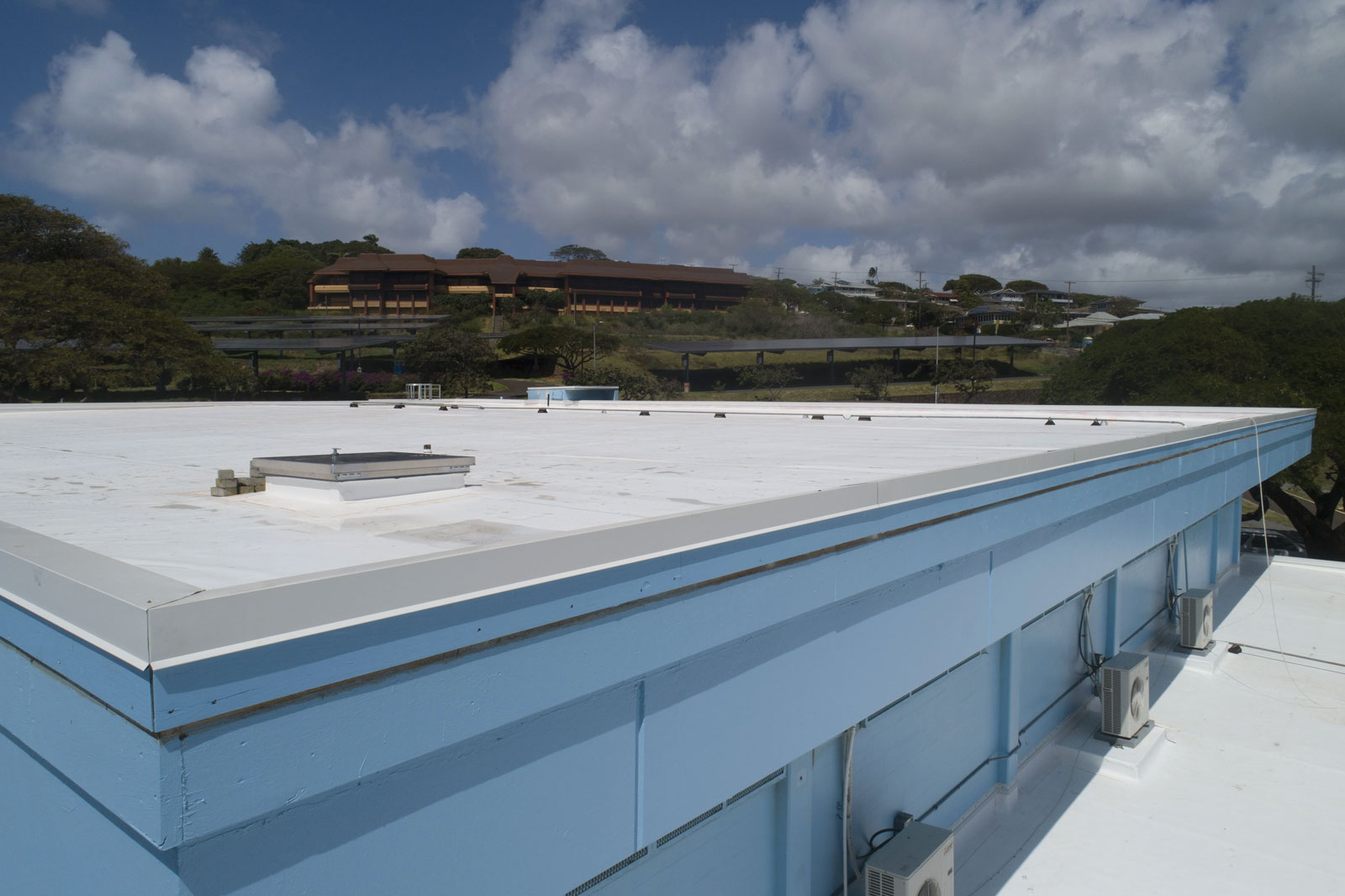
PVC Roofing — Chemical-Resistant Membrane for New Orleans Commercial.
PVC Roofing — Chemical-Resistant Membrane for New Orleans Commercial support in New Orleans, LA, with documented inspections, written scopes, and practical roof planning for commercial properties.
What this roof work solves
PVC Roofing — Chemical-Resistant Membrane for New Orleans Commercial in New Orleans should begin with a documented roof walk. The first job is to identify active water entry, drainage problems, membrane condition, edge details, rooftop equipment conflicts, and weather exposure before a price or schedule is discussed.
For commercial owners, the useful answer is rarely a one-line recommendation. The roof file should explain the work area, the reason for the scope, the access constraints, and the next maintenance decision.
How the scope is built
The scope is based on service scope, building use, roof age, visible defects, and the cost difference between immediate repair and longer-range planning. When repair is enough, the work stays focused. When replacement or recover planning is the responsible move, the reasoning is written plainly.
Each finished project should leave behind before-and-after photos, service notes, and follow-up items so the owner keeps a record for future inspections, budgeting, and vendor conversations.
PVC membrane is the correct specification for New Orleans restaurants, food service facilities, and chemical-exposure commercial buildings. We install 50-mil and 60-mil systems across Orleans and Jefferson parishes with 25-year manufacturer warranty paths and hurricane wind-uplift design documentation.
Animal fats and cooking oils are chemically destructive to standard TPO and EPDM membranes. Restaurant kitchen exhaust carries grease particulate that degrades both membrane types under sustained exposure, accelerating plasticizer loss in TPO and surface cracking in EPDM over five to ten years of concentrated contact. PVC is chemically resistant to animal fats, vegetable oils, and the industrial cleaning agents used in restaurant and food-service rooftop systems. This is not a preference — it is a performance requirement in a market with one of the highest concentrations of food-service commercial buildings in the South.
New Orleans's restaurant and hospitality density spans the French Quarter hotel and restaurant corridors on Bourbon, Decatur, and Royal Streets, the Magazine Street and Freret Street independent restaurant corridors Uptown, and the large commercial kitchen operations in the Central Business District hotel inventory along Poydras and Canal Streets. These buildings produce sustained rooftop grease exhaust exposure that makes PVC the appropriate default membrane specification for any building with significant commercial kitchen operations, regardless of building age.
PVC also carries the longest standard manufacturer warranty term available for single-ply commercial roofing: Sika Sarnafil and Versico both offer 25-year NDL warranty paths on qualifying PVC systems. For building owners making a long-term capital commitment on a commercial property in Orleans or Jefferson Parish, that warranty term combined with PVC's chemical resistance produces a lower lifecycle cost than shorter-warranty alternatives on most food-service and hospitality buildings.
PVC Membrane Specifications — 50-mil vs 60-mil
50-mil PVC: Entry-level commercial specification carrying 15 or 20-year manufacturer NDL warranty terms. Appropriate for light commercial buildings without significant chemical exhaust exposure or frequent rooftop maintenance foot traffic. We rarely specify 50-mil on new restaurant or food-service installations — the incremental cost of 60-mil is a small fraction of total project cost, and the performance differential in a high-humidity, chemical-exposure environment is meaningful.
60-mil PVC: Standard specification for restaurant, food processing, and chemical-exposure applications in the New Orleans market. Qualifies for 20-year NDL warranties from most manufacturers and for 25-year NDL from Sika Sarnafil and Versico on qualifying configurations. Substantially more puncture-resistant than 50-mil — important for French Quarter and Uptown hospitality buildings where rooftop access for HVAC refrigerant service, exhaust hood cleaning, and grease trap maintenance generates regular foot traffic that 50-mil does not tolerate as well over a long service life.
PVC Performance in New Orleans Restaurant and Hospitality Environments
The failure pattern on TPO membranes installed on New Orleans restaurant buildings without accounting for chemical exhaust exposure is consistent: surface chalking and texture degradation within three to five years of installation, followed by membrane brittleness and seam check-cracking at seven to ten years. A TPO roof that would reach a full 20-year service life on an office building runs 10 to 12 effective years on a high-volume kitchen exhaust exposure. Two TPO cycles over a 25-year period cost substantially more than a single PVC cycle with a 25-year warranty — and that math applies particularly to the New Orleans hospitality and food-service inventory, where buildings on well-trafficked commercial corridors carry high replacement scheduling costs when the roof fails at an inconvenient time.
French Quarter hospitality buildings present additional specification considerations. Roof access is constrained by the historic urban fabric — narrow service passages, shared walls, and Vieux Carré Commission oversight of visible rooftop modifications. PVC's flexibility and the ability to detail penetrations and transitions without open-flame hot-work simplifies the installation logistics in constrained access environments while delivering chemical resistance appropriate for the high kitchen-exhaust loading that a dense hospitality corridor produces.
We conduct a surface chemistry assessment on any roof where we suspect prior chemical exposure before specifying the replacement membrane. If the existing membrane shows degradation consistent with grease exhaust exposure, we document it and specify PVC. If the building is a food-service or hospitality property, PVC is the default specification.
Chemical Exposure Applications Beyond Food Service
Industrial and petrochemical-adjacent facilities: The New Orleans metro's industrial base — petroleum refining and storage support services, chemical distribution, and maritime industry operations — produces chemical-exposure profiles in commercial buildings along the river corridor and in Metairie's industrial zones that require PVC specification. The specific chemical resistance of PVC should be confirmed against the tenant's actual chemical inventory before specification — we ask about the chemical environment before committing to a membrane type.
Dry-cleaning and textile services: Perchloroethylene solvent exhaust from dry-cleaning operations is destructive to standard EPDM and accelerates degradation in some TPO formulations. Commercial buildings with dry-cleaning tenants — whether in retail strip centers along Causeway Boulevard in Metairie or in mixed-use commercial buildings across Mid-City — require PVC or a PVC-compatible coating over EPDM before the dry-cleaning tenant commences operations.
Questions to settle early
Where is the risk?
Locate leaks, wet-insulation indicators, open seams, weak flashing, and drainage restrictions across the roof.
What can wait?
Separate immediate work from maintenance items that can be tracked for the next service window.
What should be funded?
Build a practical recommendation for repair, coating, recover, or replacement planning.
Need help with PVC roofing — chemical-resistant membrane for new orleans commercial?
Send the building address, known roof age, access notes, and what changed. We will respond with the right next step.