
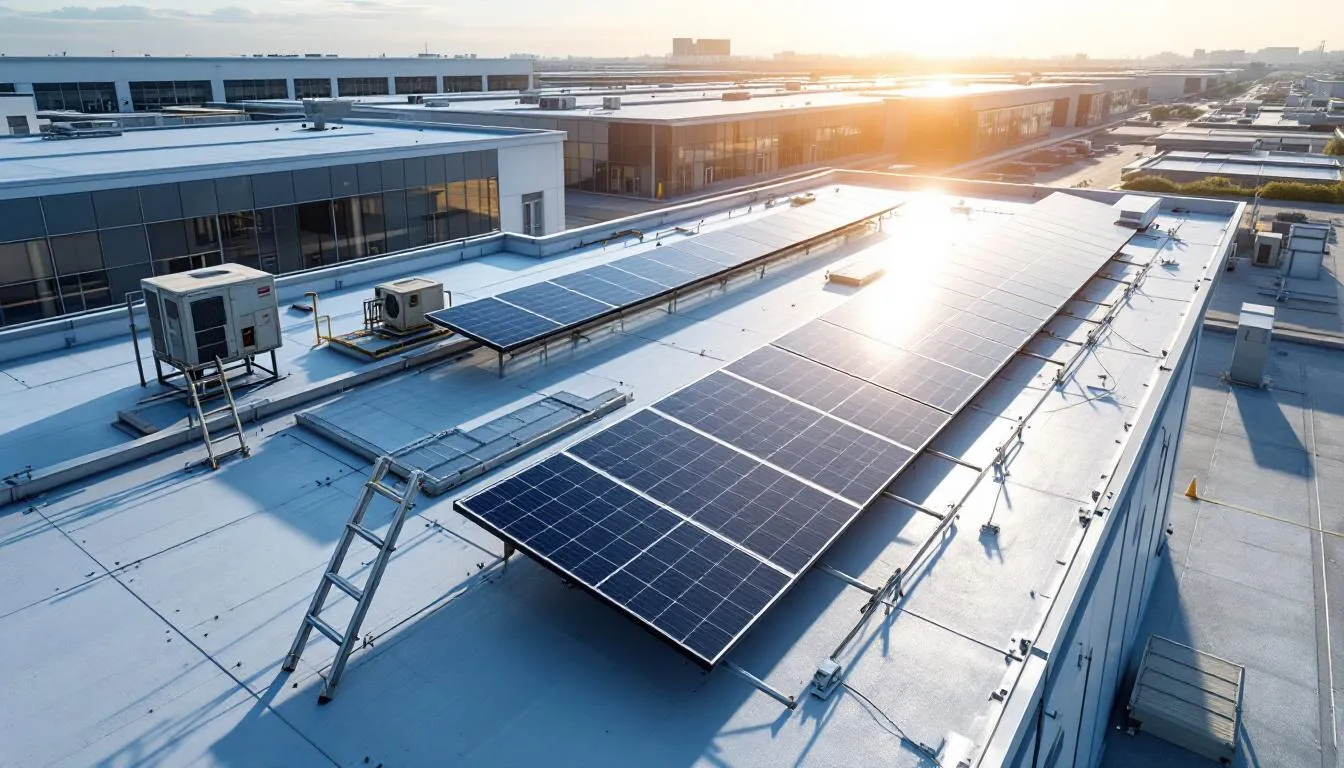
Industrial Flex Space Roofing.
Industrial Flex Space Roofing support in New Orleans, LA, with documented inspections, written scopes, and practical roof planning for commercial properties.
What this roof work solves
Industrial Flex Space Roofing in New Orleans should begin with a documented roof walk. The first job is to identify active water entry, drainage problems, membrane condition, edge details, rooftop equipment conflicts, and weather exposure before a price or schedule is discussed.
For commercial owners, the useful answer is rarely a one-line recommendation. The roof file should explain the work area, the reason for the scope, the access constraints, and the next maintenance decision.
How the scope is built
The scope is geared to building use, building use, roof age, visible defects, and the cost difference between immediate repair and longer-range planning. When repair is enough, the work stays focused. When replacement or recover planning is the responsible move, the reasoning is written plainly.
Each finished project should leave behind before-and-after photos, service notes, and follow-up items so the owner keeps a record for future inspections, budgeting, and vendor conversations.
Roofing built for the way flex buildings actually get used in New Orleans
A flex building rarely keeps the same tenants for the life of its roof. The same shell in Elmwood or along the Jefferson Highway corridor might hold a fabrication shop in one bay, a wholesale distributor in the next, and a contractor's office-and-warehouse combination on the end. We roof these buildings knowing the occupancy will shift two or three times before the membrane is due for replacement, so we specify for the whole range of loads a flex shell can see rather than for whatever a single current tenant happens to run.
The defining roofing problem on a multi-tenant low-slope building is penetration density. Every time a bay turns over, someone adds a rooftop condenser, a new exhaust fan, a refrigerant line set, or an electrical mast, and almost none of it gets recorded in the property file. Before we price a reroof, we walk the deck and build a photographed penetration map keyed to each demising wall. That inventory tells us where curbs are undersized, where prior tenant work was flashed with mastic instead of a proper boot, and where abandoned penetrations are still open and feeding water into the insulation below.
The flex inventory we work on around the metro
The Elmwood district in Jefferson Parish is the dense center of metro flex space — block after block of 1970s and 1980s tilt-wall and concrete-frame shells off Citrus Boulevard and Edwards Avenue that have cycled through countless light-industrial and service tenants. Many were reroofed in a hurry after Katrina, and a lot of those rushed built-up and early single-ply jobs are now failing at the seams and curbs.
Harahan and the rail-served frontage near the Huey P. Long Bridge hold another concentration of flex and light-distribution buildings tied to the BNSF and Union Pacific yards. Across the parish line, the Almonaster-Michoud corridor in New Orleans East carries newer pre-engineered metal flex shells built on reclaimed industrial land, many with standing-seam or R-panel roofs rather than membrane. Each of those building types needs a different scope, and we spec accordingly instead of defaulting to one assembly.
For the classic Elmwood-era concrete and tilt-wall flex building, a 60-mil TPO over tapered polyiso is our usual recommendation. Where a bay carries heavy rooftop equipment or sees regular HVAC-contractor foot traffic, we step up to 80-mil membrane and add walkway pads on the service routes so the roof isn't punctured by the people maintaining the units.
On the metal flex buildings out in the East, we evaluate whether a retrofit framing system with a new standing-seam roof, a single-ply recover over high-density board, or a silicone restoration coating is the right call. That decision turns on purlin spacing, panel corrosion, and how much added dead load the structure can take — not on a one-size answer.
Wind uplift on a multi-tenant low-slope roof
New Orleans sits in a hurricane-prone region under ASCE 7, and a wide flex roof has long perimeter and corner zones where uplift pressures run highest. We calculate the attachment design for the actual building geometry and exposure category rather than copying a generic fastening pattern off a manufacturer table. Elmwood's enclosed terrain is gentler than the open exposure out in New Orleans East, and the fastener density or adhesive coverage we specify reflects that difference.
The other reality of these roofs is ponding. Flat decks built decades ago around a handful of interior drains hold water after every storm, and New Orleans rainfall regularly exceeds two to three inches an hour in a tropical downpour. Standing water is an active aging mechanism on the membrane and a constant test of every penetration seal, so tapered insulation designed to the real drain locations is part of most of our flex reroof scopes.
Coordinating work across several tenants at once
Reroofing an occupied multi-tenant building is as much a logistics job as a roofing job. We start from a bay-by-bay occupancy map and a single property-management contact, then sequence the work so no tenant loses rooftop HVAC during their operating hours without notice. Vacant bays get sequenced first where possible. Tenants hear about the schedule through the property manager, not from a crew knocking on doors, and every section is dried in watertight before the crew leaves for the day.
- Photographed penetration and curb inventory keyed to each demising wall before pricing
- Abandoned-penetration sealing and undersized-curb correction written into the base scope
- Moisture cores to find saturated insulation before we decide between recover and tear-off
- Daily dry-in on every section, no open deck left overnight in this climate
- Closeout package with warranty registration, a roof zone diagram, and the penetration map for the asset file
Questions to settle early
Where is the risk?
Locate leaks, wet-insulation indicators, open seams, weak flashing, and drainage restrictions across the roof.
What can wait?
Separate immediate work from maintenance items that can be tracked for the next service window.
What should be funded?
Build a practical recommendation for repair, coating, recover, or replacement planning.
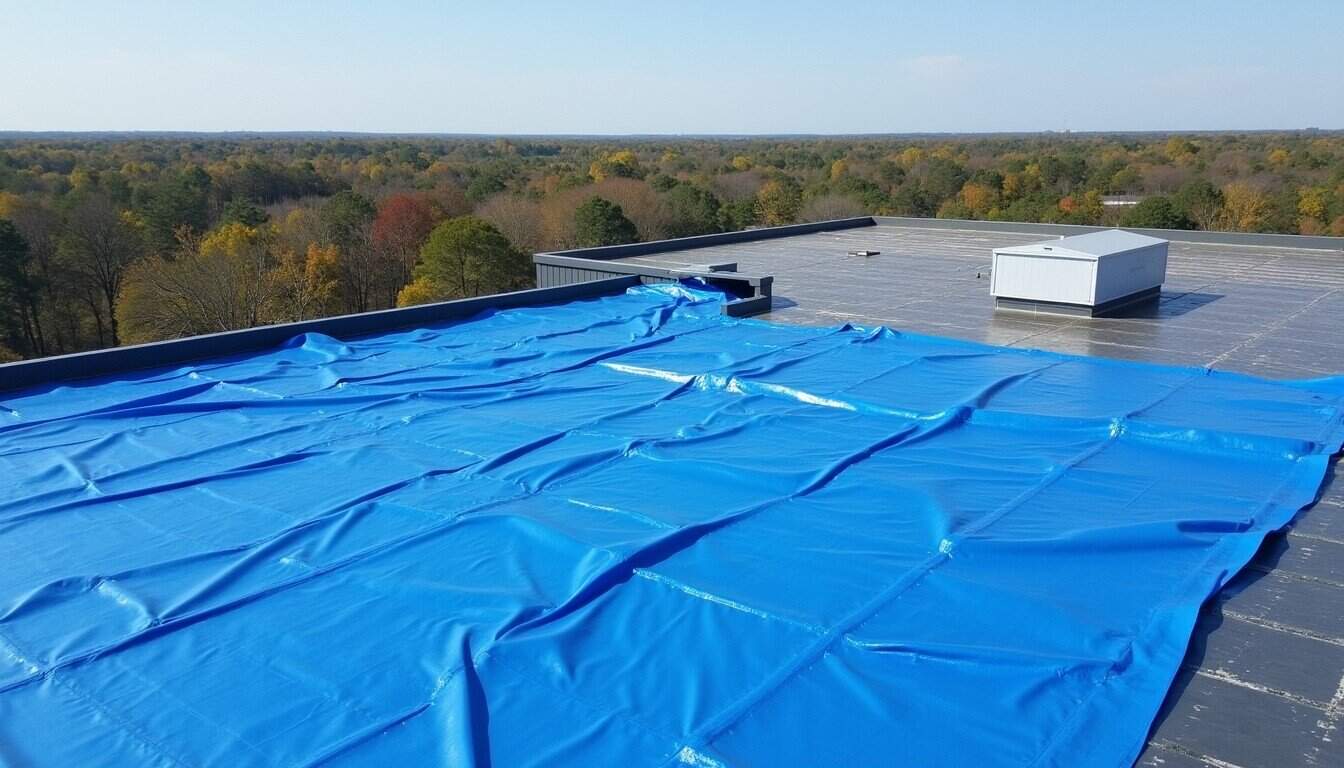
Need help with industrial flex space roofing?
Send the building address, known roof age, access notes, and what changed. We will respond with the right next step.