
Office Building Roofing.
Office Building Roofing support in New Orleans, LA, with documented inspections, written scopes, and practical roof planning for commercial properties.
What this roof work solves
Office Building Roofing in New Orleans should begin with a documented roof walk. The first job is to identify active water entry, drainage problems, membrane condition, edge details, rooftop equipment conflicts, and weather exposure before a price or schedule is discussed.
For commercial owners, the useful answer is rarely a one-line recommendation. The roof file should explain the work area, the reason for the scope, the access constraints, and the next maintenance decision.
How the scope is built
The scope is geared to building use, building use, roof age, visible defects, and the cost difference between immediate repair and longer-range planning. When repair is enough, the work stays focused. When replacement or recover planning is the responsible move, the reasoning is written plainly.
Each finished project should leave behind before-and-after photos, service notes, and follow-up items so the owner keeps a record for future inspections, budgeting, and vendor conversations.
Class A towers along Poydras Street, mid-rise office buildings in the Central Business District and the Tulane-Gravier medical corridor, and suburban office campuses across Jefferson and St. Tammany parishes. Crane logistics, tenant disruption windows, and manufacturer warranty closeout on buildings where roof access is never routine.
Below the Poydras high-rise corridor, the CBD holds a second generation of mid-rise office buildings from the 1980s and early 1990s — four-to-eight story buildings along Gravier, Common, and Carondelet streets that are in various stages of repositioning and tenant reinvestment. These buildings are the most active segment of the New Orleans office roofing market right now, because many of them are under capital improvement programs that include roof replacement as part of facade and MEP updates. Their roofing is less technically complex than the towers, but the urban access and tenant coordination are not.
The Tulane-Gravier medical-office corridor on the CBD's upper fringe — where Tulane Medical Center anchors a cluster of medical-office and administrative buildings — and the Veterans Boulevard medical corridor in Metairie round out the primary office-roofing territory in the metro. Medical-office buildings require additional coordination for hot-work permits, infection-control compliance, and off-hours scheduling on occupied clinical floors.
High-Rise Roof Access in the New Orleans CBD
High-rise roof access in the Poydras Street corridor is a logistics problem as much as a roofing problem. Crane placement on Poydras, Loyola, or St. Charles Avenue requires Downtown Development District coordination, NOPD permitting for lane closures, and in We manage the permit sequencing and logistics coordination for every high-rise project — these are not tasks to leave to the building owner after contract signing.
Material staging on CBD high-rise projects is typically through the building's freight elevator with a secured staging zone on the ground floor or parking structure. Freight elevator scheduling, weight-limit documentation, and daily load management are part of our pre-construction scope on every tower project. For buildings where freight elevator access is inadequate for insulation board volume, crane lifts are scheduled in early-morning windows when street activity permits.
Mid-Rise Office Building Reroof: The Active CBD Market
The four-to-eight story office buildings on Gravier, Common, and Carondelet represent the most actively bid segment of the New Orleans commercial office-roofing market. Many of these buildings are running original or first-replace modified bitumen systems from the late 1990s through early 2000s — well past warranted life and, in buildings that did not undergo substantial post-Katrina capital work, potentially carrying compromised deck and insulation from storm-related moisture intrusion.
Modified bitumen recover or replacement is the standard scope on mid-rise CBD buildings where existing deck and insulation cores are acceptable. TPO recover over polyiso board is the alternative specification where the existing membrane profile is too high for a second recover layer, or where energy code compliance requires the additional insulation R-value. We scope each building based on the moisture-core data and deck condition observed on the pre-bid inspection — not on a one-size office-building specification.
Tenant Disruption Management on Occupied Office Buildings
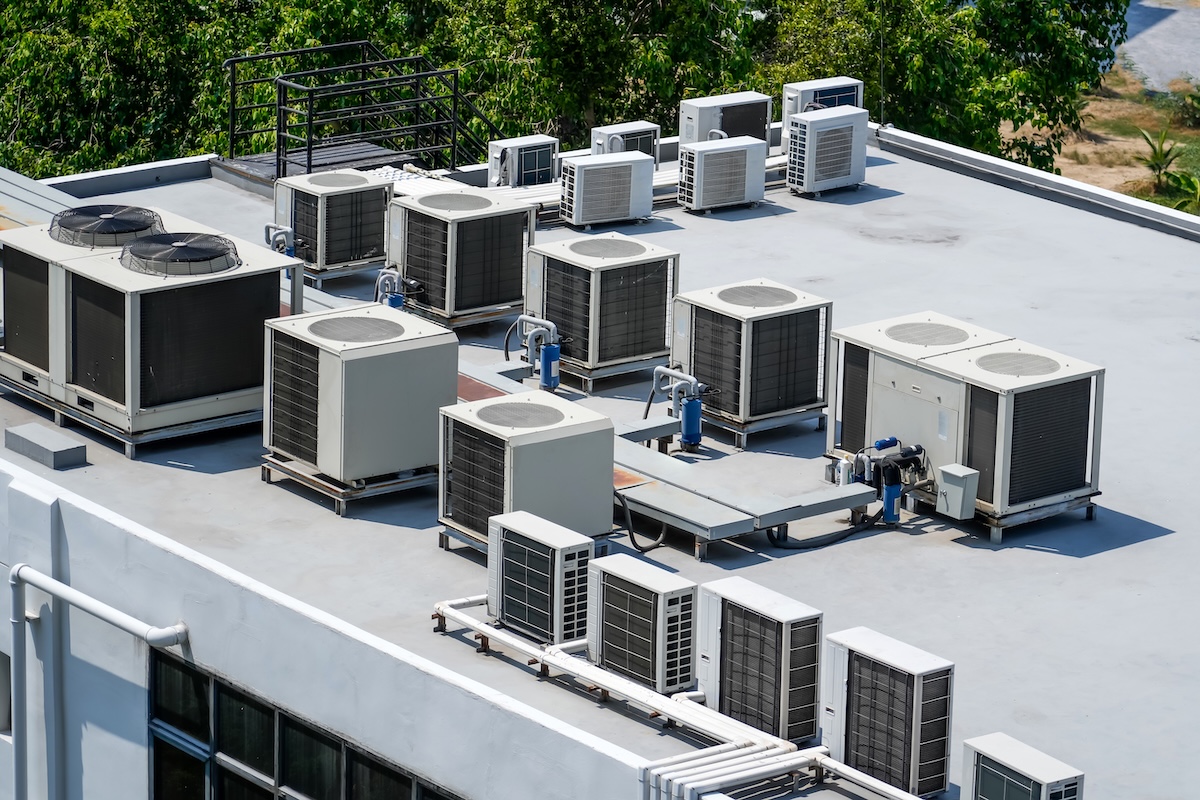
Office tenants in New Orleans CBD buildings are sensitive to odor from hot-process modified bitumen application, noise from tear-off equipment, and HVAC disruption during work on rooftop mechanical units. We scope hot-work windows for modified bitumen application in early-morning hours before building populations peak, and we coordinate HVAC unit isolation with the building's mechanical contractor before commencing any work on or adjacent to rooftop mechanical equipment.
Tenant notification letters — delivered through the property manager with our project schedule and after-hours contact — are part of our pre-construction package on every occupied CBD office building. Tenants on clinical or legal workflows are particularly sensitive to schedule changes and unannounced disruptions. We keep the property manager informed of daily production status so tenant inquiries can be answered accurately without guesswork about what is happening above their floor.
Can you work on active Class A office buildings along Poydras Street?
Yes. We manage Downtown Development District crane and street- We have worked on occupied CBD office buildings in New Orleans and understand the permit and operational requirements specific to this corridor.
Questions to settle early
Where is the risk?
Locate leaks, wet-insulation indicators, open seams, weak flashing, and drainage restrictions across the roof.
What can wait?
Separate immediate work from maintenance items that can be tracked for the next service window.
What should be funded?
Build a practical recommendation for repair, coating, recover, or replacement planning.
Need help with office building roofing?
Send the building address, known roof age, access notes, and what changed. We will respond with the right next step.