
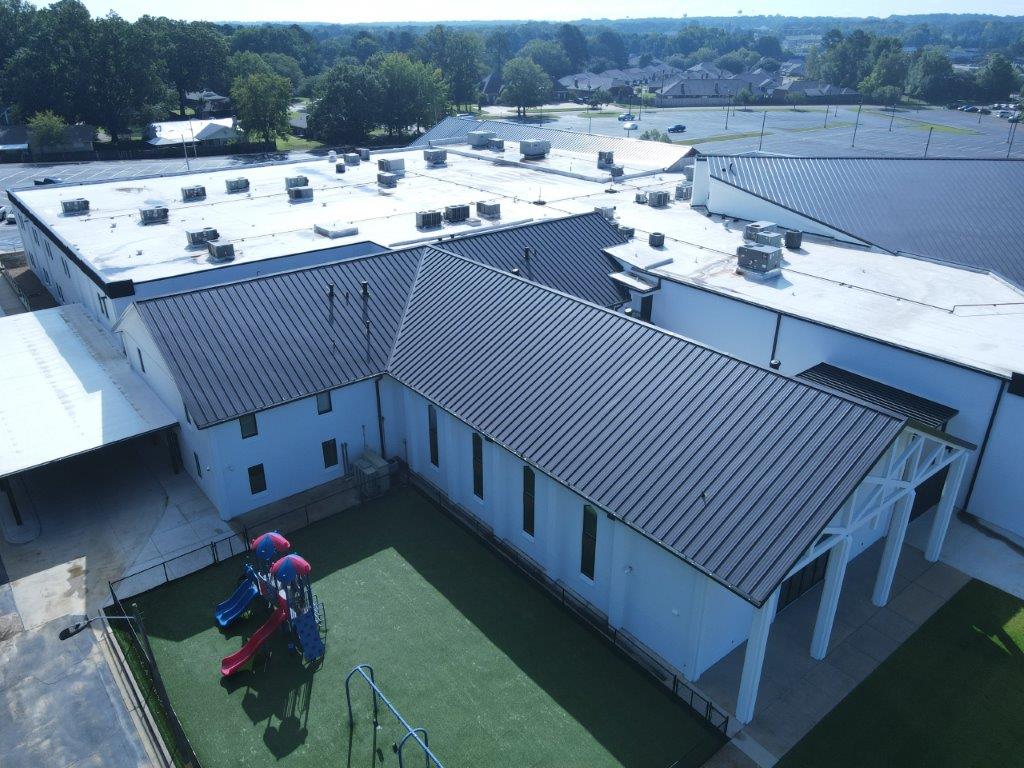
Religious Building Roofing.
Religious Building Roofing support in New Orleans, LA, with documented inspections, written scopes, and practical roof planning for commercial properties.
What this roof work solves
Religious Building Roofing in New Orleans should begin with a documented roof walk. The first job is to identify active water entry, drainage problems, membrane condition, edge details, rooftop equipment conflicts, and weather exposure before a price or schedule is discussed.
For commercial owners, the useful answer is rarely a one-line recommendation. The roof file should explain the work area, the reason for the scope, the access constraints, and the next maintenance decision.
How the scope is built
The scope is geared to building use, building use, roof age, visible defects, and the cost difference between immediate repair and longer-range planning. When repair is enough, the work stays focused. When replacement or recover planning is the responsible move, the reasoning is written plainly.
Each finished project should leave behind before-and-after photos, service notes, and follow-up items so the owner keeps a record for future inspections, budgeting, and vendor conversations.
St. Louis Cathedral at Jackson Square, St. Patrick's Church on Camp Street, Holy Trinity in the Tremé, and the suburban parish campuses across Jefferson and St. Tammany parishes. Religious building roofing in New Orleans involves historic masonry conditions, congregational scheduling, and in many cases, historic district permit requirements that distinguish this work from standard commercial roofing.
New Orleans has one of the most significant concentrations of historic religious architecture in the United States. The oldest buildings in the city's religious inventory — St. Louis Cathedral on Jackson Square, consecrated in its current form in 1794 and substantially reconstructed in 1850, and Holy Trinity Church in the Tremé, dating to 1847 — represent an architectural preservation context that places roofing work under Louisiana State Historic Preservation Office guidelines and, in the case of French Quarter properties, Vieux Carré Commission oversight.
St. Patrick's Church at in the Lower Garden District is among New Orleans's most recognizable Gothic Revival landmarks — a mid-19th-century masonry structure with a complex roof profile that requires specialized attention to historic slate or flat-roof component replacement at the nave and transept junctions. The Archdiocese of New Orleans campus buildings and the network of suburban parish campuses in Jefferson and St. Tammany parishes present a second category of religious roofing — newer construction from the 1960s through 1990s with flat-roof systems that have been maintained through multiple hurricane seasons and are entering replacement cycles.
Budget planning in the religious building market is different from the standard commercial cycle. Parish and congregation capital programs often run on multi-year planning horizons with restricted fundraising timelines. We work with religious building clients on phased replacement scopes that fit within available capital rather than presenting a single full-replacement cost that requires extraordinary session fundraising to fund.
Historic Religious Buildings: Masonry Parapet and Deck Conditions
Historic masonry religious buildings in Orleans Parish — including St. Louis Cathedral complex buildings and the cluster of 19th-century parish churches in the Tremé, Bywater, and Garden District neighborhoods — present parapet and deck conditions that require pre-bid inspection by an experienced crew before any scope is produced. Original cypress wood-deck construction common in these buildings deteriorates differently from light-gauge metal deck, and the parapet masonry condition at the roof-to-wall junction is almost always a project variable that cannot be estimated by phone.
Vieux Carré Commission review applies to any visible rooftop modification on religious buildings within the French Quarter and its designated buffer zones. Historic District Landmarks Commission review applies to NOLA historic district properties in the Tremé, Bywater, and other local historic overlay areas. We manage the permit and review process for historic religious building projects and include the review timeline in the pre-construction schedule — VCC review can add six to eight weeks to the pre-construction phase for complex projects.
Congregation Scheduling and Worship Service Continuity
Religious buildings operate on a calendar that does not resemble the standard commercial building schedule. Daily Mass at active parish churches, weekend services at all faith communities, major liturgical events tied to fixed dates — Ash Wednesday, Palm Sunday, Easter, Christmas, Hanukkah, Eid — and community events in fellowship halls and meeting rooms create a scheduling landscape that requires coordination far beyond a standard 'avoid weekends' rule.
We produce a conflict calendar for every religious building project that maps production blackout dates against the congregation's liturgical and event calendar before the production schedule is finalized. Sunday services are always a production blackout. Major liturgical events receive 48 hours of production blackout before and after. Fellowship hall and school events are identified and accommodated in the production zone sequencing.
The suburban parish campuses in Jefferson and St. Tammany parishes — the 1960s through 1990s construction that defines the New Orleans suburban church landscape — represent the most active segment of the religious roofing market in terms of volume. These are typically flat-roof church sanctuary buildings adjacent to school and fellowship hall buildings, each with independent flat-roof systems that are often at different points in their lifecycle. We scope campus-wide projects that sequence the buildings by condition priority and available capital rather than requiring a simultaneous replacement of every building on the campus.
Modified bitumen and TPO systems are the standard specifications for post-1960 suburban parish buildings. Hurricane wind-uplift requirements for Risk Category III religious buildings — church sanctuaries above 300-person occupancy are typically classified as Risk Category III — drive full-adhered system specifications for any suburban parish building in the New Orleans metro's hurricane-prone-region designation.
Can you work on St. Louis Cathedral or other French Quarter religious buildings?
Historic religious buildings in the French Quarter require Vieux Carré Commission coordination, and we manage the VCC permit process for projects within the VCC jurisdiction. Pre-bid inspection is required before any scope is produced on historic masonry buildings — deck conditions, parapet masonry status, and drainage configuration must be observed in person before a scope can be written accurately.
Questions to settle early
Where is the risk?
Locate leaks, wet-insulation indicators, open seams, weak flashing, and drainage restrictions across the roof.
What can wait?
Separate immediate work from maintenance items that can be tracked for the next service window.
What should be funded?
Build a practical recommendation for repair, coating, recover, or replacement planning.
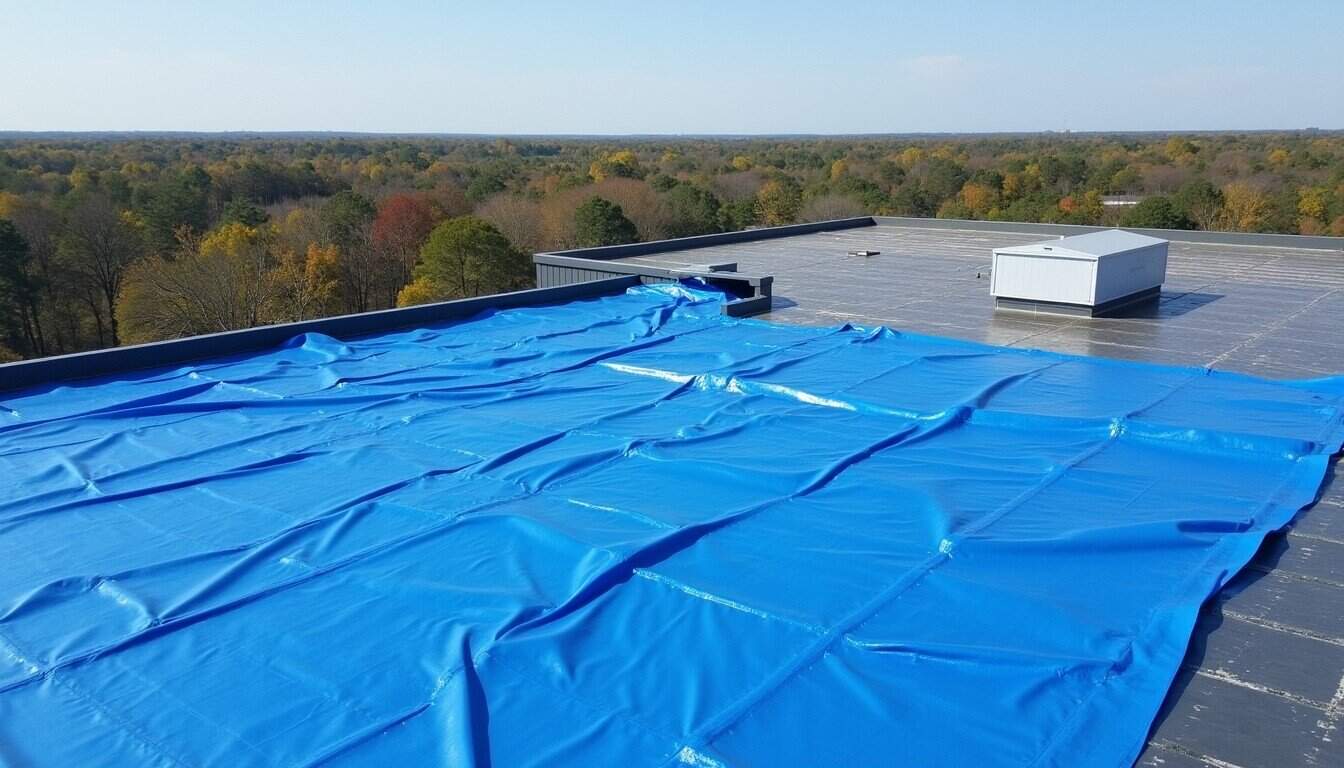
Need help with religious building roofing?
Send the building address, known roof age, access notes, and what changed. We will respond with the right next step.