
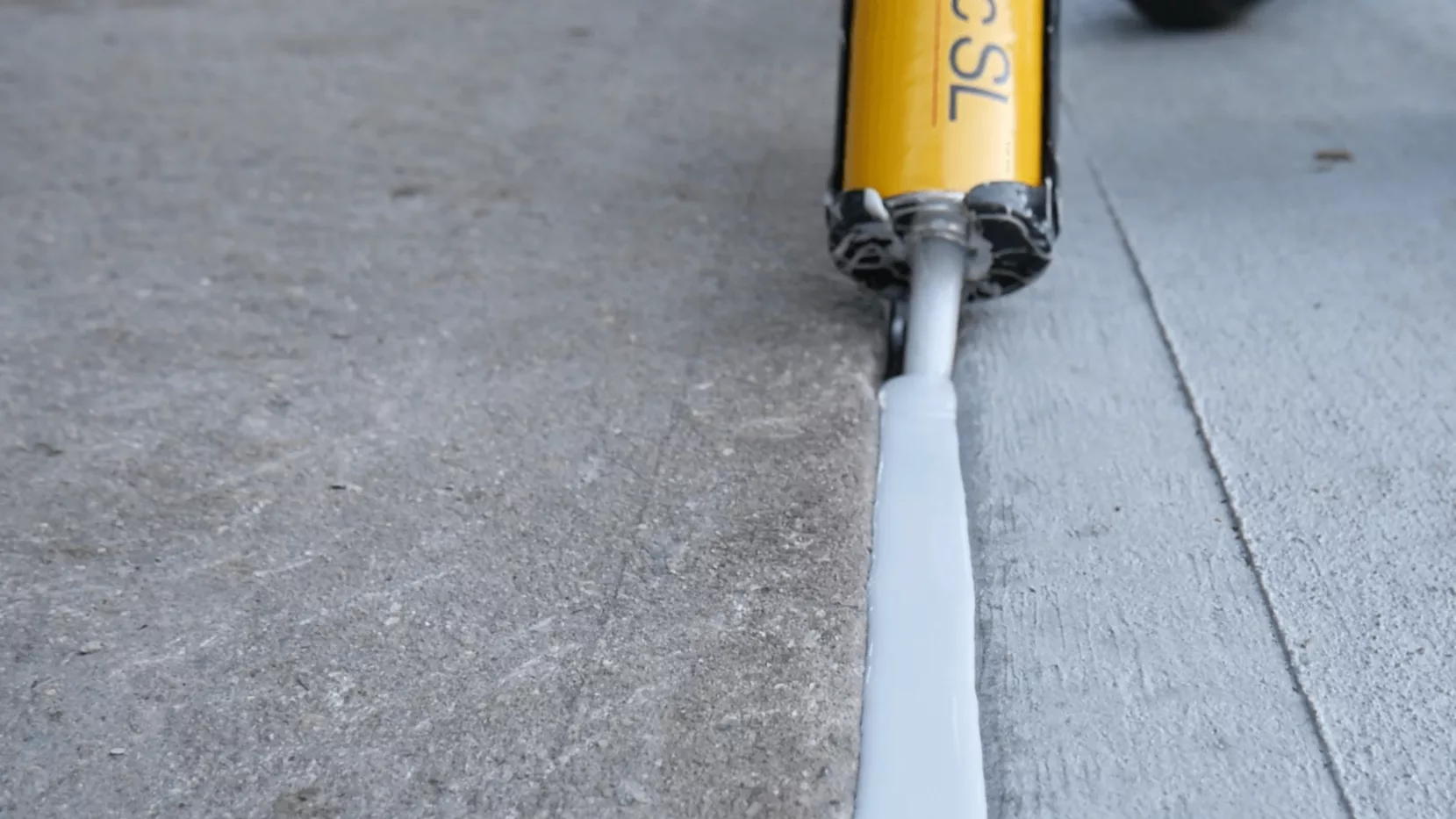
Expansion Joint Repair.
Expansion Joint Repair support in New Orleans, LA, with documented inspections, written scopes, and practical roof planning for commercial properties.
What this roof work solves
Expansion Joint Repair in New Orleans should begin with a documented roof walk. The first job is to identify active water entry, drainage problems, membrane condition, edge details, rooftop equipment conflicts, and weather exposure before a price or schedule is discussed.
For commercial owners, the useful answer is rarely a one-line recommendation. The roof file should explain the work area, the reason for the scope, the access constraints, and the next maintenance decision.
How the scope is built
The scope is based on service scope, building use, roof age, visible defects, and the cost difference between immediate repair and longer-range planning. When repair is enough, the work stays focused. When replacement or recover planning is the responsible move, the reasoning is written plainly.
Each finished project should leave behind before-and-after photos, service notes, and follow-up items so the owner keeps a record for future inspections, budgeting, and vendor conversations.
Expansion joints in New Orleans commercial buildings fail when the cover cannot accommodate the actual movement the structure experiences — from thermal cycling, from foundation settlement on soft alluvial soil, and from hurricane wind-load deflection in storm events. We measure the movement range before we specify the replacement.
Expansion joints in commercial buildings are designed gaps that allow adjacent building sections to move relative to each other without transmitting stress through the structure. The roof expansion joint cover is the flexible assembly that spans that gap at the roof surface and keeps water out while the joint opens, closes, and shifts beneath it. When the cover cannot accommodate the movement — because the bellows has hardened, the termination has pulled out, or the cover was filled with a rigid material by a prior contractor — the joint becomes a continuous leak source along its full length.
New Orleans commercial buildings on the city's alluvial soil experience expansion joint movement driven by two forces that do not apply with the same intensity in most other US markets. The first is differential settlement — New Orleans's soft alluvial soils produce ongoing differential settlement in commercial buildings that is gradual, chronic, and unequal across a large building footprint. Buildings in the CBD, the Warehouse District, and along the Chef Menteur corridor in New Orleans East with long histories on soft soil foundations have often moved beyond their original expansion joint design range over decades of service. The second is hurricane wind-load deflection — Category 3 and 4 wind events produce structural rack and sway in large commercial buildings that briefly load expansion joint covers far beyond their normal thermal movement range.
We repair and replace expansion joint covers on New Orleans commercial buildings using EPDM and TPO bellows cover systems sized for the actual movement range the structure experiences — not just the thermal movement range the joint was originally designed for. Every repair project includes measuring the current joint width and, where possible, comparing it to original drawings or a prior measurement to understand how much the joint has moved over the building's service history.
EPDM and TPO Expansion Joint Cover Systems
EPDM bellows covers are the most common system on New Orleans commercial buildings built through the 1990s and on older pre-Katrina construction in the CBD and Warehouse District. The flexible EPDM bellows spans the joint opening and accommodates horizontal and vertical movement by extending, compressing, or deflecting. The cover terminates on both sides of the joint with metal bars embedded in the roofing membrane. When the termination bars corrode or separate from the membrane, or when the bellows tears from repeated movement or age-related hardening, the joint leaks along its full length.
TPO heat-weldable expansion joint covers — the current specification for buildings on TPO membrane systems — are welded directly to the field membrane on both sides of the joint, with a pre-formed TPO bellows spanning the opening. The heat-weld integration eliminates the termination bar as a separate failure point and allows the cover to be inspected and verified in the same manner as any other field seam. On New Orleans buildings where we are replacing an EPDM bellows cover on an existing TPO system, we specify the TPO heat-weldable system to eliminate the membrane-type interface that creates compatibility and inspection complications.
Modified bitumen compatible joint covers — specified for older New Orleans commercial buildings still on modified bitumen or BUR systems — are installed by torch-applied or cold-adhesive methods into the surrounding membrane. These systems are less flexible than single-ply bellows covers and require more precise movement range estimation at the time of installation. Undersized modified bitumen covers on New Orleans buildings with active differential settlement fail at the bellows center within two to three seasons.
Differential settlement on New Orleans alluvial soils is a design reality that the expansion joint specification must account for. The soft alluvial clay and fill material that underlies most of Orleans Parish and the lower Jefferson Parish zones produces ongoing, unequal settlement in commercial buildings — particularly large-footprint industrial and institutional buildings with varied loading patterns across their footprints. Buildings along the Chef Menteur Highway corridor, in the New Orleans East warehouse district, and on the lower-elevation blocks of the CBD frequently show expansion joint gaps that have widened or offset from their original specified dimension as the building has settled differentially over decades of service.
We assess settlement-driven movement on every expansion joint repair project by documenting the current joint dimension in width and vertical offset, comparing it to available original specifications or drawings, and evaluating the visible evidence of movement direction in the existing cover — tears concentrated at one side of the bellows, termination bars pulled out on one side only, and cover displacement in a consistent direction all indicate the movement pattern. That assessment drives the bellows depth and width specification for the replacement cover.
Hurricane wind-load deflection creates a brief but high-amplitude loading event that expansion joint covers must survive without tearing or pulling out. Post-storm surveys of New Orleans commercial buildings following Ida and Zeta found expansion joint cover failures on buildings where the bellows was undersized for the combined movement demand — normal settlement differential plus storm-deflection load. We account for wind-deflection load in the replacement cover specification on buildings in open-terrain exposure categories and on larger commercial buildings where structural deflection under Category 3 or 4 wind loading can be estimated from the building's structural system.
Cover repair — reseating a displaced termination bar, patching a localized tear in an otherwise intact bellows, or reinstalling a cover section that has lifted from a failed adhesive bond — is appropriate when the failure is isolated and the bellows material retains adequate flexibility and thickness. We probe the cover material at multiple points along the joint to verify material condition before recommending repair over replacement. EPDM covers that have hardened to the point of cracking at the probe test point require replacement regardless of whether the current failure is localized.
Full cover replacement is indicated when the bellows material has failed across most of its length, when termination bars have pulled out or corroded over more than 30 percent of the joint, when the joint width has changed significantly from the original design dimension due to differential settlement, or when a prior contractor has filled the joint with a rigid material. Filled joints — the single most destructive prior-contractor action we encounter on New Orleans commercial buildings — require removing the fill, restoring the joint gap to its design dimension, and installing a proper bellows cover. The fill material bonds to both sides of the joint and tears the adjacent membrane when removed, which adds membrane repair to the joint cover scope.
We document the completed joint repair with a before-and-after photo record showing the joint condition, the cover system installed, and the termination detail on both sides. On buildings where differential settlement is active, we include a width measurement and a date in the record so the next inspection cycle has a baseline against which to assess ongoing movement. This documentation is particularly useful for New Orleans commercial buildings where settlement history is a relevant factor in capital planning and insurance context.
Questions to settle early
Where is the risk?
Locate leaks, wet-insulation indicators, open seams, weak flashing, and drainage restrictions across the roof.
What can wait?
Separate immediate work from maintenance items that can be tracked for the next service window.
What should be funded?
Build a practical recommendation for repair, coating, recover, or replacement planning.
Need help with expansion joint repair?
Send the building address, known roof age, access notes, and what changed. We will respond with the right next step.