
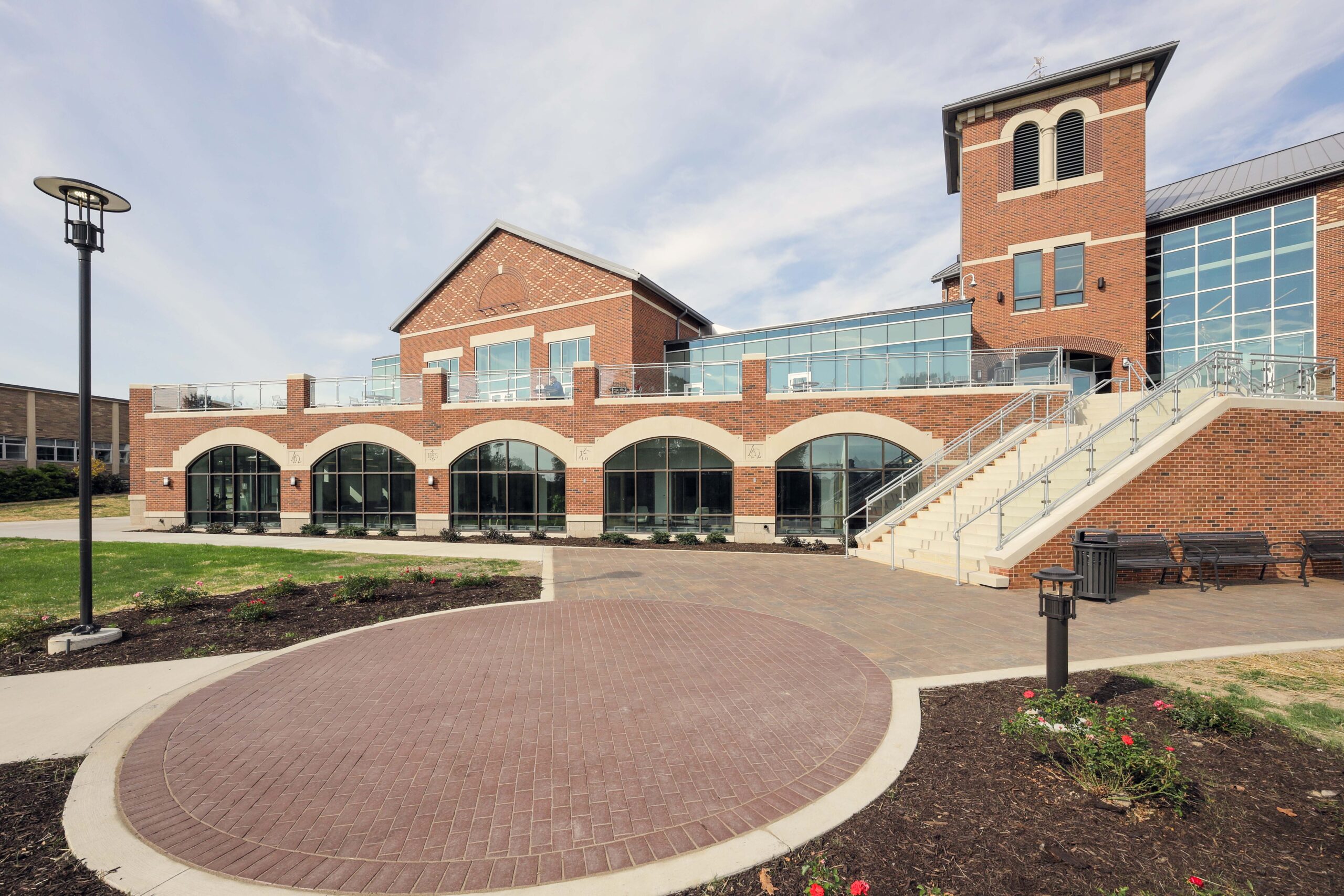
University and College Campus Roofing.
University and College Campus Roofing support in New Orleans, LA, with documented inspections, written scopes, and practical roof planning for commercial properties.
What this roof work solves
University and College Campus Roofing in New Orleans should begin with a documented roof walk. The first job is to identify active water entry, drainage problems, membrane condition, edge details, rooftop equipment conflicts, and weather exposure before a price or schedule is discussed.
For commercial owners, the useful answer is rarely a one-line recommendation. The roof file should explain the work area, the reason for the scope, the access constraints, and the next maintenance decision.
How the scope is built
The scope is based on service scope, building use, roof age, visible defects, and the cost difference between immediate repair and longer-range planning. When repair is enough, the work stays focused. When replacement or recover planning is the responsible move, the reasoning is written plainly.
Each finished project should leave behind before-and-after photos, service notes, and follow-up items so the owner keeps a record for future inspections, budgeting, and vendor conversations.
Commercial roofing for university buildings, dormitories, academic halls, and college campuses throughout New Orleans, LA.
Tulane University's uptown New Orleans campus and Loyola University New Orleans, situated side by side along St. Charles Avenue, together present one of the most historically rich and architecturally complex higher education roofing environments in the South. Tulane's Richardson Memorial Hall, Tilton Memorial Library, and the Newcomb Hall academic buildings include some of the most beautiful historic masonry structures in the region, with clay tile roofing, slate, and copper details that require preservation-minded contractors with hands-on experience in historic roofing materials and techniques. Loyola's Marquette Hall and the Jesuit Chapel, with their Spanish Renaissance-inspired tile roofing, add additional historic complexity to the St. Charles Avenue academic corridor.
Historic building preservation is the defining challenge for roofing work at Tulane and Loyola in New Orleans. The Louisiana Division of Historic Preservation's review process applies to buildings listed on the State and National Registers of Historic Places, and both campuses have multiple buildings that qualify. Roofing replacements on these structures require documentation of the existing conditions, consultation with preservation professionals about the historical significance of the roofing material, and submission of a treatment plan for review before work proceeds. The process is not optional, and contractors who begin work on historic buildings without completing the required review can expose the university to regulatory consequences and potentially to the cost of reversing non-compliant work.
Semester scheduling at Tulane and Loyola is complicated by the New Orleans academic tradition of a heavy fall event calendar — the period around Mardi Gras in spring and the intense social and academic activity of the fall semester — that limits access windows considerably. Summer provides the primary roofing project window, and the humidity and heat of New Orleans summers create challenging working conditions that require careful worker safety planning including heat illness prevention protocols that go beyond OSHA minimums given the extreme temperature and humidity combination that characterizes late July and August in the city.
Hurricane preparedness is the most operationally urgent roofing consideration for New Orleans universities. Post-Katrina campus rebuilding at Tulane — which closed briefly after the storm and undertook a major academic restructuring and physical rebuilding program — gave the university's facilities team direct experience with large-scale storm damage assessment and roofing reconstruction under emergency conditions. The lessons of that experience are embedded in current specifications that require FM Global 1-90 or higher wind uplift ratings for all new and re-roofed campus buildings, hurricane-rated skylight systems for any translucent roof panels, and documented pre-hurricane seasonal preparation protocols for every campus building.
LEED certification at Tulane reflects the university's deep commitment to sustainability education and practice in a city that is acutely vulnerable to the climate impacts that sustainable building practices help mitigate. Tulane's Green Wave Action Plan commits the university to specific carbon emission reduction targets, and roofing improvements — particularly insulation upgrades and cool roof installations — contribute directly to energy reduction that advances these targets. The facilities team at Tulane maintains a LEED documentation coordinator who works with roofing contractors on certification projects to ensure that all required product data and installation documentation is collected as the work proceeds rather than being assembled retrospectively at the end of the project.
Research laboratory roofing at Tulane, particularly at the Payson Center for International Development, the School of Science and Engineering buildings, and the A.B. Freeman School of Business, involves coordination with research operations that run throughout the calendar year. Tulane's medical school and its partnership with the VA New Orleans hospital system mean that health-sciences research continues without traditional academic breaks, and roofing projects near research laboratory buildings must be managed with the same contamination control discipline that applies to healthcare facility roofing work. Pre-project air quality baseline testing and continuous monitoring during roofing work near sensitive research areas are increasingly common on Tulane's campus.
The subtropical New Orleans climate creates a biological growth challenge for campus roofing that is more aggressive than at any other higher education institution in this survey. Algae, mold, and lichen colonize roofing surfaces within weeks during the humid summer months, and the rapid biological growth on clay tile roofing at Tulane and Loyola's historic buildings can accelerate deterioration of the tile substrate and the underlying mortar and flashing system if not managed with regular cleaning and biocide treatment. The campus grounds teams at both universities coordinate with roofing maintenance contractors to schedule biocide treatments for historic roofing on the same cycle as the broader grounds maintenance program to ensure that treatments are applied before biological growth reaches the point of causing physical damage.
Campus program buildings at Tulane — including the LBC (Lavin-Bernick Center for University Life), the Reily Recreation Center, and the Freeman School — are high-traffic buildings where roofing work must be coordinated carefully to avoid disrupting student life activities that occur outside of the academic calendar. The LBC in particular operates virtually continuously as the center of campus social and dining life, and roofing work on this building requires careful sequencing that confines work to times when building sections below the affected roof areas are not occupied. This type of coordination requires a direct relationship between the roofing contractor's superintendent and the building's manager, established before construction begins.
Long-term asset management at Tulane and Loyola benefits from the institutional investment in building documentation that both universities have made as part of post-Katrina recovery and rebuilding. The detailed building records created during storm damage assessment and restoration have given both universities a more complete picture of their building stock than was available before the storm, and this documentation foundation supports more accurate capital planning for roofing and other building systems. Maintaining and updating this documentation as roofing projects are completed — adding current photographs, warranty documentation, and condition assessments to the building record — is a practice that both universities have continued as part of their post-Katrina commitment to knowing the physical condition of every campus building.
Can you repair a leaking BUR roof on a New Orleans building without full replacement?
Sometimes. If the leak source is an isolated failed flashing at a penetration or parapet — and core cuts show the BUR field plies are otherwise dry and intact — targeted repair is the appropriate scope. If the leak is coming from degraded plies in the roof field, patching the visible wet spot without addressing the ply failure produces another leak nearby within a season or two. In a market where the next tropical rain event may arrive before the targeted repair has time to prove out, that distinction matters more than it does in other markets. We tell you which situation you are in before we propose a scope.
How do you manage gravel removal during BUR tear-off in a dense urban New Orleans location?
Gravel-surfaced BUR tear-off is labor-intensive and generates significant debris volume. On CBD, French Quarter, and Warehouse District buildings with constrained street access, we use rooftop vacuum systems that collect the gravel without staging loose aggregate at the curb. Street-use permits for dumpster placement in the French Quarter and the Downtown Development District require advance coordination with the City of New Orleans — we handle that permitting before mobilization.
Questions to settle early
Where is the risk?
Locate leaks, wet-insulation indicators, open seams, weak flashing, and drainage restrictions across the roof.
What can wait?
Separate immediate work from maintenance items that can be tracked for the next service window.
What should be funded?
Build a practical recommendation for repair, coating, recover, or replacement planning.
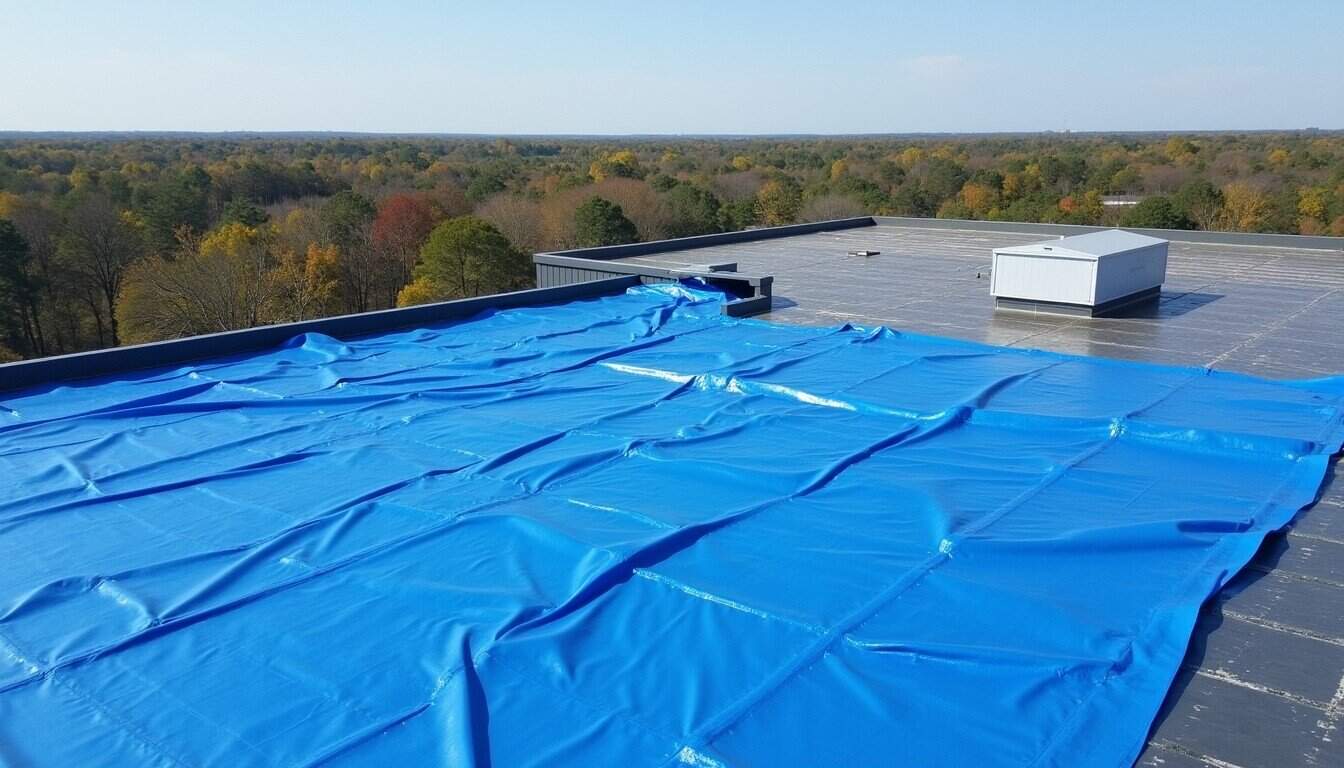
Need help with university and college campus roofing?
Send the building address, known roof age, access notes, and what changed. We will respond with the right next step.