
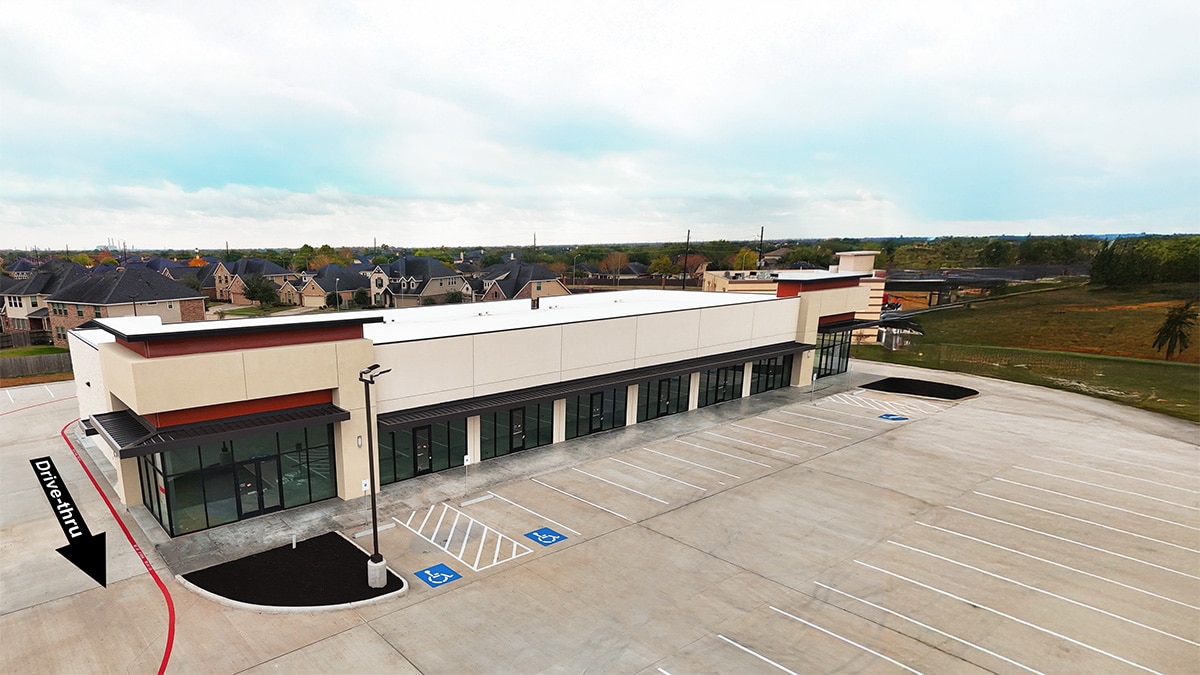
Retail and Shopping Center Roofing.
Retail and Shopping Center Roofing support in New Orleans, LA, with documented inspections, written scopes, and practical roof planning for commercial properties.
What this roof work solves
Retail and Shopping Center Roofing in New Orleans should begin with a documented roof walk. The first job is to identify active water entry, drainage problems, membrane condition, edge details, rooftop equipment conflicts, and weather exposure before a price or schedule is discussed.
For commercial owners, the useful answer is rarely a one-line recommendation. The roof file should explain the work area, the reason for the scope, the access constraints, and the next maintenance decision.
How the scope is built
The scope is based on service scope, building use, roof age, visible defects, and the cost difference between immediate repair and longer-range planning. When repair is enough, the work stays focused. When replacement or recover planning is the responsible move, the reasoning is written plainly.
Each finished project should leave behind before-and-after photos, service notes, and follow-up items so the owner keeps a record for future inspections, budgeting, and vendor conversations.
Commercial roofing for strip malls, shopping centers, anchor stores, and standalone retail buildings throughout New Orleans, LA.
New Orleans retail real estate exists in a climate that taxes roofing assemblies harder than almost any other market in North America. Average annual rainfall exceeds 62 inches, humidity rarely drops below 70 percent, summer heat indexes top 115 degrees, and the city sits in the direct path of Gulf of Mexico tropical systems that produce both extreme wind speeds and the prolonged torrential rainfall that tests every aspect of a flat roof's drainage design. The Lakeside Shopping Center corridor along Veterans Memorial Boulevard, the Fat City commercial district, the stretch of retail along Chef Menteur Highway, and the recovering strip centers on the east bank of St. Bernard Parish all carry roofing systems that live under constant pressure from a uniquely punishing environment.
Post-Katrina building code upgrades changed the roofing requirements for New Orleans commercial properties in ways that still shape project specifications today. The Louisiana State Uniform Construction Code adopted significantly enhanced wind uplift resistance requirements following the 2005 storm season, and roofing assemblies installed on commercial retail buildings after 2007 must meet tested uplift ratings that substantially exceed what older buildings in the market were originally designed for. When we reroofing older New Orleans retail properties — the strip malls on Magazine Street, the neighborhood commercial buildings on Carrollton Avenue — we specify membrane systems with FM 1-90 or better uplift ratings and install enhanced perimeter fastening patterns that address the increased wind pressure demands at roof edges and corners.
TPO single-ply is the dominant specification for new retail roofing in the greater New Orleans market, prized for its reflectivity in a climate where cooling energy costs are a major operating expense, and for the performance of heat-welded seams under the thermal cycling that accompanies daily summer thunderstorms. However, the city's exceptional humidity creates a specific installation quality control challenge: moisture contamination during membrane welding produces seam voids that may not be apparent during initial quality checks but open up under UV and thermal stress within two to three years. Our crews use seam probe testing on every linear foot of heat-welded seam on New Orleans retail projects and document results for the warranty file.
Tenant disruption planning in New Orleans retail has a unique dimension: the city's festival and event calendar creates retail peaks that have no equivalent in other markets. The period from January through Mardi Gras, the Jazz Fest weeks, and the fall Saints season all represent sales periods when retail landlords are understandably reluctant to have roofing equipment visible in their parking lots and construction noise audible inside their stores. We work with New Orleans retail property managers to schedule major reroofing projects in the narrow windows between events — typically late May through July for the spring-to-summer gap, and again in September before the fall event season starts.
Drainage design for New Orleans retail roofs operates in a zero-margin environment. The city's geography — below sea level in many areas, with drainage entirely dependent on the pump system — means that a retail building roof that cannot shed water faster than it accumulates creates flooding risk for tenants and inventory. We design drainage systems for New Orleans retail projects using the highest local rainfall intensity data: the 15-minute intensity for a 10-year storm event in New Orleans is among the highest in the continental United States, and drain sizing that would be perfectly adequate in most markets can be completely overwhelmed here during a slow-moving convective storm. Multiple interior drain locations, generously sized scuppers, and tapered insulation systems that eliminate any flat spots in the drainage plane are all standard elements of our New Orleans retail specifications.
HVAC penetration management on New Orleans retail roofs must account for the extraordinary density of rooftop equipment required to maintain interior comfort in the city's climate. A 5,000-square-foot inline retail tenant in the New Orleans market may operate three to five rooftop units to maintain the cooling capacity required in a building that absorbs heat from a 100-degree outdoor temperature combined with high latent humidity load. Grocery and food service tenants have even denser equipment profiles. Our New Orleans retail reroofing projects include a full inventory of all rooftop equipment and penetrations, a flashing condition assessment for each, and a replacement schedule that prioritizes the curbs and boots that show signs of existing moisture ingress on the infrared scan.
The recovery of New Orleans retail real estate following Katrina has been uneven, and significant pockets of the commercial landscape — particularly on the east bank, in New Orleans East, and along Gentilly Boulevard — still carry buildings where deferred maintenance has created layered roofing problems that require careful sequencing to address. We encounter retail buildings in these corridors where multiple generations of patch roofing are visible in core samples, where drains have been paved over by subsequent roof layers, and where the structural deck condition is unknown until tear-off reveals it. Thorough pre-bid investigation, including core sampling and drone photography, is the only reliable way to develop an accurate scope for these properties.
National retail brands that operate in the New Orleans metro — the grocery chains, pharmacy operators, and dollar store concepts that serve neighborhood retail needs across the metro's diverse commercial corridors — have post-Katrina corporate standards that reflect the lessons of 2005. These standards typically require enhanced wind uplift ratings, redundant drainage provisions, and independent inspection and testing during membrane installation. Landlords whose properties host these brands benefit from building relationships with contractors who understand the corporate facilities management process and can navigate the approval and documentation requirements without creating schedule delays.
Historic building overlays and architectural review requirements affect retail reroofing in New Orleans more than in almost any other American city. Properties in the Central Business District, the Warehouse District, and areas adjacent to the French Quarter may require review by the Historic District Landmarks Commission or the Vieux Carré Commission before re-roofing or facade work proceeds. Even properties that are not individually landmarked may be subject to design review in designated historic commercial corridors. Our project development process includes a regulatory review step for all New Orleans retail projects to identify any overlay districts or commission review requirements that apply before permit submission.
Can you repair a leaking BUR roof on a New Orleans building without full replacement?
Sometimes. If the leak source is an isolated failed flashing at a penetration or parapet — and core cuts show the BUR field plies are otherwise dry and intact — targeted repair is the appropriate scope. If the leak is coming from degraded plies in the roof field, patching the visible wet spot without addressing the ply failure produces another leak nearby within a season or two. In a market where the next tropical rain event may arrive before the targeted repair has time to prove out, that distinction matters more than it does in other markets. We tell you which situation you are in before we propose a scope.
How do you manage gravel removal during BUR tear-off in a dense urban New Orleans location?
Gravel-surfaced BUR tear-off is labor-intensive and generates significant debris volume. On CBD, French Quarter, and Warehouse District buildings with constrained street access, we use rooftop vacuum systems that collect the gravel without staging loose aggregate at the curb. Street-use permits for dumpster placement in the French Quarter and the Downtown Development District require advance coordination with the City of New Orleans — we handle that permitting before mobilization.
Questions to settle early
Where is the risk?
Locate leaks, wet-insulation indicators, open seams, weak flashing, and drainage restrictions across the roof.
What can wait?
Separate immediate work from maintenance items that can be tracked for the next service window.
What should be funded?
Build a practical recommendation for repair, coating, recover, or replacement planning.
Need help with retail and shopping center roofing?
Send the building address, known roof age, access notes, and what changed. We will respond with the right next step.