
Humidity & Trapped-Moisture Roof Repair.
Humidity & Trapped-Moisture Roof Repair support in New Orleans, LA, with documented inspections, written scopes, and practical roof planning for commercial properties.
What this roof work solves
Humidity & Trapped-Moisture Roof Repair in New Orleans should begin with a documented roof walk. The first job is to identify active water entry, drainage problems, membrane condition, edge details, rooftop equipment conflicts, and weather exposure before a price or schedule is discussed.
For commercial owners, the useful answer is rarely a one-line recommendation. The roof file should explain the work area, the reason for the scope, the access constraints, and the next maintenance decision.
How the scope is built
The scope is based on service scope, building use, roof age, visible defects, and the cost difference between immediate repair and longer-range planning. When repair is enough, the work stays focused. When replacement or recover planning is the responsible move, the reasoning is written plainly.
Each finished project should leave behind before-and-after photos, service notes, and follow-up items so the owner keeps a record for future inspections, budgeting, and vendor conversations.
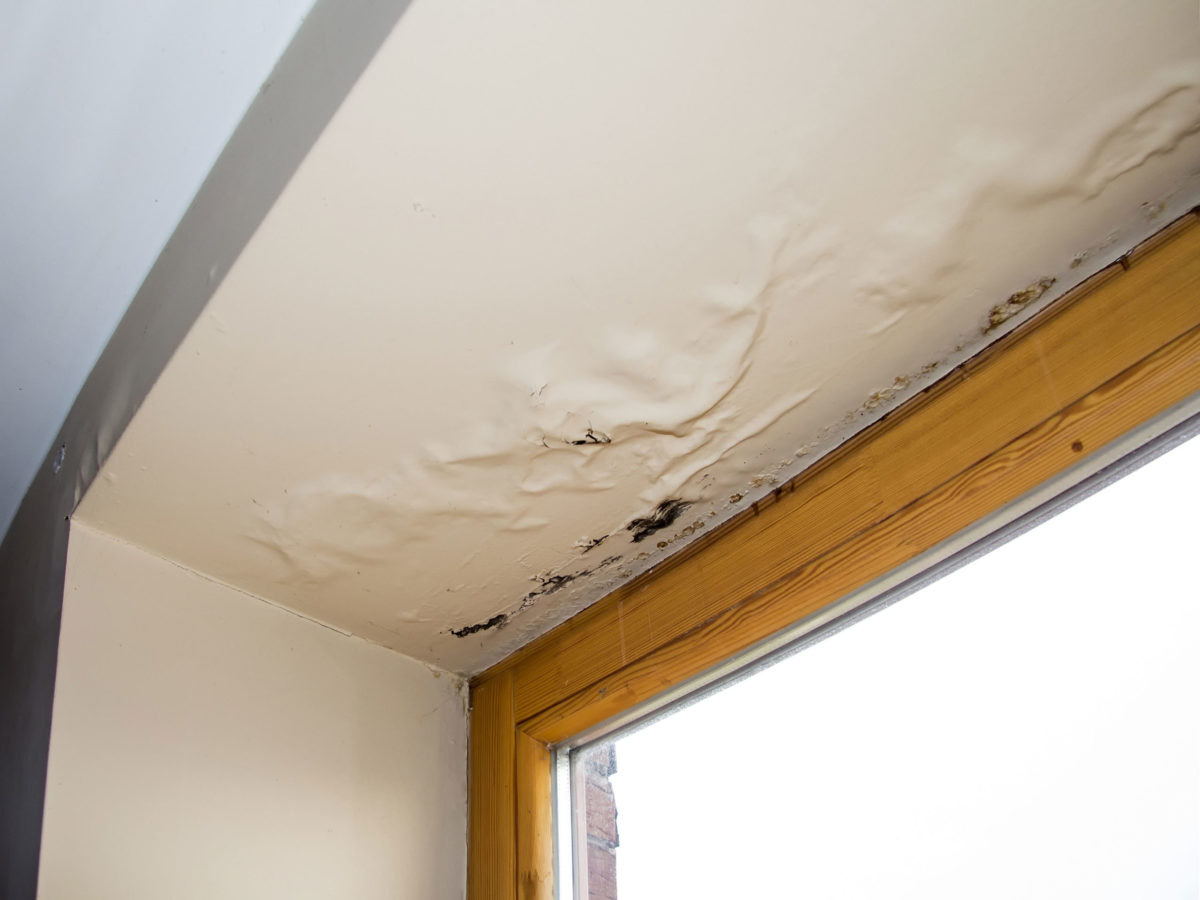
Owners almost always assume a wet roof means rain found a way in. On a large share of the New Orleans buildings we repair, the water never came through the membrane at all. It rose from inside. The outdoor air in this city stays loaded with moisture for most of the year, and inside a conditioned building that humid air is forever drifting upward toward the cooler roof. When it reaches a cold surface above the insulation it condenses, and the water it leaves behind has nowhere to drain. Season after season the insulation saturates, the membrane begins to lift, and the steel deck below starts to rust, all of it happening without one drop getting past the top sheet. This is a fundamentally different failure than storm damage, and treating it like storm damage is how owners end up paying twice.
The building types that drive New Orleans demand are exactly the ones prone to it. Restaurants and food-service kitchens packed through the French Quarter, the CBD, and the Warehouse District push heavy interior moisture loads up into their roofs. So do commercial laundries, indoor pools, and the cold-storage and food-processing plants clustered along the river and the Almonaster industrial corridor. Any building running high interior humidity, or built with its vapor barrier in the wrong place, is a candidate for this damage no matter how new the membrane looks from the parking lot.
Trapped-moisture damage shows itself in a few recognizable ways on a low-slope commercial roof, and reading them correctly is most of the diagnosis.
- Blistering. The membrane bubbles and lifts as vapor pressure builds beneath it and forces the sheet off its substrate, sometimes in pockets the size of a fist, sometimes across whole bays.
- Ridging. Long raised lines telegraph through the membrane along the insulation-board joints, where moisture has swollen the boards and pushed the seams upward.
- Soft, warm underfoot. Saturated insulation feels spongy and stays warm well after the surrounding dry field has cooled.
- Lifting edge metal. Around the perimeter, coping and edge metal start to pull loose as the fasteners holding them corrode in the constant damp.
The trouble is that by the time these signs are obvious from the surface, the problem is bigger than it looks. Blistering and ridging are late-stage symptoms, which means the insulation below has usually been wet long enough to spread well past the visible failure. That is why we never scope a humidity repair off a surface walk alone. The visible damage is the smoke; the saturated insulation is the fire, and it is almost always burning across more area than the eye can confirm from on top.
Behind most New Orleans humidity damage sits a vapor retarder that is missing, damaged, or installed on the wrong side of the assembly. In our climate the dominant vapor drive runs upward and outward, from the warm humid interior toward the roof, for most of the calendar. That means the retarder belongs low in the assembly, down near the deck, where it can stop interior moisture before it ever reaches the cold zone where it would condense. When a roof was built with the retarder above the insulation, or with no working retarder at all, the assembly fights the building physics instead of cooperating with it, and it traps moisture by design. Recovering over a roof like that without fixing the vapor layer simply rebuilds the same trap one course higher, and the new roof fails the same way the old one did.
Finding the Wet Insulation Before the Knife
You cannot repair what you cannot locate, and saturated insulation hides beneath an intact membrane. Our diagnostic tool for it is infrared scanning. After sunset the roof gives back the heat it absorbed all day, and dry insulation cools faster than wet insulation because water holds heat longer. An infrared survey run during that cooldown window lights the saturated areas up as warm zones against a cooling field, mapping the moisture across the whole roof rather than at the few spots where it has finally broken through. Then we confirm that map the only way that is truly conclusive: a roof cut at the flagged locations, where we pull a core, feel the insulation, and see for ourselves whether it is wet, how deep the saturation runs, and whether the deck below has begun to corrode.
For New Orleans buildings we push for an infrared survey on any commercial roof without one documented in the last three years, because in this climate the gap between catching wet insulation early and catching it late is the gap between a patch and a tear-off. We have cored roofs in Metairie and Mid-City where the membrane looked perfectly fine and the insulation underneath was soaked across half the field, the deck already pitting with rust. That building no longer had a repair on the table; it had a replacement. Caught two seasons sooner, it would have been a manageable cut-and-patch.
What we do about humidity damage depends entirely on how far it has spread, and the infrared survey is what tells us. When the wet insulation sits in discrete, well-defined zones with sound dry assembly all around them, we cut out the saturated material, rebuild it with new dry insulation set back to the right slope, patch the membrane over the repair, and reseal any edge metal or flashing we disturbed. That is a targeted repair, and it is the correct answer whenever the damage is contained.
Once the saturation crosses roughly a quarter to a third of the roof, or once the steel deck has corroded to where it no longer holds fasteners reliably, patching stops making economic sense. At that point the conversation shifts to a full replacement, and a replacement is also the moment to fix the underlying cause: we redesign the assembly with the vapor retarder placed correctly for our climate so the new roof does not inherit the old one's failure mode. We lay all of this out plainly after the survey, with the wet areas mapped, the deck condition documented, and a clear side-by-side of repair cost against replacement cost, so the decision rests on what the roof actually needs rather than on guesswork.
Humidity damage does not hold still. Wet insulation surrenders its insulating value, so the building bleeds conditioned air through the roof and the HVAC works harder and costs more every month the moisture stays. The corrosion on the deck speeds up the longer it sits in the damp. A roof that scans at fifteen percent wet coverage this year can read forty or fifty percent two seasons on, and the repair that was affordable becomes a replacement that is not. In a climate that keeps the assembly damp and rarely dries it out, that progression runs faster here than in most markets. If your New Orleans commercial building is showing blisters, soft spots, ridging, or lifting edge metal, the smart move is to get the roof scanned before the next humid stretch pushes a contained problem into a full tear-off. Reach out and we will run the infrared survey, core the findings, and tell you exactly where the moisture is and what it will take to stop it.
Questions to settle early
Where is the risk?
Locate leaks, wet-insulation indicators, open seams, weak flashing, and drainage restrictions across the roof.
What can wait?
Separate immediate work from maintenance items that can be tracked for the next service window.
What should be funded?
Build a practical recommendation for repair, coating, recover, or replacement planning.
Need help with humidity & trapped-moisture roof repair?
Send the building address, known roof age, access notes, and what changed. We will respond with the right next step.