
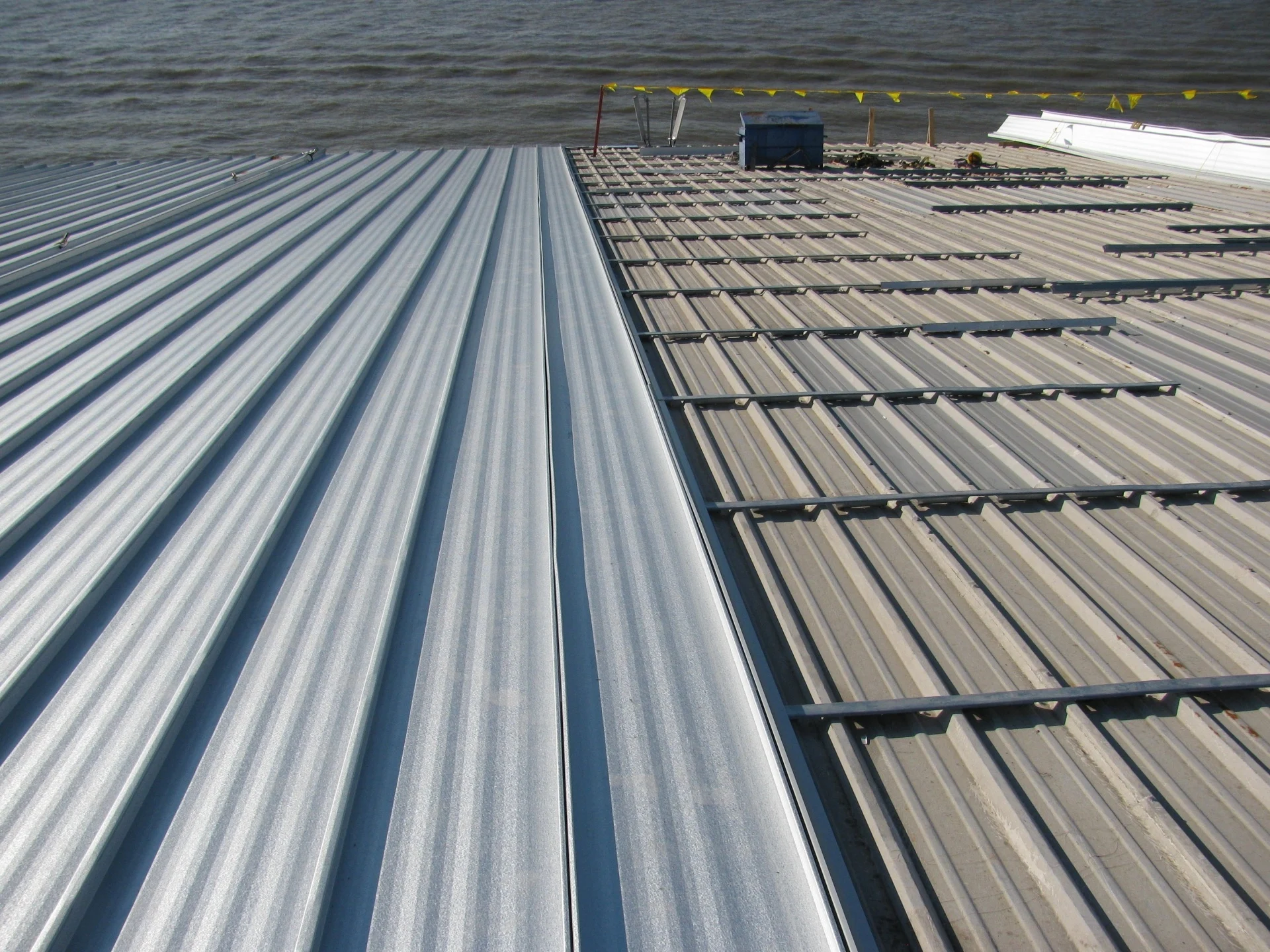
Roof Recover Systems.
Roof Recover Systems support in New Orleans, LA, with documented inspections, written scopes, and practical roof planning for commercial properties.
What this roof work solves
Roof Recover Systems in New Orleans should begin with a documented roof walk. The first job is to identify active water entry, drainage problems, membrane condition, edge details, rooftop equipment conflicts, and weather exposure before a price or schedule is discussed.
For commercial owners, the useful answer is rarely a one-line recommendation. The roof file should explain the work area, the reason for the scope, the access constraints, and the next maintenance decision.
How the scope is built
The scope is based on service scope, building use, roof age, visible defects, and the cost difference between immediate repair and longer-range planning. When repair is enough, the work stays focused. When replacement or recover planning is the responsible move, the reasoning is written plainly.
Each finished project should leave behind before-and-after photos, service notes, and follow-up items so the owner keeps a record for future inspections, budgeting, and vendor conversations.
A recover system — new insulation overlay plus new membrane installed over an existing roof — can extend a New Orleans commercial building's roof asset by 15-20 years at roughly half the capital cost of full tear-off replacement. The condition of the existing roof's insulation, and the building's storm history, determine whether recover is an honest option.
The recover-vs-replace decision is the most consequential scoping question on any aging New Orleans commercial flat roof. Get it right and you either save the building owner 40-50% of replacement capital (when recover qualifies) or you avoid installing a new manufacturer-warranted membrane over wet insulation that will void the warranty and fail within a few storm seasons (when it does not). The Gulf Coast climate makes this a higher-stakes decision than it would be in a drier inland market: saturated polyiso insulation in New Orleans does not dry out between rain events, and covering it with a new membrane locks in a deterioration process that keeps running under the new system.
We have no financial incentive to push replacement over recover or recover over replacement. A recover on a qualifying 100,000 sq ft New Orleans warehouse might run $8-11 per sq ft installed vs. $14-17 per sq ft for full tear-off replacement. If recover is the honest scope, we scope it. If core cuts come back wet, we scope replacement — because the cost of a failed recover system in a market with 60-plus inches of annual rainfall is the full replacement cost plus the leak damage that accumulated in the interval.
The decision framework rests on two physical conditions: the moisture content of the existing insulation, and the structural condition of the existing roof deck. Both require physical investigation — surface appearance is not a reliable indicator of either.
Moisture Core Sampling Protocol for New Orleans Roofs
We pull moisture cores at one per 4,000-5,000 sq ft on any roof being considered for recover — minimum 6 cores on any building we evaluate. Core locations are chosen to sample all roof zones: field areas away from drains, areas near drain bowls, parapet corners, areas near previously repaired leak locations, and any zone with visible surface anomalies including blisters, delamination, or discoloration. On a 50,000 sq ft single-story New Orleans industrial building, that means 10-12 core pulls during the inspection visit.
Each core is inspected visually — wet polyiso changes color from white or cream to yellow, orange, or brown — and weighed before and after oven-drying to quantify moisture content precisely. Core locations are marked on the roof zone diagram and photographed in place before the plug is replaced. The written report maps every core location, records the finding at each, and calculates the percentage of cores reading wet.
Our threshold in this market is conservative relative to some regional standards: if more than 20-25% of core locations show wet insulation, recover is not the honest scope on a New Orleans commercial building. At 60-plus inches of annual rainfall, the wet insulation will not dry out under a new membrane — it will continue to retain moisture, accelerate corrosion on the metal deck below it, support biological activity at the insulation-membrane interface, and degrade the new system's adhesion and performance over time. Below that threshold, targeted tear-out of wet areas combined with a qualifying recover membrane can produce a warranted system with full expected service life.
A New Orleans-specific condition we track closely: buildings in the Mid-City, Gentilly, and lower Lakeview corridors where pre-Katrina drainage infrastructure allowed temporary surface flooding to remain in contact with the roof edge for extended periods during major rain events. Roofs in these zones show elevated moisture infiltration at parapet-base insulation compared to buildings with equivalent surface drainage performance in other parts of the metro.
Recover System Design on Gulf Coast Buildings
A recover system has three components: the attachment method through the existing roof to the deck, the new insulation overlay, and the new membrane. Each must be specified to the existing roof's condition, the building's ASCE 7 hurricane wind-uplift classification, and the manufacturer's published recover system design requirements.
Attachment: most recover systems on New Orleans commercial buildings are mechanically attached through the new insulation, the existing membrane, and the existing insulation to the structural deck below. The fastener pattern and density are designed to the building's hurricane-prone-region wind-uplift requirement — the same ASCE 7 calculation that governs a new replacement system. On buildings with exposure to open water or elevated corner-zone pressure coefficients, we may specify a higher fastener density at perimeter zones and full adhesion for the top membrane layer to reduce uplift risk at the edge.
Insulation overlay and energy compliance: Louisiana's adopted energy code for commercial buildings in Climate Zone 2A requires minimum insulation values that must be met by the combined existing-plus-new assembly. We calculate the existing insulation's R-value contribution where it is confirmed dry and add the overlay requirement to reach current code compliance. On older buildings with under-insulated assemblies, the recover scope may require a thicker polyiso overlay than the minimum cover board — that calculation is in the written scope before anything is ordered.
Membrane: TPO, EPDM, or modified bitumen, selected and specified to the building's use, warranty path, and Gulf Coast performance requirements. The recover membrane carries the same 15-20 year manufacturer warranty as a new replacement system if the substrate passes the manufacturer's recover system requirements. We specify membrane based on reflectivity requirements for Climate Zone 2A energy compliance, wind-uplift attachment method, and the building owner's capital horizon.
Questions to settle early
Where is the risk?
Locate leaks, wet-insulation indicators, open seams, weak flashing, and drainage restrictions across the roof.
What can wait?
Separate immediate work from maintenance items that can be tracked for the next service window.
What should be funded?
Build a practical recommendation for repair, coating, recover, or replacement planning.
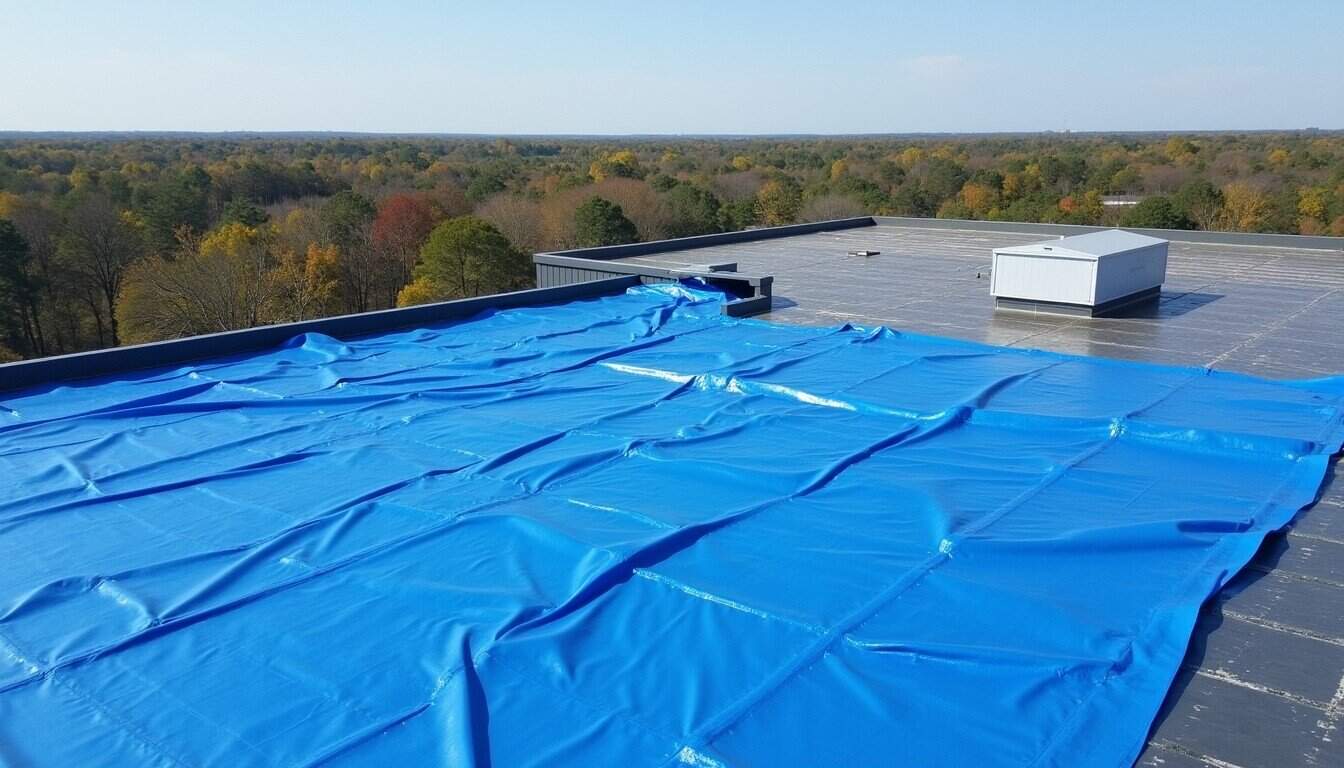
Need help with roof recover systems?
Send the building address, known roof age, access notes, and what changed. We will respond with the right next step.