
Mixed-Use Development Roofing.
Mixed-Use Development Roofing support in New Orleans, LA, with documented inspections, written scopes, and practical roof planning for commercial properties.
What this roof work solves
Mixed-Use Development Roofing in New Orleans should begin with a documented roof walk. The first job is to identify active water entry, drainage problems, membrane condition, edge details, rooftop equipment conflicts, and weather exposure before a price or schedule is discussed.
For commercial owners, the useful answer is rarely a one-line recommendation. The roof file should explain the work area, the reason for the scope, the access constraints, and the next maintenance decision.
How the scope is built
The scope is based on service scope, building use, roof age, visible defects, and the cost difference between immediate repair and longer-range planning. When repair is enough, the work stays focused. When replacement or recover planning is the responsible move, the reasoning is written plainly.
Each finished project should leave behind before-and-after photos, service notes, and follow-up items so the owner keeps a record for future inspections, budgeting, and vendor conversations.
Commercial roofing for mixed-use buildings, urban infill developments, and live-work-play properties throughout New Orleans, LA.
New Orleans presents one of the most demanding mixed-use roofing environments in the country, combining Gulf Coast hurricane exposure, sustained extreme heat and humidity, frequent intense rainfall, and an architectural heritage that makes every roofing decision visible from the street. The Warehouse District, Magazine Street, and the redeveloping Mid-City area around the Lafitte Greenway have all seen significant mixed-use investment, with buildings that layer ground-floor restaurants, galleries, and retail under upper-floor apartments and boutique hotels. The specific character of the Crescent City—its elevation challenges, its French and Spanish colonial construction traditions, its position as a direct target for major hurricanes—defines what a roofing assembly must accomplish here.
Hurricane wind design is the foundational requirement for every New Orleans mixed-use roof. Louisiana's state building code and the City of New Orleans's amendments require design wind speeds of 130 to 150 mph in the greater metropolitan area, with specific higher values in coastal parish zones. Mixed-use buildings in the Warehouse District and along the Magazine Street corridor must have every component of the roof assembly—membrane, insulation, flashings, and all rooftop accessories—evaluated for the wind uplift that these speeds produce. After Katrina and Ida both demonstrated the consequences of wind uplift failure on urban mixed-use buildings, local building officials and insurance underwriters have become significantly more attentive to documentation of code-compliant wind resistance on new construction and major reroofing projects.
Heat and UV intensity in New Orleans are extreme even by Gulf Coast standards, with rooftop surface temperatures regularly exceeding 170°F on black-surfaced assemblies in July and August. Cool roofing requirements under Louisiana's energy code mandate minimum solar reflectance values for new low-slope commercial roofs, and the cool roof specification on mixed-use buildings reduces both the building's cooling load—which is the dominant energy cost in New Orleans's climate—and the thermal stress on the membrane itself. White TPO or light-colored modified bitumen cap sheets have become the standard in New Orleans's commercial market for good reasons rooted in both code compliance and service life extension.
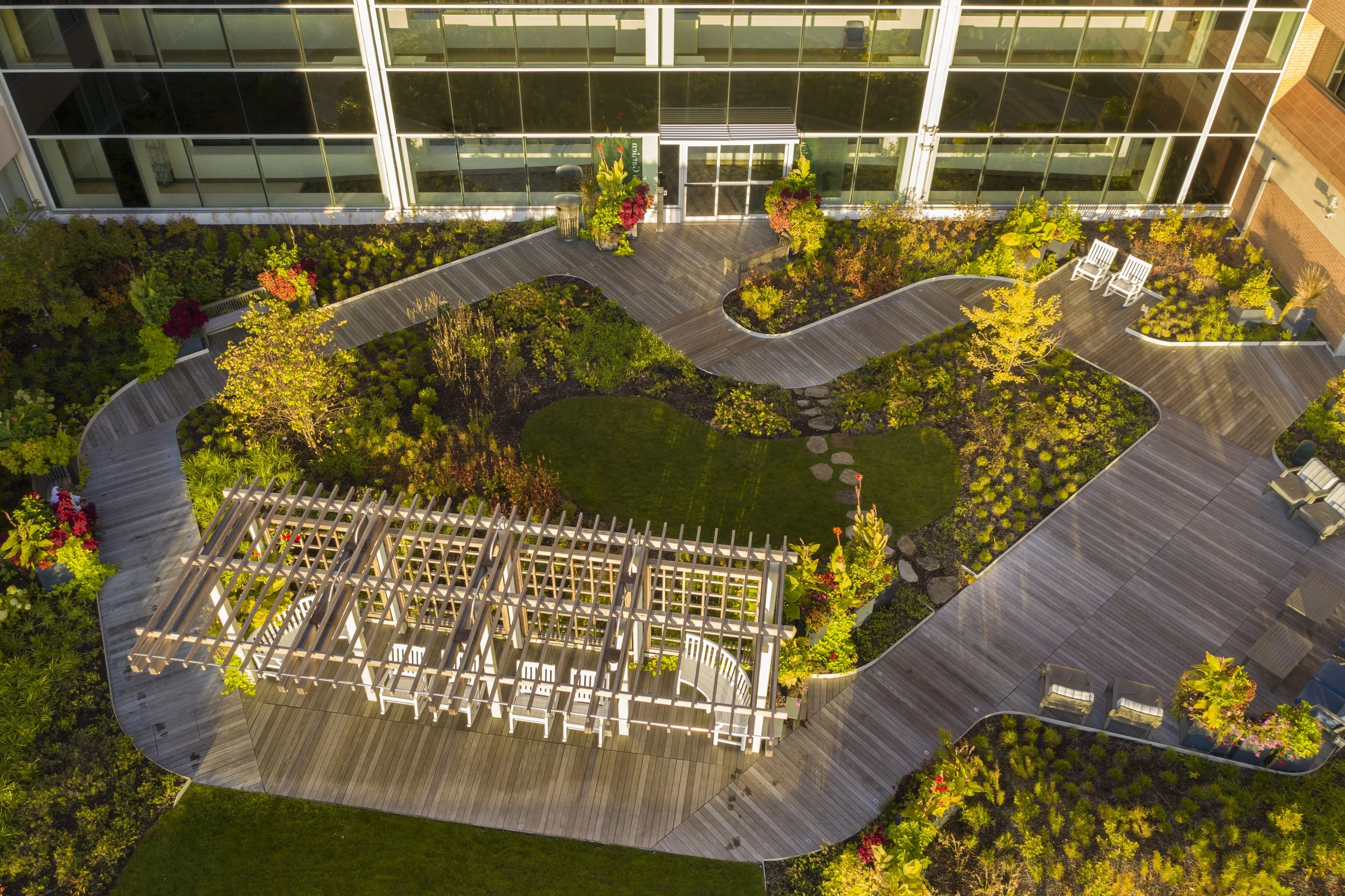
Rooftop amenity decks and rooftop bars are a significant part of the New Orleans mixed-use development program in the Warehouse District and the Lower Garden District. These spaces are heavily used year-round given the city's climate, which means the waterproofing system beneath them faces constant foot traffic, bar drain loads, frequent power washing, and the intense UV that uncovered surfaces experience. A monolithic fluid-applied waterproofing system, reinforced with polyester fabric at transitions and drain areas, provides a seamless waterproofing layer that eliminates the lap joint vulnerabilities that sheet-applied systems present in this application. Root barriers are equally important on any New Orleans rooftop deck where tenants or residents introduce planter boxes, as the subtropical climate accelerates root growth toward the membrane.
Multi-stakeholder management in New Orleans mixed-use buildings is complicated by the city's large base of small, independent property owners who may have purchased a unit in a mixed-use condominium without fully understanding the shared infrastructure implications. Roof replacement on a Warehouse District mixed-use condo that was built in the early 2000s may require a special assessment because the reserve fund was not adequately structured at the time of conversion. The Louisiana Condominium Act's reserve fund requirements provide a framework, but enforcement is variable, and many buildings operate with insufficient capital reserves for roofing events—which, given New Orleans's hurricane exposure, can arrive unexpectedly and require immediate response.
Long-term maintenance on New Orleans mixed-use roofs must be intensified relative to what would be appropriate in less hostile climates. Biannual inspections—one in early spring before the severe weather season and one in late fall after hurricane season—should check flashing integrity at all parapet and transition conditions, drain function and capacity, membrane condition with particular attention to areas near rooftop bar and kitchen equipment, and the condition of any rooftop amenity surfaces. Post-storm inspections after tropical systems should be added to this schedule as needed. The contractors best positioned for this work in New Orleans have specific experience with the city's historic building fabric and the particular intersection of preservation requirements and modern waterproofing performance.
Can you repair a leaking BUR roof on a New Orleans building without full replacement?
Sometimes. If the leak source is an isolated failed flashing at a penetration or parapet — and core cuts show the BUR field plies are otherwise dry and intact — targeted repair is the appropriate scope. If the leak is coming from degraded plies in the roof field, patching the visible wet spot without addressing the ply failure produces another leak nearby within a season or two. In a market where the next tropical rain event may arrive before the targeted repair has time to prove out, that distinction matters more than it does in other markets. We tell you which situation you are in before we propose a scope.
How do you manage gravel removal during BUR tear-off in a dense urban New Orleans location?
Gravel-surfaced BUR tear-off is labor-intensive and generates significant debris volume. On CBD, French Quarter, and Warehouse District buildings with constrained street access, we use rooftop vacuum systems that collect the gravel without staging loose aggregate at the curb. Street-use permits for dumpster placement in the French Quarter and the Downtown Development District require advance coordination with the City of New Orleans — we handle that permitting before mobilization.
Is built-up roofing still installed new in New Orleans?
Rarely for new commercial installations. Modern modified bitumen achieves comparable performance with lower installation complexity and without the hot-kettle asphalt-fume requirements that create odor and fire-watch burdens in the densely occupied neighborhoods that characterize much of New Orleans commercial construction. We can specify and install new BUR where a building's situation genuinely calls for it, but for most New Orleans commercial projects, modified bitumen or TPO is the more defensible specification for new work.
Aging BUR on a New Orleans commercial building?
Questions to settle early
Where is the risk?
Locate leaks, wet-insulation indicators, open seams, weak flashing, and drainage restrictions across the roof.
What can wait?
Separate immediate work from maintenance items that can be tracked for the next service window.
What should be funded?
Build a practical recommendation for repair, coating, recover, or replacement planning.
Need help with mixed-use development roofing?
Send the building address, known roof age, access notes, and what changed. We will respond with the right next step.