
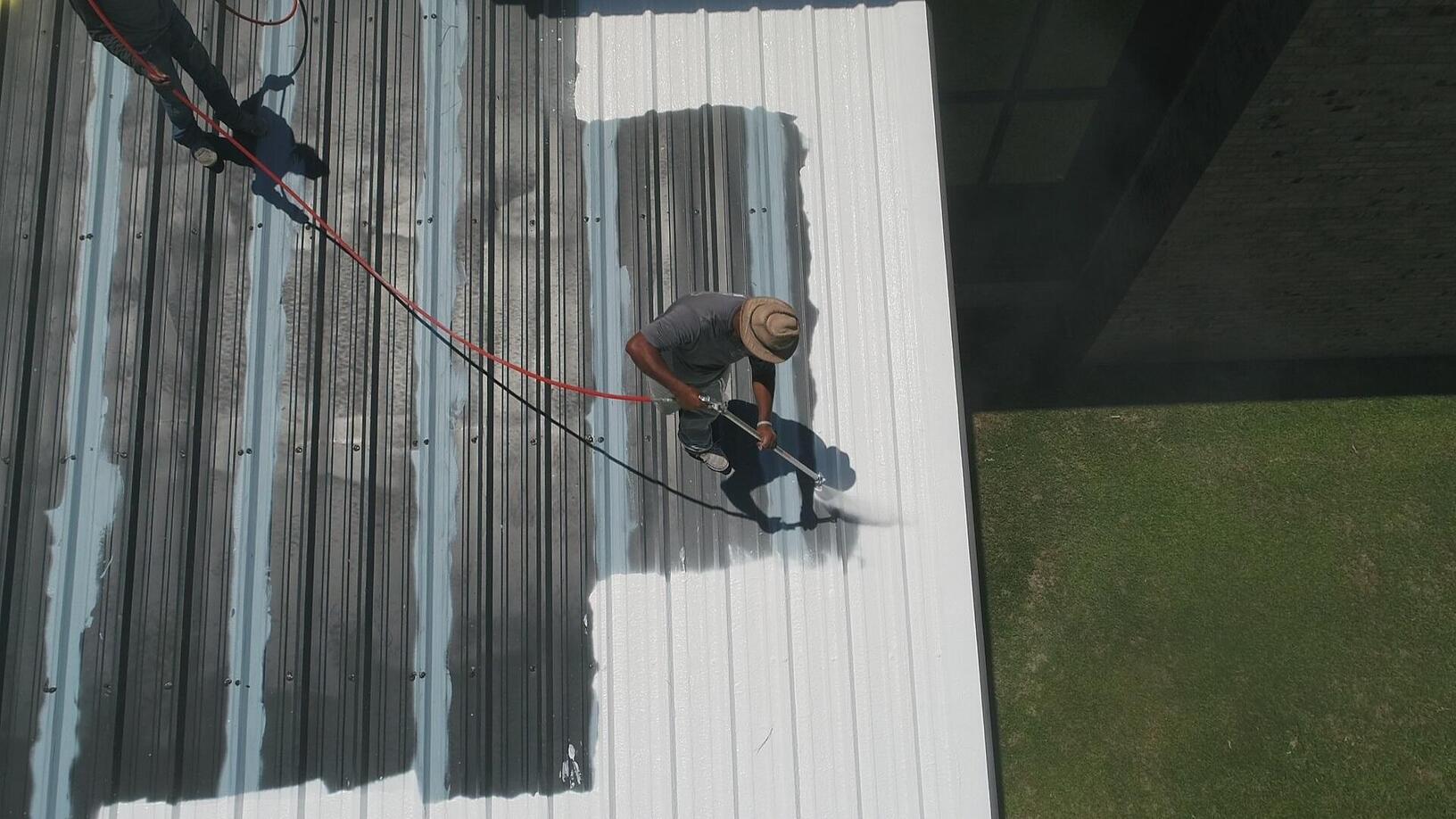
Insurance Claim Roof Documentation.
Insurance Claim Roof Documentation support in New Orleans, LA, with documented inspections, written scopes, and practical roof planning for commercial properties.
What this roof work solves
Insurance Claim Roof Documentation in New Orleans should begin with a documented roof walk. The first job is to identify active water entry, drainage problems, membrane condition, edge details, rooftop equipment conflicts, and weather exposure before a price or schedule is discussed.
For commercial owners, the useful answer is rarely a one-line recommendation. The roof file should explain the work area, the reason for the scope, the access constraints, and the next maintenance decision.
How the scope is built
The scope is geared to damage response, building use, roof age, visible defects, and the cost difference between immediate repair and longer-range planning. When repair is enough, the work stays focused. When replacement or recover planning is the responsible move, the reasoning is written plainly.
Each finished project should leave behind before-and-after photos, service notes, and follow-up items so the owner keeps a record for future inspections, budgeting, and vendor conversations.
Louisiana's commercial insurance market was reshaped by Katrina in 2005 and again by the successive Gulf storms of 2020 and 2021. The carriers active in this market — Citizens, State Farm, Allstate, USAA, and the specialty commercial market — work within a regulatory framework that demands specific documentation. We build it.
New Orleans commercial property owners file more weather-related roof damage claims per square foot of commercial building inventory than almost any other major US city. The Gulf Coast's hurricane cycle, the subtropical climate's year-round convective storm season, and the legacy of Katrina's 2005 damage combined to create a Louisiana insurance market that processes commercial wind-damage claims on a scale and frequency that carriers in most other US states do not encounter.
The Louisiana Department of Insurance post-Katrina claim-handling regulations established documentation standards for commercial wind damage claims that are more specific than most states' requirements. Louisiana Citizens Property Insurance Corporation — the state insurer of last resort, which has processed commercial wind claims from Katrina, Ike, Gustav, Zeta, Laura, and Ida — works within those regulations. Private carriers active in the Louisiana commercial market, including State Farm, Allstate, and USAA, operate under the same regulatory framework and have developed their own adjuster workflows that expect specific documentation formats.
We produce commercial roof insurance documentation to that standard. Not as public adjusters — we are roofers. We document the physical condition of the roof, the storm damage pattern, the pre-event versus event-caused condition distinction, and the repair-vs-replace recommendation. The people managing your claim — your adjuster, your public adjuster, or your attorney — take that documentation and use it. We do not negotiate claims, represent insureds in the claim process, or advise on coverage.
What Louisiana Carriers Require from Commercial Roof Documentation
Louisiana commercial property insurance adjusters, particularly those processing hurricane wind claims under the Louisiana Department of Insurance's post-Katrina claim-handling rules, work from a documentation standard that separates storm-caused damage from pre-existing conditions, attributes damage to a specific insured event with cross-reference to publicly available storm records, and provides a line-item repair-vs-replace scope that the adjuster can evaluate without walking every foot of the damage zone.
The Louisiana Insurance Commissioner's office provides oversight that shapes how carriers handle commercial wind claims in the state. After Katrina, the Commissioner's office implemented claim-handling regulations specifically addressing wind damage attribution, the distinction between storm-caused and pre-existing damage, and the timeline requirements for adjuster response. Our documentation is designed to support that regulatory framework — not to work around it.
The Components of a Louisiana-Carrier-Grade Roof Documentation Package
Roof zone diagram: A measured drawing of the commercial building's roof surface divided into field, perimeter, and corner zones per ASCE 7 classification, with each damage zone keyed to the diagram and labeled by failure mode — membrane uplift, impact, water infiltration, flashing separation. The diagram is the navigation tool that allows an adjuster to correlate every photo in the log to a specific location on the roof without being on the roof.
Photo log with GPS tags: Every damage site photographed at three distances — wide context, mid-range showing seam and penetration proximity, close-up with scale reference. Each photo tagged with GPS coordinates and a zone reference that ties to the roof diagram. Separate photo indexes for each peril where the damage involved multiple causes — wind, hail, water, or debris impact documented in separate indexed sequences so the adjuster can match each photo set to the applicable policy provision.
Storm event documentation: NWS storm event records for the specific event date, NOAA NEXRAD radar archive, SPC storm reports where applicable, the Louisiana Governor's Office of Homeland Security and Emergency Preparedness event declaration number where issued, and any Verisk or CoreLogic hail or wind footprint data for the building's address. This package ties the scope unambiguously to the insured event.
Written repair-vs-replace recommendation: A narrative recommendation for each damage zone — specific to that zone's failure mode, pre-event condition, and damage extent — with the factual basis for the recommendation stated. A recommendation that cannot be supported by the documented evidence does not go in the package.
Working with Public Adjusters and Attorneys in Louisiana
Louisiana has a robust licensed public adjuster community shaped by the post-Katrina claim environment. Public adjusters representing commercial building owners in wind-damage claims routinely request specific documentation formats that differ from what a general contractor's damage estimate provides — they need a roof scope package, not a bid. We produce the scope package and deliver it to your public adjuster in a format they can work from.
Questions to settle early
Where is the risk?
Locate leaks, wet-insulation indicators, open seams, weak flashing, and drainage restrictions across the roof.
What can wait?
Separate immediate work from maintenance items that can be tracked for the next service window.
What should be funded?
Build a practical recommendation for repair, coating, recover, or replacement planning.
Need help with insurance claim roof documentation?
Send the building address, known roof age, access notes, and what changed. We will respond with the right next step.