
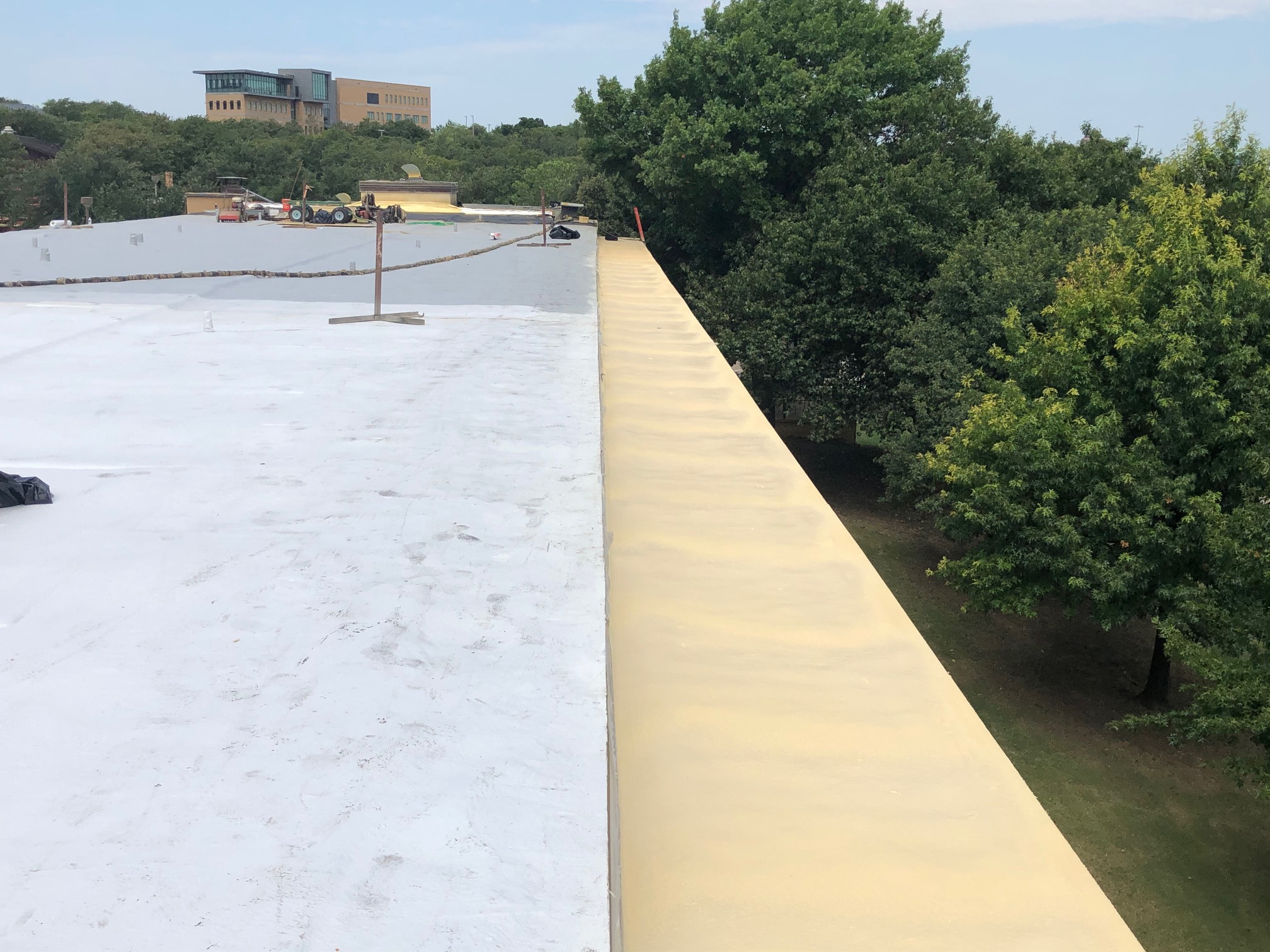
Wind Damage Roof Repair.
Wind Damage Roof Repair support in New Orleans, LA, with documented inspections, written scopes, and practical roof planning for commercial properties.
What this roof work solves
Wind Damage Roof Repair in New Orleans should begin with a documented roof walk. The first job is to identify active water entry, drainage problems, membrane condition, edge details, rooftop equipment conflicts, and weather exposure before a price or schedule is discussed.
For commercial owners, the useful answer is rarely a one-line recommendation. The roof file should explain the work area, the reason for the scope, the access constraints, and the next maintenance decision.
How the scope is built
The scope is geared to damage response, building use, roof age, visible defects, and the cost difference between immediate repair and longer-range planning. When repair is enough, the work stays focused. When replacement or recover planning is the responsible move, the reasoning is written plainly.
Each finished project should leave behind before-and-after photos, service notes, and follow-up items so the owner keeps a record for future inspections, budgeting, and vendor conversations.
No US commercial roofing market has more documented hurricane wind-uplift failure data than New Orleans. Katrina in 2005, Zeta in 2020, Laura in 2020, and Ida in 2021 produced successive datasets of what fails and how. We read those patterns on your roof and build documentation that captures what the storm actually did.
Hurricane Ida made landfall near Port Fourchon on August 29, 2021 as a Category 4 storm with 150 mph sustained winds — exactly 16 years after Katrina to the day. Ida's track through Jefferson and Orleans parishes stripped membrane systems from commercial buildings across Metairie, Kenner, and New Orleans East. Post-Ida damage surveys documented the same failure modes that post-Katrina surveys identified in 2005: perimeter and corner edge lift on mechanically attached systems where fastener density met code minimums but not actual Cat-3 and Cat-4 pressure coefficients, parapet-to-membrane transition separation on pre-2005 details, and field membrane delamination on fully adhered systems where adhesive bond had degraded through subtropical thermal cycling.
Hurricane Zeta's October 2020 Category 3 landfall near Cocodrie added another dataset three years before Ida — commercial buildings across St. Tammany and Jefferson parishes sustained wind uplift on membrane systems that passed pre-storm inspection. The failure mode in most Zeta cases was perimeter separation beginning at the building's windward corner, not field membrane failure, which is consistent with the corner pressure coefficient distribution ASCE 7 models for Gulf Coast hurricane-prone regions.
We document wind damage by reading its directional signature, its zone distribution, and its failure mode. We produce that scope package in a format your Louisiana-licensed adjuster or public adjuster can use to advance the claim — because they need to make line-item decisions without necessarily walking every linear foot of the damage zone.
How Hurricane Wind Loads a New Orleans Flat Roof
Wind pressure on a flat roof is not uniform. ASCE 7 maps commercial roof surfaces into field, perimeter, and corner zones — corners carry roughly three times the uplift pressure of the field. In New Orleans's hurricane-prone region designation, these pressure coefficients are elevated beyond non-hurricane-prone baselines. Buildings in open-terrain Exposure C designations — the New Orleans East warehouse corridor along Chef Menteur Highway, the lakefront commercial zone along Veterans Boulevard in Metairie, the open-air corridors of the Lower Ninth Ward industrial district — carry corner uplift requirements that routinely expose the gap between pre-Katrina code-minimum fastener patterns and what Ida-class events actually produce.
Parapet-to-membrane transition failure is the second most documented wind-damage pattern in New Orleans post-hurricane surveys. Pre-Katrina commercial buildings in Orleans and Jefferson parishes were detailed to pre-2005 wind specifications. When Ida and Zeta generated peak gust pressures at parapet corners, the wall-to-deck transition flashings separated first. We inspect every parapet corner and perimeter termination on wind-event inspections — not just the area where the obvious pull-off began.
Fastener pullout at the perimeter rows of mechanically attached systems is the third common failure mode. Metal deck on commercial buildings in this market that has been through 20 or more years of thermal cycling in subtropical heat and humidity can develop oversized fastener holes that fail under hurricane-class wind loading even when the fastener pattern meets current code density requirements. We probe the perimeter rows and document pullout evidence with measurements and photographs — because pullout from wind loading has a zone distribution and directional concentration that distinguishes it from installation defects.
Post-Hurricane Wind Damage Documentation for Louisiana Carriers
Louisiana's post-Katrina insurance market is shaped by the Louisiana Department of Insurance's regulatory response to the 2005 event and subsequent Gulf storms. Louisiana Citizens Property Insurance Corporation, the state insurer of last resort, processes more commercial wind claims per storm season than any comparable state program. Private carriers active in the Louisiana commercial market — including State Farm, Allstate, and USAA — work within a regulatory environment that post-Katrina reforms shaped specifically around wind-damage claim documentation standards.
We build wind damage documentation to the standard those carriers and their adjusters require: a roof zone diagram with each damage zone keyed by ASCE 7 field-perimeter-corner classification, a directional damage narrative that correlates with the storm track on record, a photo log with GPS-tagged images at each failure site, and a written repair-vs-replace recommendation with the failure mode and zone distribution stated. We include the NWS storm event data and the Louisiana Governor's Office of Homeland Security and Emergency Preparedness declaration number where applicable.
We are roofers, not public adjusters. We document what happened to the roof and produce the scope that the people managing your claim can use. We do not negotiate claims, represent insureds, or advise on coverage decisions.
Repair vs. Replace After Hurricane Wind Damage
Perimeter pull-off confined to one or two edges with the field membrane intact and fastener pattern holding in the field zones is typically a repair scope: reinstall perimeter termination with current hurricane-specification edge metal, reinforce the perimeter fastener pattern to ASCE 7 hurricane-prone-region density, reattach displaced parapet flashing with reinforced transition detail. This is the most common post-wind repair scope on well-maintained buildings that were originally installed to current wind-uplift requirements.
Questions to settle early
Where is the risk?
Locate leaks, wet-insulation indicators, open seams, weak flashing, and drainage restrictions across the roof.
What can wait?
Separate immediate work from maintenance items that can be tracked for the next service window.
What should be funded?
Build a practical recommendation for repair, coating, recover, or replacement planning.
Need help with wind damage roof repair?
Send the building address, known roof age, access notes, and what changed. We will respond with the right next step.