
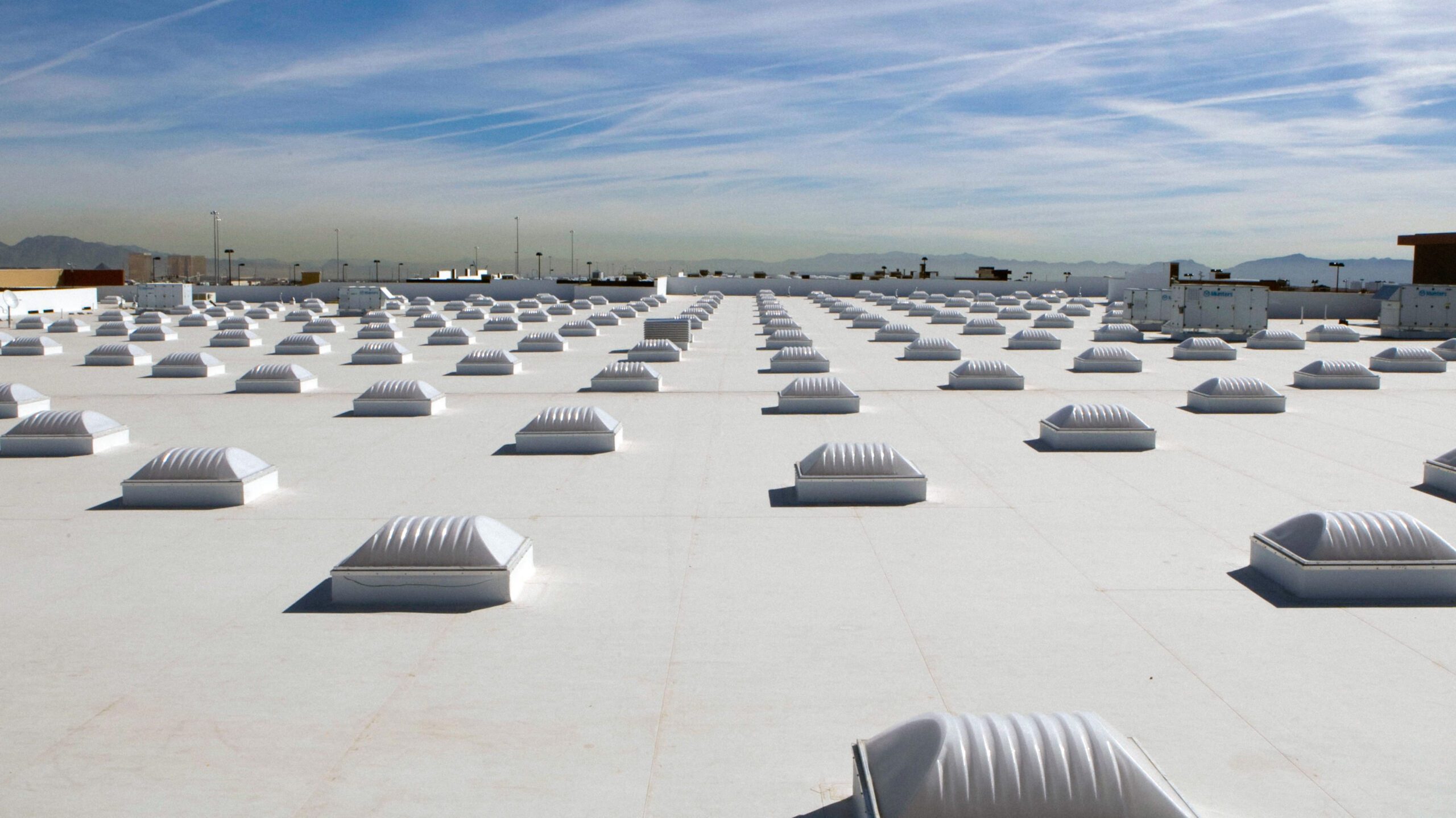
Commercial Roof Coatings — Silicone and SPF/Silicone Hybrid Systems.
Commercial Roof Coatings — Silicone and SPF/Silicone Hybrid Systems support in New Orleans, LA, with documented inspections, written scopes, and practical roof planning for commercial properties.
What this roof work solves
Commercial Roof Coatings — Silicone and SPF/Silicone Hybrid Systems in New Orleans should begin with a documented roof walk. The first job is to identify active water entry, drainage problems, membrane condition, edge details, rooftop equipment conflicts, and weather exposure before a price or schedule is discussed.
For commercial owners, the useful answer is rarely a one-line recommendation. The roof file should explain the work area, the reason for the scope, the access constraints, and the next maintenance decision.
How the scope is built
The scope is based on service scope, building use, roof age, visible defects, and the cost difference between immediate repair and longer-range planning. When repair is enough, the work stays focused. When replacement or recover planning is the responsible move, the reasoning is written plainly.
Each finished project should leave behind before-and-after photos, service notes, and follow-up items so the owner keeps a record for future inspections, budgeting, and vendor conversations.
Fluid-applied silicone coatings on qualifying New Orleans commercial roofs — 20-year manufacturer warranty paths, significant capital savings versus full replacement, and a rigorous qualification process specific to gulf-coast humidity and hurricane-season moisture loading.
Silicone fluid-applied coatings represent a compelling life-extension option for commercial flat roofs in the New Orleans market — but the qualification criteria in this subtropical environment are more stringent than in drier markets, and applying a coating to a roof that cannot support it is a particularly costly mistake here. New Orleans records more than 60 inches of annual rainfall with peak tropical moisture loading from June through November. A silicone coating applied over marginally wet insulation in a dry-climate market might perform for two or three seasons before failing. In New Orleans, that same coating over borderline insulation fails during the first post-application tropical rain event, voids the manufacturer warranty on day one, and leaves the building owner with a coating cost plus a replacement scope rather than one or the other.
For roofs that do qualify — dry insulation confirmed by cores, serviceable membrane with correctable seam defects, no structural ponding that the coating system cannot address — silicone coatings deliver meaningful capital savings. A qualifying EPDM or TPO roof with five to eight years of remaining life on the existing system can carry a manufacturer-warranted silicone coating with a 10, 15, or 20-year warranty at roughly 30 to 40 percent of full replacement cost. In Climate Zone 2A, the cool-roof reflectivity of a white silicone system also produces measurable HVAC energy reduction during the eight-month cooling season.
We install silicone coatings, SPF/silicone hybrid systems, and acrylic coatings on qualifying commercial roofs across Orleans and Jefferson parishes. The qualification assessment is not optional — it protects both the warranty and the building owner's capital.
Standard 20-year warranty silicone systems require a minimum of 30 mils dry film thickness total — typically a 20-mil base coat followed by a 10-mil topcoat, or a single 30-mil application on smooth substrates. Manufacturer field representatives verify mil thickness at inspection before warranty issuance. In New Orleans's high-humidity installation environment, application windows are governed by dew point, not just air temperature — silicone applied to a surface with moisture condensation on the membrane will delaminate within the first season. Our crews monitor dew point during application and do not apply product outside the manufacturer's humidity tolerance window, regardless of project schedule pressure.
Surface preparation is the warranty-critical step. The existing membrane surface must be clean, dry, and free of contamination before coating. We pressure wash at 3,000 to 4,000 psi, spot-prime failed seams and flashing edges with compatible primer, and re-flash all penetrations and parapet base flashings before coating application begins. A failed seam or flashing that is not corrected before coating will push through the coating system within two to three seasons — and the warranty claim on that outcome falls on the building owner, not on us, if the pre-coat defect was documented and not corrected.
SPF/silicone hybrid systems apply spray polyurethane foam at one to three inch thickness to add insulation value and correct ponding areas simultaneously, then receive a silicone topcoat for UV protection and waterproofing continuity. This system is appropriate for New Orleans commercial buildings where both insulation code compliance and roof life extension are priorities — the foam fill corrects low spots that would otherwise pond in tropical rainfall events, and the silicone topcoat provides the weather surface that survives the gulf-driven UV and moisture cycle.
When Coating Is the Right Call — and When It Is Not
Coating makes sense when: moisture cores confirm dry insulation throughout the field, existing seams are serviceable or correctable at reasonable pre-coat repair cost, ponding is minor and addressable with SPF fill or tapered insulation spot correction, and the building owner's capital horizon aligns with a 15 to 20-year performance expectation from the existing system rather than the clean-slate reset that a full replacement provides.
Coating is the wrong call in the New Orleans market when: cores show wet insulation across more than 25 percent of the roof area (the subtropical moisture regime means this condition only worsens — it does not self-correct), when seam failures are systemic throughout the membrane field rather than isolated (coating cannot remediate seams that have lost adhesion or weld integrity across the full field), or when structural ponding is driven by deck deflection or drain inadequacy that the coating surface itself cannot address.
We see coating proposals on roofs that should be replaced — typically offered to avoid the capital conversation that a full replacement requires. We do not take that approach. A warranty denial after a coating on a failing substrate is a problem for the building owner and a reputation problem for us — neither outcome serves the relationship.
Manufacturer Warranty Paths Available in New Orleans
10-year NDL: Available from Tremco, GS Roofing, and Conklin on 20-mil total DFT applications. Appropriate for roofs in the five to eight-year remaining life range where the owner wants performance warranty protection without the capital outlay of full replacement.
15-year NDL: Requires 25 to 30 mils total DFT. Available from Tremco and GS Roofing on qualifying systems. The common selection for New Orleans commercial buildings with eight to twelve years of remaining life in the existing system.
Questions to settle early
Where is the risk?
Locate leaks, wet-insulation indicators, open seams, weak flashing, and drainage restrictions across the roof.
What can wait?
Separate immediate work from maintenance items that can be tracked for the next service window.
What should be funded?
Build a practical recommendation for repair, coating, recover, or replacement planning.
Need help with commercial roof coatings — silicone and SPF/silicone hybrid systems?
Send the building address, known roof age, access notes, and what changed. We will respond with the right next step.