
Hail Damage Roof Repair.
Hail Damage Roof Repair support in New Orleans, LA, with documented inspections, written scopes, and practical roof planning for commercial properties.
What this roof work solves
Hail Damage Roof Repair in New Orleans should begin with a documented roof walk. The first job is to identify active water entry, drainage problems, membrane condition, edge details, rooftop equipment conflicts, and weather exposure before a price or schedule is discussed.
For commercial owners, the useful answer is rarely a one-line recommendation. The roof file should explain the work area, the reason for the scope, the access constraints, and the next maintenance decision.
How the scope is built
The scope is based on service scope, building use, roof age, visible defects, and the cost difference between immediate repair and longer-range planning. When repair is enough, the work stays focused. When replacement or recover planning is the responsible move, the reasoning is written plainly.
Each finished project should leave behind before-and-after photos, service notes, and follow-up items so the owner keeps a record for future inspections, budgeting, and vendor conversations.
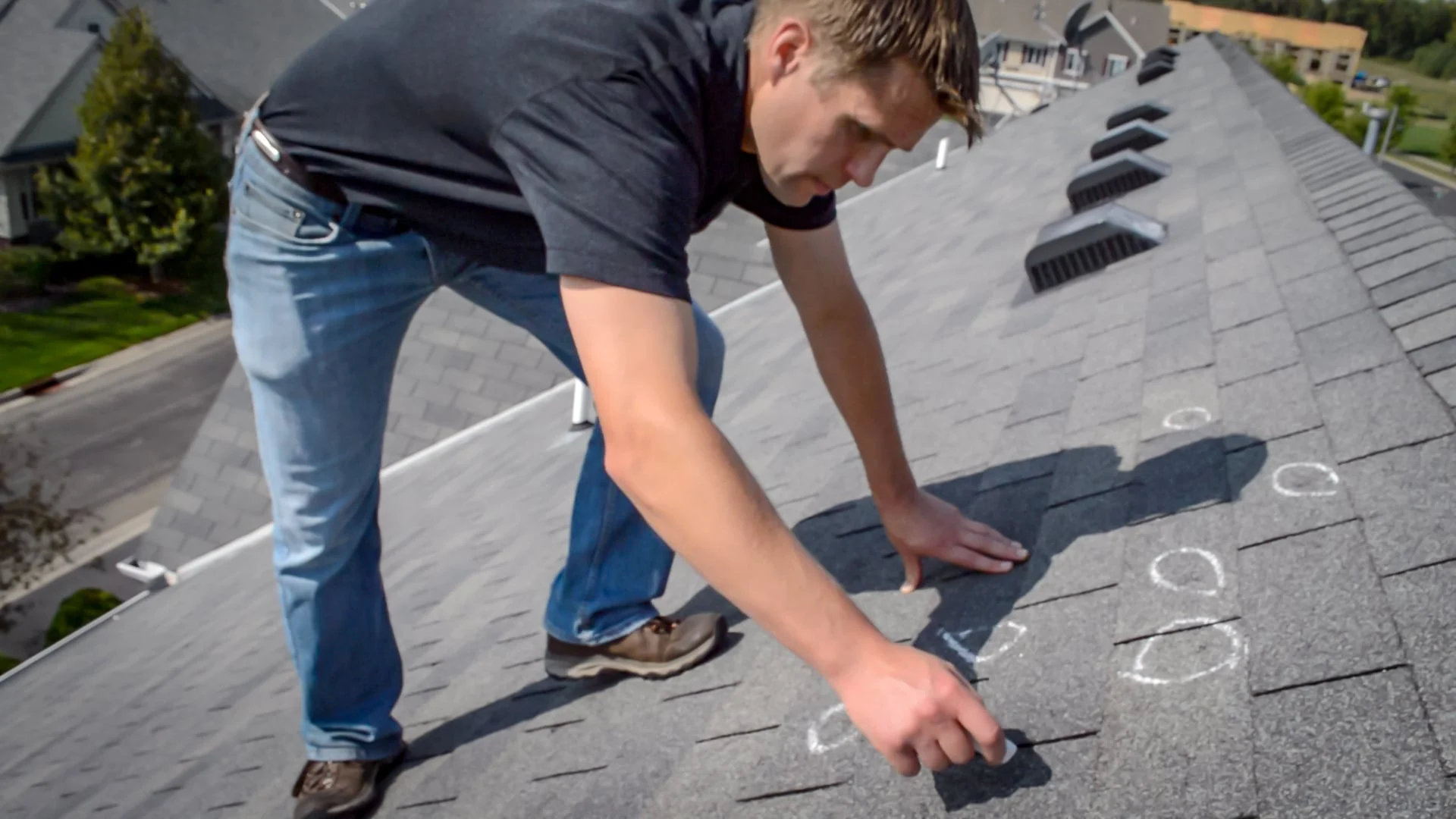
Hail hits New Orleans commercial buildings several times a year on average, often embedded in the leading squall lines of Gulf tropical systems. The documentation window after an event is short. We get on the roof before the adjuster does, separate event damage from pre-existing conditions, and produce the record that moves the claim forward.
New Orleans sits in a zone where Gulf-driven severe weather systems produce hail with enough frequency to make post-storm roof documentation a routine commercial building management task rather than a rare event. The squall lines that precede Gulf tropical systems regularly generate hailstones in the half-inch to one-and-a-half-inch range across Orleans and Jefferson parishes, and outright supercell events moving through southern Louisiana can produce stones above two inches. Unlike the North Louisiana hail belt where large-stone hail dominates the damage picture, New Orleans hail events cause their most significant commercial roof damage through the combination of impact frequency — dense hail falls over extended periods — and the existing condition of aged membranes and degraded flashing details that would not have failed under the storm alone.
The documentation window after a hail event matters enormously in Louisiana's commercial insurance environment. The Louisiana Department of Insurance imposes notice provisions on commercial wind and hail claims that require prompt reporting, and pre-adjuster documentation — a dated roof walk with photographs taken before the adjuster's independent inspection — is the record that protects the building owner against scope disputes. We conduct pre-adjuster walks within 48 hours of significant events and document conditions with the specificity that adjusters and coverage counsel require.
We do not inflate hail damage scope. Adjusters who work the Louisiana commercial market regularly know which contractors pad hail claims and which do not, and that reputation directly affects how efficiently a building owner's future claims are processed. We document what the storm caused, we separate it from what was already there, and we repair what the storm damaged — accurately and permanently.
Insurance-Grade Hail Damage Documentation
A defensible Louisiana commercial hail claim requires documentation establishing three things: that a hail event occurred, that the event caused the observed damage, and that the damage is distinct from pre-existing conditions. The first is established by NOAA storm reports and Louisiana Governor's Office of Homeland Security and Emergency Preparedness storm data. The second requires photographs of hail impact signature on multiple surface types — spatter patterns on AC condenser fins, dented pipe boots, granule displacement craters on modified bitumen membrane, bruising and micro-fractures on single-ply systems.
The third — distinguishing event damage from pre-existing conditions — is where most New Orleans commercial hail claims generate disputes. New Orleans buildings have a documented history of deferred maintenance and storm-event accumulation that means pre-existing degradation is common on many roofs. We photograph and describe every area of membrane degradation during our pre-adjuster walk, characterizing each condition as consistent with hail impact signature or consistent with age-related degradation, UV weathering, or prior water damage. Both categories are documented honestly because the integrity of the report is what makes it useful.
We measure hail impact density across the roof surface — impacts per 10 square feet in multiple zones — and document hard-surface impact evidence on metal components: coping caps, pipe boots, skylight frames, and HVAC equipment housing. Adjusters weight hard-surface evidence heavily in Louisiana commercial claims because it establishes hail size and density independent of the membrane evidence, which can be harder to distinguish from age-related degradation.
Common Hail Damage Patterns on New Orleans Commercial Roofs
Modified bitumen membranes: Granule-surfaced modified bitumen — widely used on New Orleans commercial buildings built through the mid-2000s — shows hail impact as granule displacement craters that expose the base sheet to UV. On buildings where the membrane is already near the end of its granule-retention life, a moderate hail event can accelerate the timeline from 'monitor' to 'replace' by exposing base sheet across a significant area. We photograph and measure exposed base sheet area and compare it to non-impacted sections of the same membrane.
Single-ply TPO and PVC: Large stones above one inch produce surface bruising and occasional micro-fractures in single-ply membrane, particularly at or near seam lines where the membrane is fully adhered to the substrate and cannot flex to absorb impact energy. In a full-adhered system — the standard specification for hurricane-prone-region buildings in New Orleans — the impact energy concentrates at the bonded membrane surface rather than distributing through membrane deflection. We probe bruised areas for sub-surface fracture.
Metal components and flashings: Every hail event in this market produces measurable evidence on the aluminum and steel components distributed across a commercial roof. Coping cap spatter, pitch-pan cover dents, and skylight frame impacts are catalogued on every post-hail walk because these components provide objective, quantifiable hail size and density evidence that supplements the membrane damage assessment.
Drainage and post-event ponding: Hail events frequently deposit debris loads on commercial roofs that partially or fully obstruct drains. In New Orleans, where peak tropical rainfall intensities can exceed three inches per hour, a drain that is 40 percent blocked by post-hail debris cannot maintain drainage pace during the next heavy rain event. We assess drain condition as part of every post-hail walk and clear obstructed drains as part of the same mobilization.
Working with Louisiana Insurance Adjusters
Questions to settle early
Where is the risk?
Locate leaks, wet-insulation indicators, open seams, weak flashing, and drainage restrictions across the roof.
What can wait?
Separate immediate work from maintenance items that can be tracked for the next service window.
What should be funded?
Build a practical recommendation for repair, coating, recover, or replacement planning.
Need help with hail damage roof repair?
Send the building address, known roof age, access notes, and what changed. We will respond with the right next step.