
Parapet Wall Repair.
Parapet Wall Repair support in New Orleans, LA, with documented inspections, written scopes, and practical roof planning for commercial properties.
What this roof work solves
Parapet Wall Repair in New Orleans should begin with a documented roof walk. The first job is to identify active water entry, drainage problems, membrane condition, edge details, rooftop equipment conflicts, and weather exposure before a price or schedule is discussed.
For commercial owners, the useful answer is rarely a one-line recommendation. The roof file should explain the work area, the reason for the scope, the access constraints, and the next maintenance decision.
How the scope is built
The scope is based on service scope, building use, roof age, visible defects, and the cost difference between immediate repair and longer-range planning. When repair is enough, the work stays focused. When replacement or recover planning is the responsible move, the reasoning is written plainly.
Each finished project should leave behind before-and-after photos, service notes, and follow-up items so the owner keeps a record for future inspections, budgeting, and vendor conversations.
The parapet is the highest-risk zone on most New Orleans commercial flat roofs — the first element to fail in wind-driven rain, the primary leak source on pre-Katrina construction, and the component post-storm surveys consistently identify as the dominant failure point in hurricane events. We repair the full assembly, not just the piece that is visibly failing.
Parapet walls on New Orleans commercial buildings carry a failure burden that goes beyond what most facility managers recognize. The parapet sits at the intersection of the roof membrane, the exterior wall, and the building's structural frame — exposed on two faces to UV, thermal cycling, and the wind-driven moisture loads that tropical weather events produce on a multi-year cycle. Post-storm surveys following Hurricane Ida in 2021 and Hurricane Zeta in 2020 identified parapet-to-membrane transition failures as the single most common commercial roofing failure mode across Jefferson and Orleans parishes — more common than field membrane puncture, more common than drain failure, and more destructive in terms of interior water damage because the separation opens a continuous water path along the full perimeter of the roof.
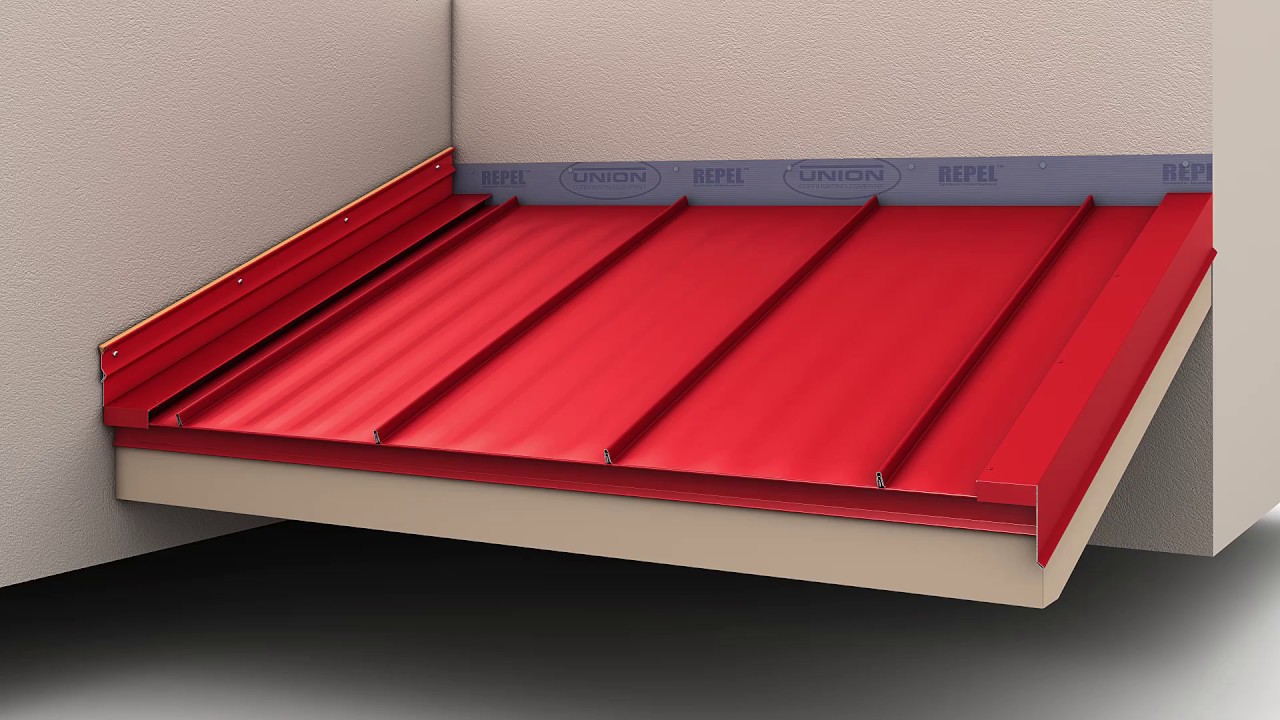
Parapet repair is not a one-component job. The coping cap is typically sheet metal or precast concrete. The base flashing is the roofing membrane's vertical run up the parapet face. The counterflashing or reglet is the termination of the base flashing into the wall face. Addressing one component while leaving the adjacent ones in degraded condition produces a repair that holds until the next storm season exposes the next failure point. We assess the full parapet assembly before scoping any work and repair the interconnected components together.
We have repaired parapets on CBD office towers along the Poydras Street corridor, on warehouse conversions in the Warehouse District and the St. Claude corridor, on medical-office buildings in the Mid-City and Veterans Boulevard corridors, and on the strip retail and service-commercial buildings that make up the largest proportion of the Jefferson Parish commercial inventory. The climate conditions are consistent across the metro. The repair sequence — assess the full assembly, strip the failed components, restore the primary barrier, restore the secondary termination — does not change.
Metal coping caps — the standard specification on New Orleans commercial buildings built after 1980 — fail most commonly at the end laps and at the clip anchors that prevent uplift under negative wind pressure. In a hurricane-prone market, uplift at coping laps is not a theoretical failure mode — it is a documented failure pattern. Post-Ida surveys in Jefferson Parish documented coping cap sections lifted and displaced at lap joints on multiple commercial buildings in the Veterans Boulevard corridor, creating open water paths into the parapet wall assembly from the top. We replace failed coping sections with continuous-clip systems that eliminate the end-lap gap and resist the uplift pressures associated with the building's ASCE 7 hurricane-prone-region designation.
Precast concrete coping — present on older New Orleans commercial buildings in the warehouse districts along the river and on pre-Katrina construction in the Mid-City and Gentilly corridors — fails at the mortar joints between coping units. Original mortar from the 1960s and 1970s has carbonated and cracked under decades of thermal cycling and tropical moisture exposure. We rake and repoint open joints with elastomeric polyurethane sealant appropriate for the concrete substrate and apply a penetrating silane-siloxane sealer to the coping surface to reduce direct water absorption.
Any coping replacement triggers a slope verification. Coping caps should drain toward the roof surface, not toward the exterior wall face. Level or outward-tilted coping concentrates water against the wall assembly and accelerates counterflashing deterioration. We correct coping slope during replacement work and document the corrected condition in the repair record.
The base flashing rebuild is the most labor-intensive component of a parapet repair. It requires stripping the existing termination back to sound material, cleaning and priming the vertical substrate, and installing new membrane in strict accordance with the manufacturer's published hurricane-prone-region detail. On TPO systems, the base flashing runs a minimum of eight inches above the finished roof surface with a heat-welded termination bar and compatible sealant into the reglet. On modified bitumen systems — more common on older New Orleans commercial buildings — the base flashing is torched or cold-applied with a metal counterflashing reglet and elastomeric sealant at the termination.
We do not re-adhere base flashings that have separated more than a quarter inch from the parapet face. A separated flashing re-adhered without stripping carries residual stress from its prior failure and will re-open. The correct repair strips the flashing back to a solid bond point — typically two to four feet below the failure — and runs new membrane from that point to the termination so the repair zone is entirely in sound material.
Wind-uplift reinforcement at the parapet transition is specified on New Orleans buildings where the parapet is on a corner or perimeter zone with elevated ASCE 7 pressure coefficients. The hurricane-prone-region design requires additional mechanical fastening or reinforced adhesive coverage at the base flashing transition on buildings classified Risk Category III or IV. We apply this reinforcement as standard practice on healthcare buildings, schools, and other high-occupancy facilities where the building's code classification requires it.
Brick and CMU parapet walls in New Orleans's subtropical humidity absorb water through the face at rates significantly higher than in drier climates. The combination of high rainfall, persistent humidity that prevents inter-event drying, and the age of much of the commercial building stock across the metro means that masonry permeability is a common contributing factor to interior moisture damage — even on buildings where the coping and base flashing are in reasonable condition. We assess masonry face permeability by examining efflorescence deposits, mortar joint condition, and spalling on every parapet repair project.
Penetrating silane-siloxane masonry sealers applied to clean, dry masonry reduce face absorption without trapping moisture in the wall. The critical variable in New Orleans is substrate moisture content before application — we verify the masonry is below 12 percent moisture content before applying sealer, because application over wet masonry in this climate traps moisture that cannot escape through the sealed face. We use a pin-type moisture meter on the parapet face before application and reschedule if conditions are not within the application window.
Repointing is performed before sealer application on any parapet face where mortar joints show open voids, carbonation cracking, or missing sections. The sequence matters: sealer applied over open joints encapsulates the gap rather than bridging it, producing a failure path that is harder to identify at the next inspection. We document every repointing location in the repair record.
How do we know if a leak is coming from the parapet rather than the field membrane?
Questions to settle early
Where is the risk?
Locate leaks, wet-insulation indicators, open seams, weak flashing, and drainage restrictions across the roof.
What can wait?
Separate immediate work from maintenance items that can be tracked for the next service window.
What should be funded?
Build a practical recommendation for repair, coating, recover, or replacement planning.
Need help with parapet wall repair?
Send the building address, known roof age, access notes, and what changed. We will respond with the right next step.