
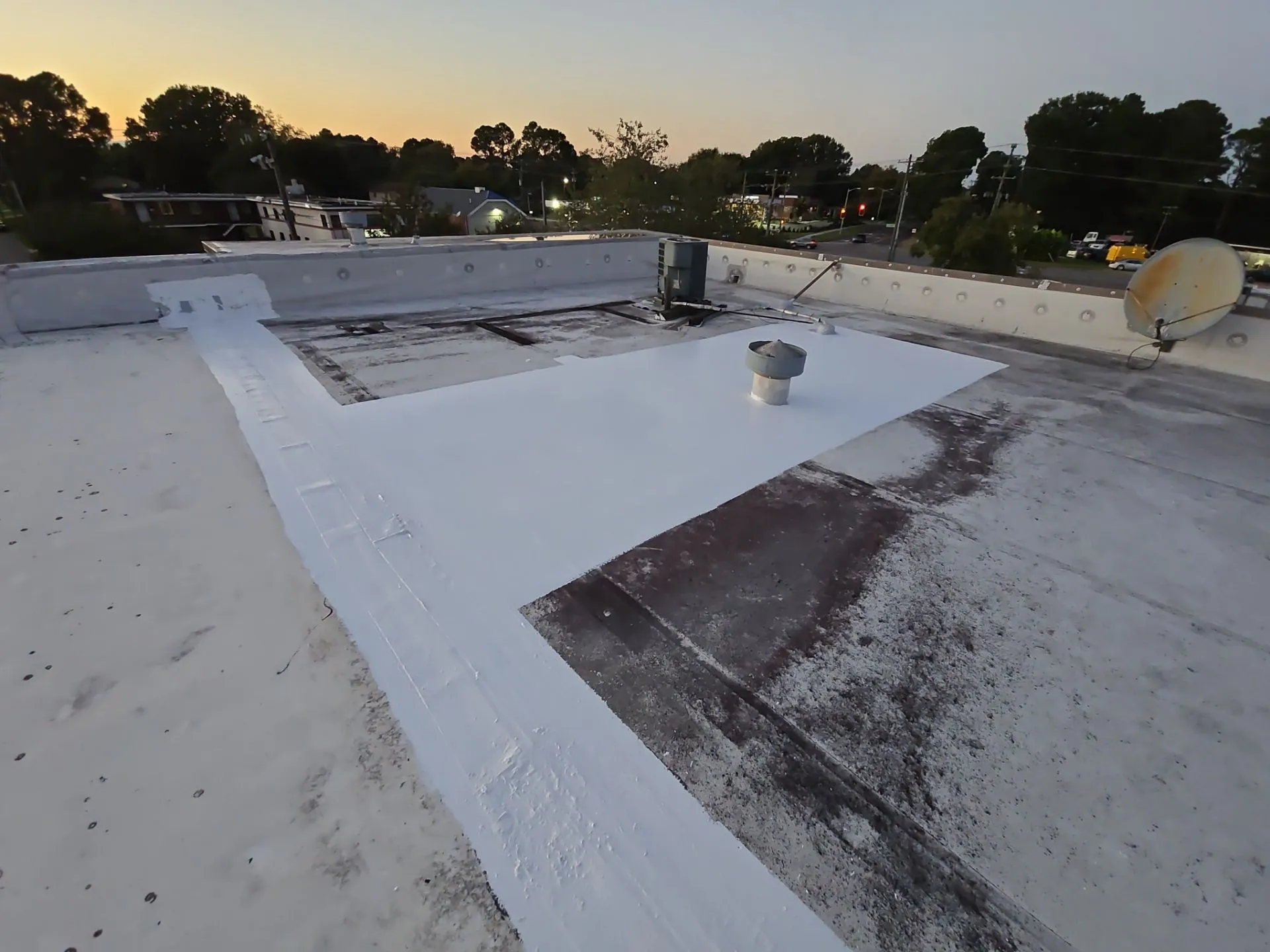
Leak Damage Roof Repair.
Leak Damage Roof Repair support in New Orleans, LA, with documented inspections, written scopes, and practical roof planning for commercial properties.
What this roof work solves
Leak Damage Roof Repair in New Orleans should begin with a documented roof walk. The first job is to identify active water entry, drainage problems, membrane condition, edge details, rooftop equipment conflicts, and weather exposure before a price or schedule is discussed.
For commercial owners, the useful answer is rarely a one-line recommendation. The roof file should explain the work area, the reason for the scope, the access constraints, and the next maintenance decision.
How the scope is built
The scope is geared to damage response, building use, roof age, visible defects, and the cost difference between immediate repair and longer-range planning. When repair is enough, the work stays focused. When replacement or recover planning is the responsible move, the reasoning is written plainly.
Each finished project should leave behind before-and-after photos, service notes, and follow-up items so the owner keeps a record for future inspections, budgeting, and vendor conversations.
New Orleans averages more than 60 inches of rainfall per year, with peak intensity during tropical weather season from June through November. Commercial flat-roof leaks in this climate are rarely simple. We trace the source — not just the stain — and repair what is actually failing.
Commercial roof leaks in New Orleans arrive in a climate that is uniquely hostile to flat-roof envelope performance. The metro's subtropical humidity means moisture that enters the roof assembly during a rain event does not dry out between events the way it does in a drier market. Peak rainfall intensity during tropical weather season can exceed three inches per hour — well above what most roof drain systems on older commercial buildings in Orleans and Jefferson parishes were sized to handle. The result is a market where leak sources that would stay confined in a temperate climate spread quickly through saturated insulation and into interior assemblies.
The first and most important step in leak repair on any New Orleans commercial building is source identification — not surface patching. Interior ceiling stains in a flat-roof commercial building routinely appear 20 to 40 feet from the actual roof-membrane breach because water travels horizontally through the insulation layer before finding a penetration or deck joint to drop through. Patching the area above the stain without identifying the source produces a temporary stop that fails in the next rain event. We trace the water path from the interior stain back through the insulation to the actual breach location before any repair scope is written.
For buildings that have sustained storm-related leak damage — hurricane, tropical storm, or the severe convective events common in the New Orleans area from May through October — we document the leak source and the interior damage separately, in a format that supports Louisiana insurance carrier documentation requirements when the leak is storm-attributable.
Common Leak Sources on New Orleans Commercial Buildings
Seam failure from subtropical UV and moisture cycling is the most common leak source on single-ply TPO and EPDM systems in this market. New Orleans's combination of intense UV radiation in summer, high humidity, and the thermal cycling produced by warm summer rain events on hot membrane surfaces accelerates lap seam adhesive degradation faster than the manufacturer's design life assumes. Seam edges lift at the point of maximum adhesive degradation, typically at field-to-perimeter transitions and at T-joints where three membrane edges meet. We probe all lap seams on buildings reporting active leaks — not just the seam nearest the interior stain.
Drain and scupper blockage is the second most common source category in a climate with New Orleans's annual rainfall volume. Live oak debris, wind-blown material during storm events, and biological growth in standing water at low points combine to block drain bowls and overflow scuppers on commercial flat roofs here. A blocked drain on a low-slope New Orleans roof during a tropical rain band can produce four to six inches of standing water that finds any compromised seam or penetration within the ponding zone. We clear and inspect every drain and scupper on our inspection routes and include drain flow confirmation in every leak repair closeout.
Penetration and curb flashing failure is the third major category — HVAC equipment curbs, pipe penetrations, and conduit entries that were originally flashed to code minimums and have aged through repeated exposure to Gulf storm-season rain events and subtropical UV. Flashing failure at penetrations in New Orleans commonly goes undetected for longer than in drier markets because the moisture spreads through saturated insulation before interior evidence appears. We inspect every penetration in the zone above any interior stain regardless of how far the stain is from the penetration.
Leak Source Tracing in Subtropical Conditions
Electronic leak detection — low-voltage electrical field testing or nuclear moisture scanning — is the tool we use on commercial buildings where the interior evidence is ambiguous, the roof area is large, or the membrane system has been repaired multiple times and the repair history is unclear. Both methods are non-destructive and locate moisture in the insulation layer and membrane compromises that do not yet show visible surface evidence. For a 40,000 sq ft New Orleans commercial building with a history of ceiling stains and multiple prior surface patches, electronic detection typically identifies two to four source zones that surface inspection alone would miss.
Core pulls at suspected source zones confirm the moisture content of the insulation beneath the membrane surface and document the condition for repair scoping. In New Orleans's subtropical climate, we consider any core result above 15 percent moisture content as requiring replacement of the insulation at that location — not just surface patching. Recovering over wet insulation in 80 percent ambient humidity traps moisture, accelerates deck corrosion on light-gauge metal substrates, and guarantees the leak returns.
We deliver the leak source trace in a written report that maps each confirmed source on the roof zone diagram, documents the water travel path from source to interior evidence point, and distinguishes storm-event-caused breach locations from age-related and maintenance-related failure locations. That separation matters when the building's insurance carrier is involved in the repair authorization.
Repair Scope and Closeout for New Orleans Commercial Roofs
Every leak repair scope we write includes the source repair — not just the surface symptom — plus the wet insulation replacement where core results warrant it, the drain clearing and confirmation, and the penetration flashing inspection and remediation. A repair that seals the visible breach without replacing saturated insulation beneath it and confirming drain function is a temporary fix in New Orleans's rainfall environment.
Questions to settle early
Where is the risk?
Locate leaks, wet-insulation indicators, open seams, weak flashing, and drainage restrictions across the roof.
What can wait?
Separate immediate work from maintenance items that can be tracked for the next service window.
What should be funded?
Build a practical recommendation for repair, coating, recover, or replacement planning.
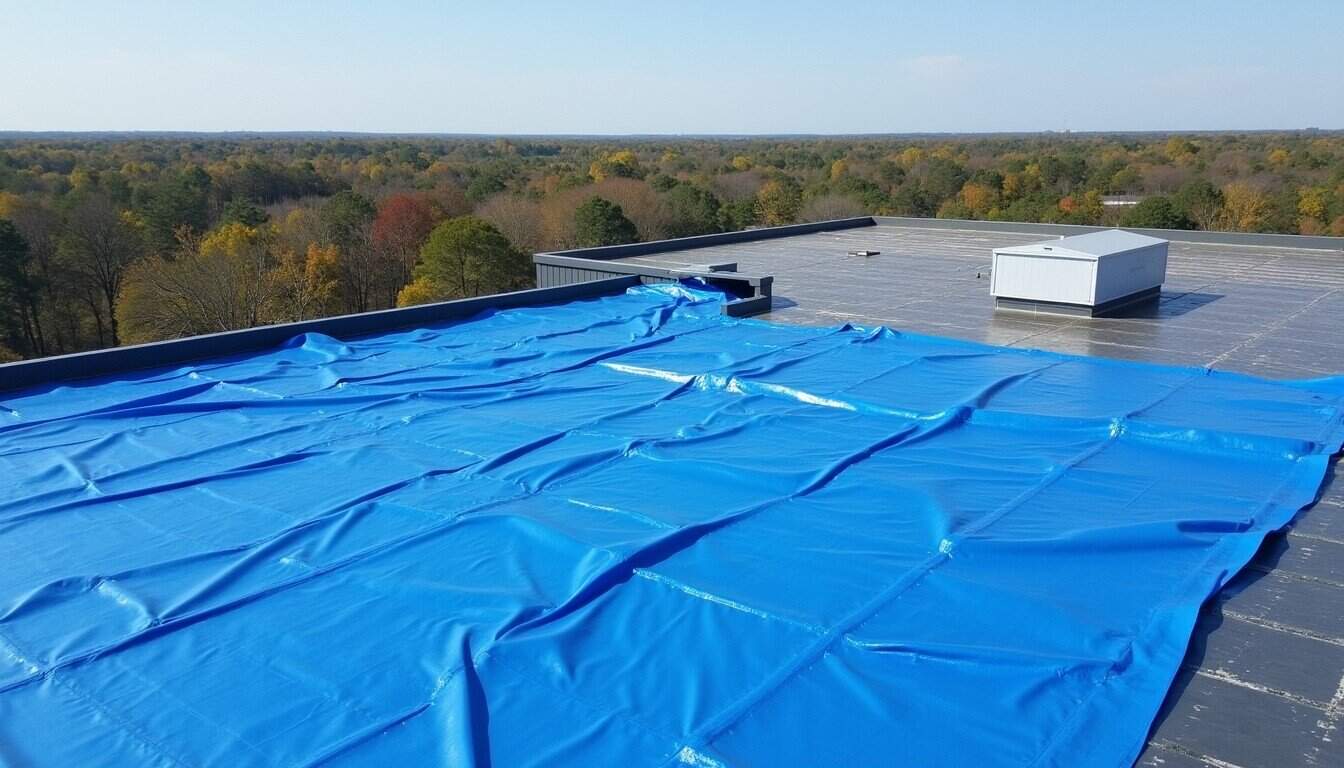
Need help with leak damage roof repair?
Send the building address, known roof age, access notes, and what changed. We will respond with the right next step.