
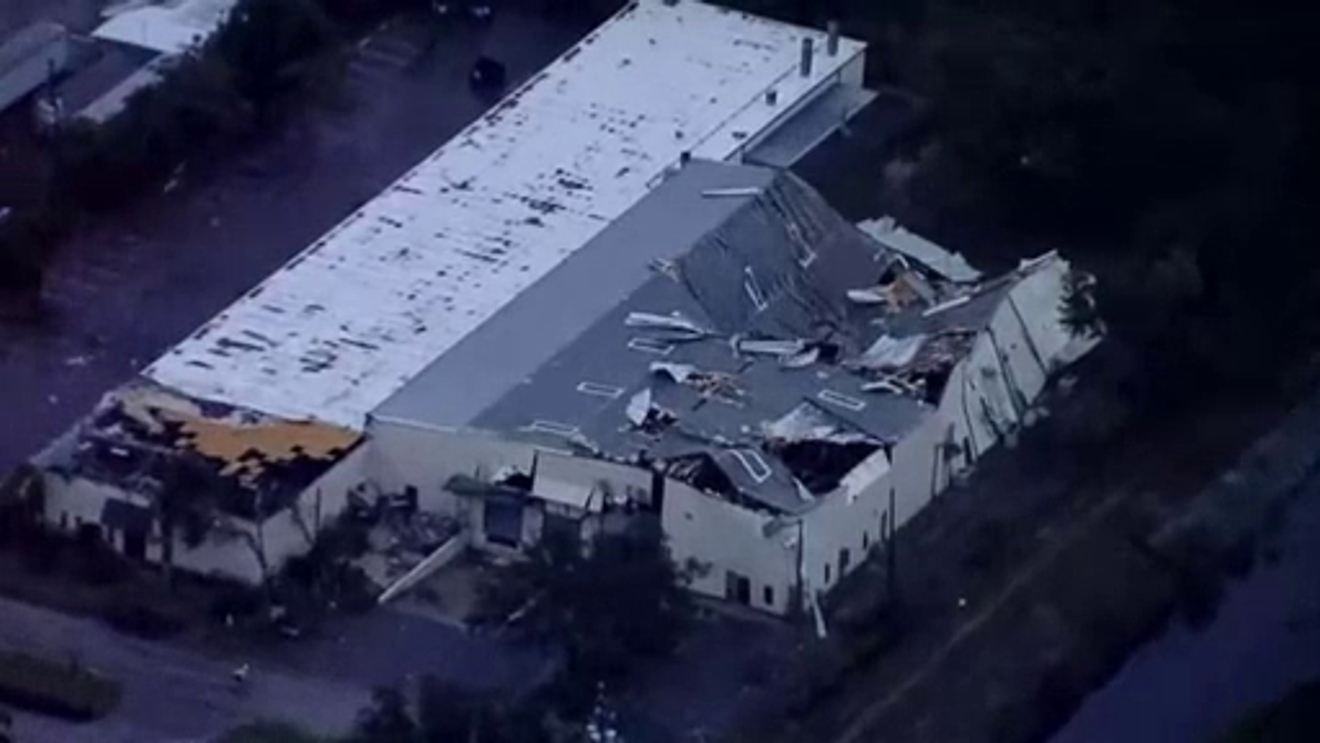
Tornado Damage Roof Repair.
Tornado Damage Roof Repair support in New Orleans, LA, with documented inspections, written scopes, and practical roof planning for commercial properties.
What this roof work solves
Tornado Damage Roof Repair in New Orleans should begin with a documented roof walk. The first job is to identify active water entry, drainage problems, membrane condition, edge details, rooftop equipment conflicts, and weather exposure before a price or schedule is discussed.
For commercial owners, the useful answer is rarely a one-line recommendation. The roof file should explain the work area, the reason for the scope, the access constraints, and the next maintenance decision.
How the scope is built
The scope is geared to damage response, building use, roof age, visible defects, and the cost difference between immediate repair and longer-range planning. When repair is enough, the work stays focused. When replacement or recover planning is the responsible move, the reasoning is written plainly.
Each finished project should leave behind before-and-after photos, service notes, and follow-up items so the owner keeps a record for future inspections, budgeting, and vendor conversations.
Tornadoes in the New Orleans area are not rare — they are a documented feature of Gulf Coast supercell activity embedded in tropical systems and cold-front interactions. We document tornado-caused roof damage for what it is: distinct from straight-line wind, distinct from hurricane uplift, and requiring specific attribution evidence for Louisiana insurance carriers.
Louisiana averages more than 25 tornadoes per year, and the New Orleans metro sits in the corridor most exposed to Gulf Coast supercell outbreaks that form ahead of cold fronts from December through April and within tropical systems during hurricane season. The February 7, 2017 tornado outbreak produced confirmed EF-. Tammany Parish, damaging commercial buildings along Chef Menteur Highway and the Slidell commercial corridor. The January 2021 outbreak produced additional confirmed tracks through Jefferson Parish neighborhoods while metro New Orleans facilities teams were still managing post-Zeta repairs from three months earlier.
Tornado damage on a commercial flat roof looks different from straight-line hurricane wind damage. Hurricane uplift follows a directional perimeter-to-field progression consistent with the storm track. Tornado damage produces vortex-pattern uplift that can strip sections of membrane in a rotational sequence, deposit debris from structures a quarter-mile away, and leave adjacent roof zones completely undamaged. These failure signatures matter for insurance attribution — and for understanding the actual structural condition of the roof envelope after the event.
We document tornado damage by reading its vortex signature, its debris impact pattern, and its zone distribution. That documentation goes into a scope package your Louisiana-licensed adjuster or public adjuster can use to advance the claim with your carrier — Citizens, State Farm, Allstate, USAA, or whichever carrier covers the building.
Reading Tornado vs. Straight-Line Wind Damage on Flat Roofs
The physical difference between tornado uplift and straight-line hurricane wind damage on a flat commercial roof is the directionality and rotational signature of the failure. Straight-line wind from a Gulf hurricane produces perimeter and corner uplift that concentrates on the windward face and tracks consistently across the building's surface in the direction of the storm track. Tornado vortex uplift produces a rotational failure pattern — sections of membrane stripped in a sweeping arc, edge metal peeled from two or more faces that do not face the same direction, and debris impact zones scattered across the roof in a pattern inconsistent with a single wind direction.
Debris impact from tornado-carried material is the other diagnostic indicator. Tornadoes in the New Orleans area carry wood debris, roofing material from adjacent structures, and occasionally structural components from light-frame construction in surrounding neighborhoods. Impact craters from carried debris are typically larger and more irregular than hail impact sites and occur in isolation across the field rather than in the density-pattern distribution characteristic of hail events. We photograph and measure each debris impact site separately and document the debris type where identifiable.
The distinction between tornado damage and straight-line hurricane wind damage matters for claim attribution when the building's commercial property policy distinguishes the two perils — or when the carrier's adjuster challenges whether a confirmed tornado track, rather than general hurricane-wind activity, caused the observed damage. Our documentation addresses the physical evidence directly.
Post-Tornado Rapid Assessment and Dry-In
Tornado events in the New Orleans area are typically short-duration with fast-moving storm cells, but the building damage they leave behind exposes commercial interiors to the subtropical humidity and follow-on Gulf rain events that characterize the metro's climate. A commercial flat roof with an open tornado-caused breach — a stripped membrane section, a displaced parapet cap, a debris puncture — allows water infiltration that propagates through the building envelope quickly in 80-percent-humidity post-storm conditions.
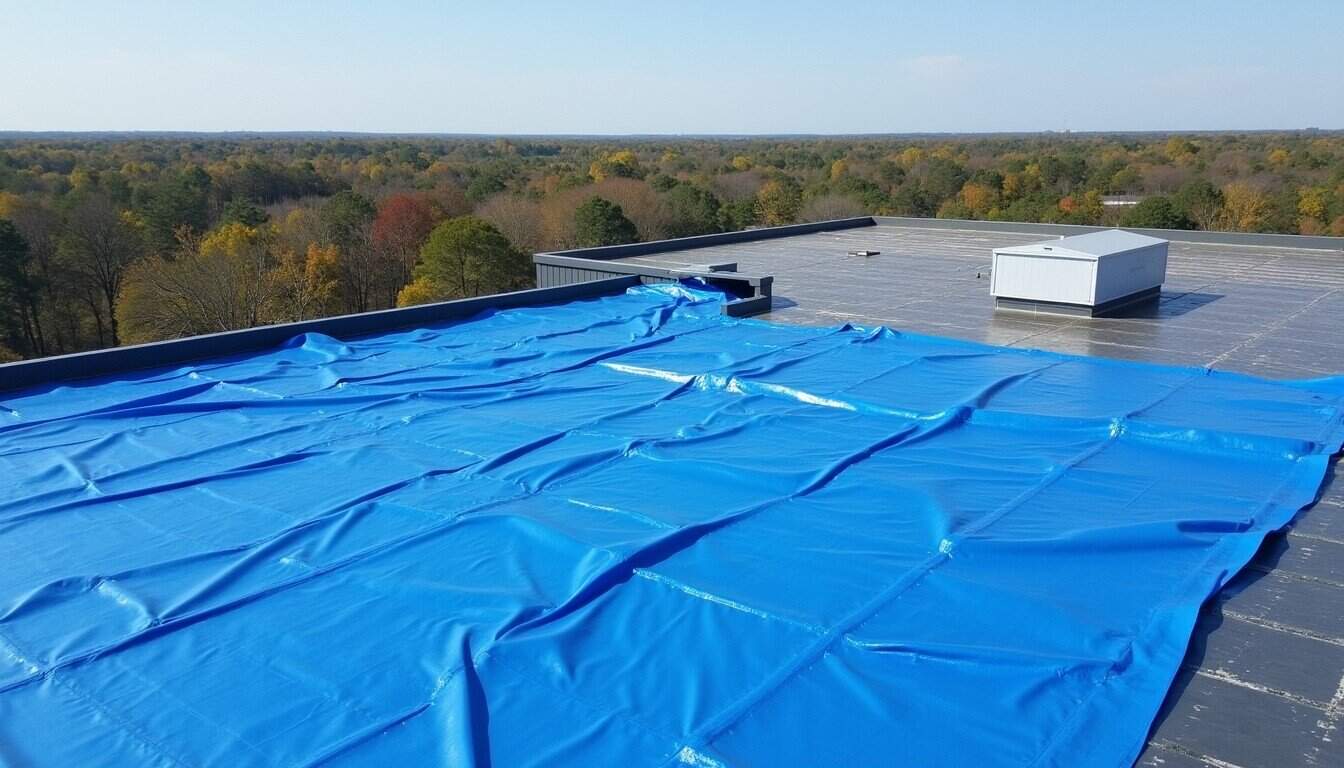
We provide rapid post-tornado assessment for commercial buildings in Orleans, Jefferson, and St. Tammany parishes — prioritizing buildings with confirmed active water infiltration. Emergency dry-in covers the open breach area, stops the active water infiltration, and is documented separately from the tornado damage scope so the temporary repair does not complicate the claim attribution.
For buildings in our maintenance program, post-tornado rapid assessment is available within four business hours of storm passage. For new-client buildings after a confirmed tornado event, we mobilize same-day or next-day depending on the number of buildings affected by the outbreak.
Building the Tornado Claim Documentation Package
Tornado documentation for Louisiana commercial property claims includes the NWS-confirmed tornado track for the event — with the building's address cross-referenced to the confirmed track width and EF-scale intensity — and the NOAA storm data archive for the date. Where the NWS has not yet issued a confirmation, we note the pending classification and document the physical evidence of rotational damage independently.
Questions to settle early
Where is the risk?
Locate leaks, wet-insulation indicators, open seams, weak flashing, and drainage restrictions across the roof.
What can wait?
Separate immediate work from maintenance items that can be tracked for the next service window.
What should be funded?
Build a practical recommendation for repair, coating, recover, or replacement planning.
Need help with tornado damage roof repair?
Send the building address, known roof age, access notes, and what changed. We will respond with the right next step.